Ten Years on the Bank
A Decade of Carp Fishing, Lessons, Memories and the Never-Ending Search
There is something about carp fishing that makes ten years disappear almost without you noticing.
One minute you are looking back at a photograph from a decade ago, remembering exactly where you were standing, what the weather was doing and how the fish came alive in the darkness. The next, you are sitting in the same bivvy on another lake, watching the bobbin rise in the early hours and wondering whether the fish that has finally picked up your bait is going to be the one you have been waiting for.
For me, the last ten years have been exactly that.
A decade of alarms, bivvies, wet sleeping bags, summer heat, winter frosts, long walks around lakes, marker rods, sonar screens, handfuls of bait, hundreds of decisions and more hours spent staring at water than I could ever count.
There have been big fish, small fish, blanks, surprise captures, frustrating sessions and those magical mornings when everything comes together perfectly.
But more importantly, there has been progression.
I have never really been interested in simply putting rods on a lake and hoping. Carp fishing has always been about trying to understand what is happening beneath the surface. Where are the fish? Why are they there? What are they eating? What has changed? Where will they be tomorrow? What does the weather tell me? What does the lakebed tell me?
Those questions have become every bit as important to my fishing as the actual catching.
And over the last ten years, my fishing has changed considerably.
Some of those changes have come through experience. Some through technology. Some through different bait and rigs. Some through fishing different waters. And some have simply come from spending enough time beside a lake to realise that what you thought you knew yesterday might not necessarily be true tomorrow.
This is the story of that decade.
—
Chapter One
Why I Still Go Fishing
I have been carp fishing since 1981, and the obsession really took hold in 1984.
That means I have now spent more than four decades chasing carp.
When I look at that written down, it sounds slightly ridiculous.
There have been periods when life has got in the way, of course. Work, family, commitments and all the normal responsibilities that come with getting older have meant that fishing has not always been as easy to fit in as I would have liked.
But somehow, I have always found my way back to the bank.
There is a reason for that.
Carp fishing is not simply about catching carp.
The fish are obviously the objective, but the attraction is everything surrounding the capture. The preparation. The planning. The anticipation. The journey to the lake. The first walk around. The decision about where to fish. The weather. The wind. The water temperature. The lakebed. The bait. The rig. The waiting.
Then there is that moment when an alarm finally sounds.
After all these years, that feeling has never really changed.
I can still feel the anticipation when a session is approaching. I still look at weather forecasts. I still study the lake. I still think about swims. I still spend far too long considering where I want to put a rig when I could probably have simply cast it out ten minutes earlier.
That is part of the attraction.
I have never wanted fishing to become routine.
The day it becomes routine is probably the day I will stop doing it.
Over the last decade, however, I have become much more aware that catching carp consistently is less about doing more and increasingly about understanding more.
That might sound obvious, but it is something that has taken decades to appreciate.
—
Chapter Two
Ten Years of Change
The carp fishing world has changed enormously over the last decade.
Tackle has changed. Bait has changed. Technology has changed. Social media has changed the way anglers share their fishing.
And perhaps most importantly, the amount of information available to an angler has increased dramatically.
But information is only useful if you know how to interpret it.
That is something I have learned repeatedly.
A sonar screen can tell me the depth. It can show contours and bottom composition. Mapping software can help me understand the shape of a lake. Weather apps can tell me wind direction and pressure. Forecasts can show rainfall and temperature.
But none of those things can actually tell me where the carp are going to be at 3am.
That still requires watercraft.
The technology simply gives me more information with which to make the decision.
This is where my Deeper CHIRP 3 has become such an important part of my fishing.
I cannot use a boat on my waters, so I have had to find another way of understanding what is beneath the surface.
The Deeper has allowed me to map areas that would otherwise be difficult to understand.
And then there is Deeper Maps+.
For years I have thought this was one of the most underused tools available to anglers using Deeper sonar.
I particularly like being able to sit at home with the laptop connected to a large monitor and study the lake properly.
For me, that is not just looking at pretty coloured maps.
It is preparation.
I can examine contours, identify transitions, look at bars, locate depressions and understand how different areas of a lake relate to one another.
That preparation has changed the way I approach fishing.
Instead of arriving at a lake completely blind, I can already have an idea of what I want to investigate.
But I have also learned not to become a slave to the technology.
The map is the starting point.
The lake is the final authority.
—
Chapter Three
The Big Pit
Over the years, there has been one type of water that has continually fascinated me: big, complicated lakes.
I like water that makes you think.
I like having to work things out.
I like lakes where simply finding a swim is not enough.
My current obsession is Airfield Lake.
At around 64 acres, it is a serious piece of water.
It is also a complicated one.
There are islands, bars and an extraordinary amount of rock and boulders.
When the water levels drop, those features become even more obvious.
That creates both opportunities and problems.
For much of the year, some of those underwater features are hidden beneath the surface. When the level falls significantly, suddenly the lake begins to reveal itself.
It is almost like somebody has removed a curtain.
You can see where the boulders are.
You can see bars that previously sat several feet underwater.
You can understand how the margins relate to deeper water.
And, importantly, you begin to understand why carp might use certain areas.
That is where the fun begins.
I have described the next few months as my opportunity to “play with the boulders”.
It sounds simple, but there is a serious point behind it.
Features concentrate carp.
But features can also make fishing extremely difficult.
A bait placed a few feet from the perfect spot can be completely different to one placed directly on it.
A rig can be perfect, but if it is sitting in the wrong place, it is still useless.
That is one of the lessons the last ten years have repeatedly reinforced.
Location comes first.
Everything else follows.
—
Chapter Four
Learning to Read Water
If there is one thing I would say has changed most about my fishing over the last decade, it is the way I approach water.
When I was younger, there was always an element of excitement about simply getting the rods out.
You arrived, found a swim, looked for signs and got fishing.
Experience gradually changes that.
Now I want to know more.
I want to understand why a particular swim might work.
I want to know the depth.
I want to know what the bottom is doing.
I want to know whether there are areas of softer silt.
I want to know where shallow water leads into deeper water.
I want to know how the wind is going to affect the swim.
And I want to know where the carp have been seen.
None of these factors works independently.
It is the combination that interests me.
One of the most important lessons I have learned is that carp do not necessarily need to be in the deepest water.
In fact, some of my most productive fishing has been in surprisingly shallow areas.
During the summer, I have regularly found areas around 3½ feet deep that are capable of producing carp.
That might surprise some anglers.
But shallow water can be incredibly attractive.
It warms quickly.
It can contain natural food.
It can offer security at particular times.
And when conditions are right, carp can spend surprisingly long periods in water that looks almost too shallow to fish.
That has changed the way I look at margins and shallow bars.
I no longer automatically associate depth with fish.
I associate conditions with fish.
—
Chapter Five
The Weather
Weather has always played an enormous role in my fishing.
Over the last decade, however, I have become increasingly conscious of just how important it is.
Wind is probably the most obvious example.
A good wind can transform a swim.
But it is not simply a case of seeing wind and immediately fishing into it.
I want to know what the wind is doing to the lake.
How long has it been blowing?
What temperature is the air?
What is the water temperature?
Is the wind pushing food into a particular area?
Is it creating oxygenation?
Is it disturbing the bottom?
Is the weather changing?
Those details matter.
The last few years have also made summer fishing increasingly interesting.
The heat can become extreme.
Temperatures approaching 40°C are not something I particularly enjoy, and they certainly do not make fishing easy.
When the weather becomes that hot, shade becomes important.
So does timing.
There have been occasions when the only sensible approach has been to set up later in the day rather than trying to sit beside the lake through the worst of the heat.
Early mornings can then become the key period.
The fish may move during the cooler hours, and those short windows can be far more productive than spending the entire day beside the water.
This is another lesson that has taken years to appreciate:
You do not have to fish harder. Sometimes you simply need to fish smarter.
—
Chapter Six
Bait Has Always Been Part of the Puzzle
Bait has played a huge role throughout my fishing.
Over the years I have used a lot of different approaches, but my relationship with Nutrabaits has become an important part of my fishing.
The EnerGize range, in particular, has given me confidence.
Confidence is an underestimated part of carp fishing.
If you have no confidence in your bait, every quiet hour makes you question it.
You start changing things.
You move rods.
You alter rigs.
You add more bait.
You reduce bait.
You begin chasing answers that may not actually exist.
When I have confidence in the bait, I can concentrate on the important thing: location.
I have used EnerGize boilies in different sizes and presentations, including 18mm Corkie wafters and larger 24mm boilies.
I have also used Trigga Ice, including 15mm hardened bottom baits.
Co-De Boilie Bites have also featured in my fishing.
The important thing is not simply having a box full of different bait.
It is understanding why I am using it.
—
Chapter Seven
Jurassic Particles
Particle fishing has become another important part of my approach.
Jurassic Particles, particularly hemp and buckwheat, have become a regular part of my baiting strategy.
I like particles because they create activity.
A boilie can be eaten relatively quickly.
Particles spread the feeding process.
They can keep fish moving.
They can encourage carp to investigate an area.
But again, I have learned that more is not automatically better.
There have been sessions where I have used a relatively small amount of particle alongside boilies.
There have also been situations where I have introduced considerably more bait because I felt the conditions justified it.
The key is reading the lake.
On one recent session, for example, I used a mixture of Nutrabaits boilies together with around three-quarters of a jar of Jurassic Particles.
That was not about putting as much bait into the lake as possible.
It was about creating a food signal around a particular area.
The fish ultimately decide whether the approach is right.
Our job is to give them a reason to visit.
—
Chapter Eight
Salt-Cured Hookbaits
One of the more interesting developments in my recent fishing has been the use of salt-cured hookbaits.
The concept is simple but extremely useful.
Salt helps preserve the bait and, importantly, allows me to prepare hookbaits in advance.
For longer sessions, this can be particularly useful.
A hookbait needs to remain reliable.
I want to know that when I recast, the bait is still doing its job.
Salt curing can produce a tougher hookbait while retaining the attraction of the underlying boilie.
For me, this fits into the broader philosophy that has developed during the last decade.
I like preparing bait.
I like experimenting.
I like giving a bait time to absorb additional attraction.
And I like having confidence that my hookbait is doing exactly what I want it to do.
—
Chapter Nine
Rigs
My rig approach has become considerably simpler.
The Ronnie Rig is one of my favourites.
It gives me a presentation I trust and allows me to concentrate on where the rig is being placed rather than continually worrying about whether the mechanics are working.
That is another lesson learned through experience.
There is an enormous amount of information available about rigs.
Every week there seems to be a new variation.
But the fundamentals remain the same.
The hook needs to be sharp.
The rig needs to present the bait properly.
The hook needs to be able to turn and catch hold.
And the rig needs to be sitting where a carp is prepared to feed.
A £100 rig does not catch a carp if it is sitting in the wrong place.
A simple rig in the right spot can be devastating.
Over the last ten years, I have increasingly favoured confidence over complexity.
—
Chapter Ten
The Search for Silt
Silt has become particularly interesting to me.
When fishing big waters, it is easy to become obsessed with obvious features.
Bars.
Islands.
Drop-offs.
Boulders.
Hard spots.
But carp are not necessarily obsessed with the same things we are.
They are looking for food.
Soft areas can hold natural food.
That makes finding small areas of silt particularly interesting.
I have often used a marker rod to investigate areas that look promising on the map.
The marker rod still has an important place in my fishing.
Technology can tell me the shape of the lake, but physically feeling the lead down and across the bottom gives me another level of information.
You can feel the change.
You can interpret the resistance.
You can understand whether the lead is landing on a hard surface or disappearing into softer ground.
That information becomes part of the puzzle.
—
Chapter Eleven
The Last Few Feet
One of the most important lessons from the last decade has been how much difference a few feet can make.
Anglers often talk about finding the feature.
But finding the feature is only the beginning.
Where exactly on that feature?
The near side?
The far side?
The top?
The slope?
The bottom?
The transition?
The margin?
The area where shallow water leads into deeper water?
These are completely different spots.
On Airfield Lake, this becomes particularly important because the boulders and bars create such complicated underwater terrain.
A lead landing a few feet away from where you intended can put your rig in completely different water.
That is why measuring distances has become part of my preparation.
Using Deeper Maps+, I can work out distances from fixed markers and understand how far I need to fish.
Then, when I am on the bank, I can use the marker rod and wraps to reproduce those distances accurately.
It sounds obsessive.
It probably is.
But carp fishing rewards accuracy.
—
Chapter Twelve
The Catch That Makes It Worthwhile
For all the technology and preparation, eventually the alarm has to go.
That is the moment everything changes.
The quiet of the night disappears.
The alarm screams.
You are out of the sleeping bag before you have properly registered what is happening.
The headtorch comes on.
The rod is in your hand.
And suddenly all those hours of preparation are reduced to one thing.
A carp on the end.
Over the years I have caught plenty of memorable fish.
My personal best carp remains a 39lb 8oz mirror.
But strangely, the biggest fish is not always the most memorable.
Sometimes it is the circumstances.
Sometimes it is a fish that comes from a difficult swim.
Sometimes it is the first fish after a long blank.
Sometimes it is a fish that arrives completely unexpectedly.
And sometimes it is simply a beautiful carp.
That is one of the wonderful things about this hobby.
You can spend months chasing a particular weight and then catch a fish ten pounds lighter that means far more to you.
—
Chapter Thirteen
Airfield Lake
Airfield Lake has become one of the defining waters of this period of my fishing.
It is not an easy water.
That is precisely why I like it.
There is enough water to keep you thinking.
There are enough features to make location interesting.
And there are enough carp to make the effort worthwhile.
The lake has also taught me humility.
You can study it for hours.
You can map it.
You can measure it.
You can watch the weather.
You can find what appears to be the perfect spot.
And the carp can still completely ignore you.
That is fishing.
Airfield has produced some excellent captures for me.
There have been commons and mirrors, doubles and twenties, and some very memorable fish.
But the lake itself has become almost as important as the individual captures.
It is a place where I can continue learning.
—
Chapter Fourteen
The Numbers
There was a time when I probably paid more attention to numbers than I do now.
How many carp?
How many twenties?
What was the average weight?
What was the biggest?
Numbers are useful.
They allow you to measure progress.
But they do not tell the entire story.
One of my more productive periods on Airfield produced remarkable numbers of carp.
In 2024, for example, the lake produced 71 carp for me, including 38 twenties and a 30lb 1oz common.
Those numbers are difficult to ignore.
But behind every number is a session.
Every capture has a story.
There is a weather system.
A swim.
A rig.
A bait.
A decision.
A moment.
And sometimes a mistake.
That is what makes the statistics meaningful.
—
Chapter Fifteen
The Difficult Sessions
Not every year has been spectacular.
Not every month has produced fish.
And some periods have been brutally difficult.
That is important to acknowledge.
Social media can create the impression that carp fishing is one continuous sequence of photographs holding big fish.
It is not.
There are blanks.
Lots of them.
There are mornings when you wake up and nothing has happened.
There are evenings when you know you have made the right decision but the lake refuses to reward you.
There are sessions when another angler catches and you don’t.
And there are periods when the weather seems determined to make fishing as difficult as possible.
The summer of 2026 has provided a perfect example.
The heatwave made conditions incredibly difficult.
At one stage, it had been around a month since I had caught a carp.
That can test your confidence.
But it also forces you to rethink.
Eventually the conditions changed.
The fishing began to improve.
And that is another lesson that has been repeated throughout my decade.
Never confuse a difficult period with a permanent situation.
The lake changes.
The fish change.
The weather changes.
Your fortunes change.
—
Chapter Sixteen
The 2026 Turnaround
The second half of 2026 has provided some particularly interesting fishing.
After the extreme heat, conditions finally began to change.
Temperatures dropped.
Wind increased.
The fish started to become more active.
Suddenly the lake felt different.
That is one of the best feelings in carp fishing.
You can almost sense that something has changed.
During one session, I used a Godman Angling PVA mesh bag containing two Nutrabaits EnerGize boilies.
The rig was fished patiently.
For around forty hours, the tench were doing the best they could to ruin the plan.
Then, after roughly fifty hours, the alarm finally produced what I had been waiting for.
A 22lb 12oz common.
It was not simply another carp.
It was confirmation.
The fish were beginning to feed again.
That single capture restored confidence.
—
Chapter Seventeen
Four Takes
Another session produced a completely different result.
Using a Ronnie Rig with an EnerGize 18mm Corkie wafter on one rod and two 15mm Hardened Trigga Ice bottom baits on the other, I concentrated on finding small areas of silt.
The water was extremely shallow.
Around 3½ feet.
It was the kind of water that can make anglers nervous.
But the fish were there.
Four takes followed.
Two low doubles and three twenties eventually made up the result, with the best fish weighing 25lb 8oz.
Those sessions reinforce why I enjoy the fishing.
It would have been easy to look at the shallow water and dismiss it.
Instead, I investigated it.
The result justified the decision.
—
Chapter Eighteen
The 25lb 13oz Common
Another session saw me fishing with Jurassic Particles and 24mm Nutrabaits Cream Cajouser Shelf boilies.
Again, the focus was not on simply filling the lake with bait.
The particles and boilies were introduced to an area that I believed the fish would use.
The first night produced a ten-pounder and a tench.
The next phase of the session produced better fish.
Eventually the scales settled on 25lb 13oz.
That is the sort of capture that reminds you why preparation matters.
The fish had to be there.
The bait had to be accepted.
The rig had to work.
And the cast had to be accurate.
Miss any one of those ingredients and the photograph never happens.
—
Chapter Nineteen
Friends
Fishing has always been more enjoyable because of the people around it.
Ian has featured regularly in my recent fishing.
There is something particularly useful about fishing with someone who understands your obsession.
You can discuss a lake for hours.
You can disagree about swims.
You can debate the weather.
You can analyse what the carp are doing.
And then one of you catches and the other immediately wants to know why.
There is friendly competition, but also shared knowledge.
Over the years, fishing friends become part of the memories.
Sometimes the fish become almost secondary.
You remember sitting outside the bivvy talking late into the night.
You remember the ridiculous weather.
You remember the coffee.
You remember the walk around the lake.
You remember the laughter.
Those moments become part of the story.
—
Chapter Twenty
Family and Fishing
One of the biggest changes over the last decade has been recognising that fishing has to fit around life.
There was a time when I would probably have arranged life around fishing.
Now there is a balance.
Family comes first.
Work comes first when necessary.
But when the opportunity appears, I still want to be beside the lake.
One of the great things is having a wife who understands that.
There have been occasions when the opportunity to fish has appeared because she has encouraged me to get out.
That support is worth more than most anglers probably realise.
Fishing can consume a huge amount of time.
There is preparation before a session.
There is the actual fishing.
Then there is cleaning and sorting everything afterwards.
There are photographs.
Catch reports.
Videos.
Bait preparation.
Tackle maintenance.
It is almost a second life.
Having somebody at home who understands that makes an enormous difference.
—
Chapter Twenty-One
Fishing and Time
Getting older changes your relationship with time.
At 60, I certainly think about fishing differently than I did twenty or thirty years ago.
I appreciate the opportunity more.
A night beside a lake is not something I take for granted.
The same applies to a capture.
A 20lb carp might once have simply been another fish.
Now I think about everything involved in getting it.
The years of experience.
The knowledge.
The preparation.
The weather.
The decisions.
The hours spent waiting.
The fish itself.
That makes every capture more meaningful.
The objective is still to catch bigger fish.
I am still looking for that next special carp.
But I am increasingly interested in the journey.
—
Chapter Twenty-Two
The Evolution of My Tackle
My tackle has changed considerably during the last decade.
Some of that has been driven by new technology.
Some by personal preference.
And some simply by learning what I actually need.
I have become less interested in having equipment because it is fashionable.
Everything needs to have a purpose.
My Deeper CHIRP 3 is a perfect example.
It is not there because sonar looks impressive.
It gives me useful information.
The marker rod is another.
It provides physical feedback.
The rods, reels, bivvy and bedchair all need to perform reliably.
The Fox Frontier, Titan T2 and other shelters I have used over the years have each had their place.
Comfort also becomes more important with age.
When you are twenty, you can probably sleep almost anywhere.
At sixty, a decent bedchair starts looking like essential fishing equipment.
—
Chapter Twenty-Three
Camping and Fishing
The last decade has also reinforced how closely camping and fishing are connected.
I have always enjoyed being outdoors.
A fishing session provides an excuse to spend time outside.
But there is something about sitting in a bivvy during bad weather that you either love or hate.
I love it.
Even when the conditions are difficult.
Rain on the bivvy.
Wind shaking the fabric.
The lake disappearing into darkness.
Then those quiet periods when everything stops.
No traffic.
No phones.
No work.
Just the lake.
That is one of the reasons fishing remains so important to me.
It creates distance from everyday life.
—
Chapter Twenty-Four
The Therapeutic Side
There is another side to fishing that is difficult to measure.
The mental break.
Being outside.
Having something to concentrate on.
Walking around a lake.
Studying water.
Preparing bait.
Watching the weather.
Waiting for a bite.
For me, fishing provides a kind of reset.
It forces me to focus on what is happening immediately around me.
The lake does not care about yesterday.
It does not care about tomorrow.
It presents a problem.
You solve it or you don’t.
That simplicity can be incredibly valuable.
—
Chapter Twenty-Five
Social Media
The last ten years have also changed how fishing is documented.
A capture that once existed only in a photograph can now become a blog, a Facebook post, an Instagram photograph and a YouTube video.
I have embraced that.
I enjoy writing about the fishing.
Not simply recording weights, but explaining the decisions.
Why I chose the swim.
Why I used particular bait.
What the weather was doing.
What I found.
What went wrong.
What worked.
That is what makes a fishing report interesting.
Anybody can write:
“25lb 8oz common. Happy days.”
But there is a much better story behind the fish.
Where did it come from?
Why was the rod there?
How long had you waited?
What did you see?
What did you learn?
That is the story I want to tell.
—
Chapter Twenty-Six
Looking Back
When I look back across the last ten years, certain things stand out.
The fish, obviously.
But also the evolution.
I am a more analytical angler than I was.
I use technology more effectively.
I understand bait better.
I am more patient when I need to be.
I am also more prepared to change when the evidence tells me I am wrong.
That last point is probably the most important.
Experience can become dangerous if it turns into certainty.
Just because something worked yesterday does not mean it will work today.
The lake changes.
The fish change.
The weather changes.
The angler has to change with them.
—
Chapter Twenty-Seven
The Importance of Confidence
Confidence is not arrogance.
It is trust in your decisions.
When I cast a rig into a spot now, I want to know why it is there.
I want to have confidence in the rig.
Confidence in the bait.
Confidence in the location.
Confidence that I have done everything reasonably possible.
After that, the rest is down to the carp.
That is the point at which patience becomes important.
There is no benefit in continually changing something that is fundamentally right.
Sometimes you simply need to wait.
Other times you need to recognise that the fish are somewhere else and move.
Knowing which situation you are in is one of the hardest parts of carp fishing.
—
Chapter Twenty-Eight
The Lessons
If I had to condense ten years of fishing into a few lessons, they would probably be these.
Find the fish.
It sounds obvious, but it remains the single most important rule.
Study the water.
Understand the lake before trying to catch its carp.
Do not become obsessed with depth.
Shallow water can be incredibly productive.
Features matter, but so do transitions.
The area between two types of lakebed can be more important than the feature itself.
Confidence matters.
Use bait and rigs you trust.
Do not overcomplicate things.
A simple rig in the right place is better than a complicated rig in the wrong place.
Use technology intelligently.
A sonar is a tool, not a magic wand.
Watch the weather.
Conditions can change everything.
Be prepared to move.
There is no prize for sitting in the wrong swim.
Enjoy the process.
Because ultimately, that is why we do it.
—
Chapter Twenty-Nine
The Fish We Remember
There are fish that become landmarks in an angler’s life.
For me, there have been plenty.
The 30lb 1oz common.
The 29lb 7oz common.
The 28lb 10oz common.
The 29lb 6oz mirror.
The 26lb 12oz common.
The 25lb 8oz fish.
The 25lb 13oz common.
The 22lb 12oz common.
And countless others.
But the list is never really complete.
There will always be another fish.
Another lake.
Another swim.
Another weather system.
Another dawn.
That is what keeps the obsession alive.
—
Chapter Thirty
The Next Ten Years
This is where the story becomes interesting.
Because I am not finished.
Not even close.
The next decade will undoubtedly look different.
Technology will improve.
Baits will evolve.
Tackle will become lighter and more sophisticated.
Lakes will change.
Carp will become bigger.
Some waters will be lost.
Others will become available.
And I will still be trying to work them out.
I suspect I will become even more selective.
Less interested in simply fishing and more interested in fishing properly.
I want to understand water.
I want to find the fish.
I want to continue learning.
And yes, I still want to catch big carp.
That part will never disappear.
—
Chapter Thirty-One
Airfield and the Boulders
For now, my attention is firmly on Airfield.
The low water levels have exposed so much of the lake.
The boulders and bars are there to be studied.
It is almost a completely different lake.
I can see features that were previously hidden.
That means there is a huge amount to learn.
Using the Deeper Maps+ mapping, combined with what I can physically investigate from the bank, gives me an opportunity to build a much clearer picture of the lake.
And that is exactly what I want to do.
I want to understand those areas.
Where the shallow water meets the deeper water.
Where the boulders create a change in depth.
Where silt collects.
Where the carp can feed.
Where they feel comfortable.
And perhaps most importantly, where they can move between different areas.
The challenge is fascinating.
—
Chapter Thirty-Two
The Endless Learning Curve
After more than forty years of carp fishing, I sometimes get asked whether there is anything left to learn.
The answer is simple.
Everything.
The moment you think you understand carp completely, they prove you wrong.
That is part of their appeal.
They are adaptable.
They respond to pressure.
They respond to weather.
They respond to food.
They respond to changes in their environment.
And individual fish behave differently.
You can catch the same carp under completely different circumstances.
That makes every session an experiment.
—
Chapter Thirty-Three
Why the Blank Matters
A blank is not necessarily wasted time.
That might sound strange.
But a blank can tell you something.
Perhaps the swim was wrong.
Perhaps the timing was wrong.
Perhaps the baiting strategy was wrong.
Perhaps the fish were somewhere else.
Perhaps the conditions were simply terrible.
The important thing is to learn from it.
Some of the best decisions I have made have come after difficult sessions.
A blank forces you to question things.
And questioning things is how an angler progresses.
—
Chapter Thirty-Four
The Early Morning
There is still nothing quite like the early morning beside a carp lake.
That moment before sunrise.
The darkness beginning to lift.
The mist sitting above the water.
Birds starting to move.
The first light appearing behind the trees.
And then, perhaps, the unmistakable sound of a carp rolling.
That sound can change everything.
You suddenly know that the lake is alive.
You watch.
You listen.
You try to work out where the fish are moving.
And sometimes that single sighting is enough to make you rethink the entire session.
That is carp fishing.
—
Chapter Thirty-Five
The Waiting Game
Patience is one of the most difficult skills to learn.
Everybody knows they should be patient.
Very few people actually are.
I have certainly had my impatient moments.
But over the years I have become much more comfortable leaving rods alone when I believe they are fishing correctly.
The 2026 session that produced the 22lb 12oz common is a good example.
Fifty hours is a long time to wait for the right result.
There were tench.
There were quiet periods.
There were opportunities to change things.
But eventually the carp came.
That does not mean every rod should be left untouched for fifty hours.
It means that when you have genuine confidence in what you are doing, patience can pay.
—
Chapter Thirty-Six
The Baiting Balance
One of the biggest changes in my baiting philosophy has been moving away from the idea that more bait automatically means more carp.
Sometimes it does.
Sometimes it does not.
The right quantity depends on the situation.
If the fish are feeding heavily, you need to give them enough.
If the fish are only trickling through, too much bait can be counterproductive.
That is why I like having different options.
Particles.
18mm boilies.
24mm boilies.
Hardened hookbaits.
Wafters.
Different attractors.
The important thing is using them as tools rather than throwing everything into the lake simply because you have it.
—
Chapter Thirty-Seven
Preparation
Good fishing begins before you leave home.
That has become increasingly obvious to me.
I can spend hours studying a lake on a laptop.
I can measure distances.
I can examine features.
I can prepare bait.
I can sort rigs.
I can check tackle.
I can plan how I want to approach the swim.
Then, when I arrive, the lake may tell me that my plan is wrong.
And that is fine.
Preparation is not about guaranteeing success.
It is about making better decisions.
If the plan needs changing, I want to know why I am changing it.
That is the difference between preparation and guesswork.
—
Chapter Thirty-Eight
The Bank Is the Classroom
There is only so much that can be learned from books, videos and social media.
Eventually you have to go fishing.
You have to stand beside the lake.
You have to watch the water.
You have to cast a lead.
You have to feel the bottom.
You have to experience weather changes.
You have to blank.
You have to catch.
That is where knowledge becomes experience.
And experience is what eventually allows an angler to make decisions quickly.
—
Chapter Thirty-Nine
Ten Years of Memories
When I think about the last ten years, I don’t remember every session.
That would be impossible.
But I remember moments.
A rod going at first light.
A fish appearing in the net.
A heavy common sliding over the cord.
The first look at a particularly good mirror.
The relief after a long blank.
The excitement of finding fish.
The frustration of seeing them somewhere you cannot reach.
The conversations with friends.
The quiet evenings.
The horrible weather.
The beautiful mornings.
All of those moments become part of the decade.
And collectively they are more valuable than any individual fish.
—
Chapter Forty
What Carp Fishing Has Given Me
Carp fishing has given me far more than fish.
It has given me friendships.
It has given me a reason to spend time outdoors.
It has given me a constant challenge.
It has given me something to study.
It has given me memories.
It has given me a way of escaping the noise of everyday life.
And it has taught me patience.
Perhaps most importantly, it has given me something to look forward to.
There is always another session.
Another weather change.
Another swim.
Another fish.
That is a powerful thing.
—
Chapter Forty-One
The Obsession Continues
There is a joke among non-anglers that carp fishing involves sitting in a tent staring at alarms.
They are not entirely wrong.
But they are missing everything that happens before the alarms go off.
The research.
The preparation.
The lake study.
The weather.
The bait.
The rigs.
The location.
The decisions.
The mistakes.
The learning.
And then, if everything comes together, the carp.
That is why I still love it.
After more than forty years, the obsession remains.
The last ten years have simply added another chapter.
—
Chapter Forty-Two
Looking Forward
I have no intention of trying to predict exactly what the next ten years will bring.
That would take away some of the fun.
Perhaps there will be another personal best.
Perhaps another lake will become important.
Perhaps Airfield will continue to dominate my fishing.
Perhaps the boulders will produce some very special carp.
Perhaps the technology will become even more sophisticated.
Whatever happens, I know one thing.
I will still be looking.
Still studying.
Still walking the banks.
Still checking the wind.
Still watching the water.
Still preparing bait.
Still measuring distances.
Still questioning where the carp are.
And still waiting for that alarm to scream.
—
Epilogue
Ten Years Down, Still Looking Ahead
Ten years is a long time.
But in carp fishing, it is really only another chapter.
When I look back, I can see how much has changed.
My approach has changed.
My tackle has changed.
My bait has evolved.
Technology has become a much bigger part of my preparation.
My understanding of water has developed.
But the fundamental attraction has remained exactly the same.
I still want to catch carp.
I still want to understand them.
I still want to find something that other anglers have overlooked.
I still get excited when the conditions look right.
I still enjoy arriving at a lake and wondering what the next few days might bring.
And I still get that feeling when a bobbin lifts and the alarm suddenly comes alive.
That is probably the most important thing.
After all these years, I still care.
I still want to learn.
I still want to improve.
I still want to find the next fish.
And perhaps that is why the last ten years have been so memorable.
It has never really been about reaching the end.
There isn’t an end.
There is always another lake to understand.
Another feature to investigate.
Another bait to try.
Another mistake to learn from.
Another sunrise.
Another night beneath the bivvy.
Another carp somewhere beneath the surface.
And another cast waiting to be made.
So, ten years on, I find myself in much the same position as I was when this decade began.
Standing beside a lake.
Looking at the water.
Thinking.
Planning.
Waiting.
Still chasing carp.
And, as long as I am physically able to do it, I suspect that is exactly where I will remain.
Because carp fishing stopped being simply a hobby a very long time ago.
It became part of who I am.
And after more than four decades, the obsession is still very much alive.
Nutrabaits

Blog Stats
- 643,258 hits
-

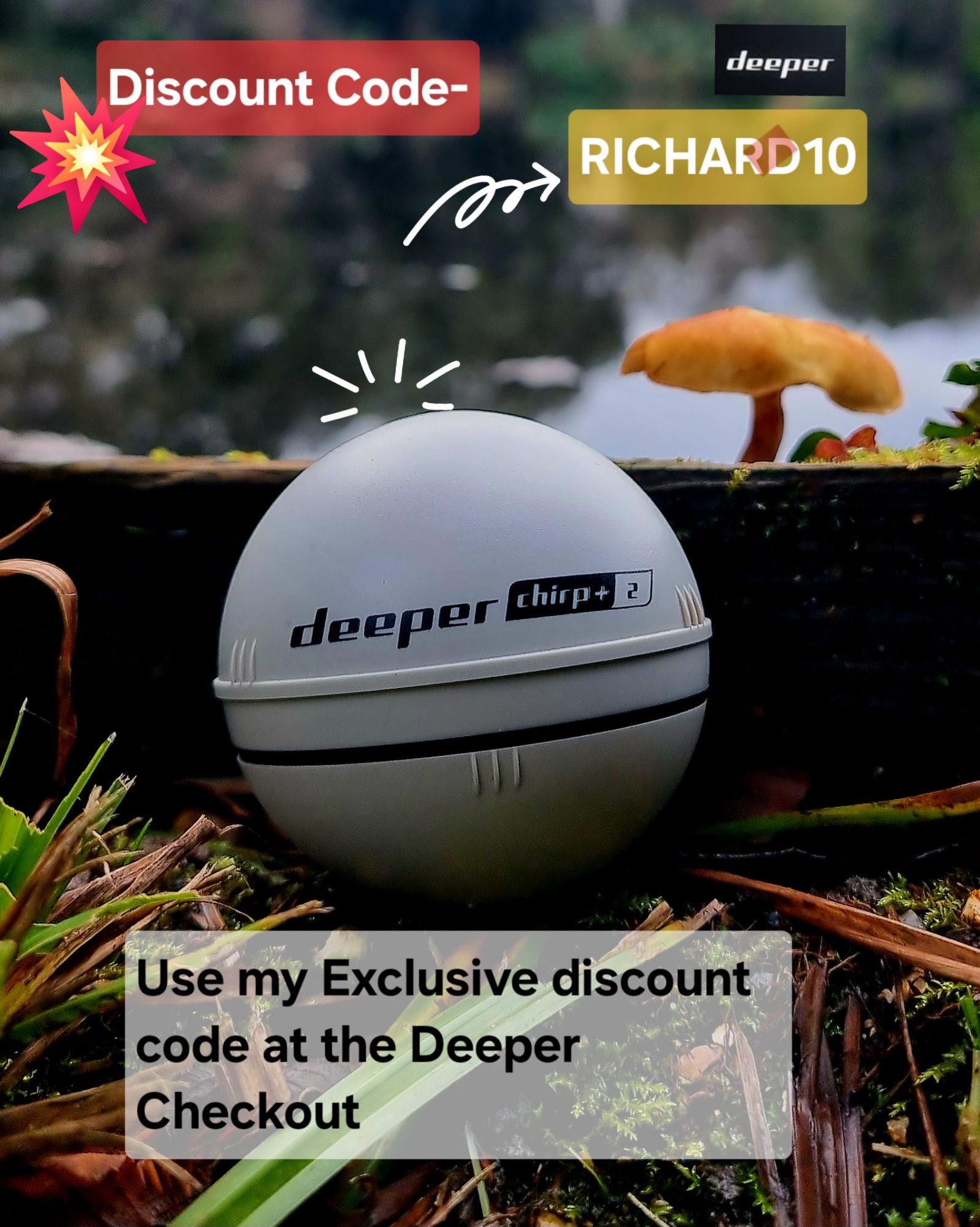
Fish Deeper Premium 10% of Code- Richard10
-

-

Deeper Sonar

-

Scruff’s Carp Leads

-

Navigation Menu
- Otters – The Good, The Bad And The Ugly
- A lucky night out!
- Big Lake Scenic Galley
- Inland Sea Scenic Galley
- Inland Sea Scenic Galley
- Florocarbon Line
- 10 Winter Carp Fishing Tips
- My Time On The Big Lake
- 2015 Vlog
- My Quest for A 30+ Common Part’s 1 – 5
- 2015 Carp Galley
- The Meadow
- The Airfield Lake
- Lakes
- Hampshire Avon Trips – 2015 – 2016
- 2015 Catch Report
- Pike Gallery
- Carp Safety & Photographing Fish
- 2016 Vlog
- 2016 Catch Report
- Spomb Phenomenon!
- 2016 Fish Gallery
- Pre Baiting Campaign’s Spring & Autumn
- .Uk Carp & Coarse Fishing Tips
- Observation
- Margin Fishing – The Forgot Spots
- My Profile
- Why the perfect capture shot?
- Lake Views
- Stix & Bag Mix
- Pike Safety & Photography
- 2017 Catch Report
- 2017 Fish Gallery
- 2017 Vlog
- Which Lake Is Harder, That the ?
- Bivvy Upgrade Time – Aqua M3 Compact
- Fox Warrior + Range By Tackle Fanatics
- 2018 Fish Gallery
- 2018 Vlog’s
- 2018 Catch Report
- Stick Mix & My Thoughts
- Observation Is The key To Success
- Keeping Warm In Your Bivvy
- How To Enjoy A Winter’s Night
- Hidden Features
- Total Fishing Tackle Shop on eBay
- In Search Of The Unknown
- Hooked Tackle eBay shop
- Local lake’s – Hampshire
- Todber Manor Fisheries – Ebay shop
- The Everyday Angler: Balancing Life and Fishing
- Beginners Guide To Carp Safety
- Rediscovering the Power of the PVA Bag
- One Of Those Nights
- My Ebay – Carp-Tackle-Supplies
- Don’t Panic or Despair
- Carp-Tackle-Supplies
- 12 Important Steps For An Easy Fishing Life
- Lockdown on the Airfield Lake: A Year of Challenges, Discoveries, and Memorable Catches
- Fox Bivvys
- Why The Green Eyed Monster?
- Carplife
- Nutrabaits
- Lazy Fishing
- Bait vs Tackle???
- .2026 Carp Gallery
- .2026 Catch Report
- Fishing Rubbish
- .2026 Video’s
- Quick night or not!
- End Tackle
- Best features to target when carp fishing
- Jurassic Particles
- Glugged & Hardened: Engineering Maximum Attraction with Nutrabaits Hookbaits
- Baiting Pole Tips
- Pink Pepper Power
- Hook Bait Boosting
- Deeper Pro Plus – Does The Business
- Fishing TV Carp Channel
- Baiting Approach
- Blank or Catch an 8 lber?
- Fishing Tv – Saltwater Latest Releases
- Carp Welfare and Being Prepared
- Fishing Tv – Planet Fish Channel
- My Approach to 2026
- Looking Ahead to 2026
- Fishing Tv – Coarse and Match
- Too Much Bait In Winter??
- .2019 Fish Gallery
- Fishing Tv – Fly Channel
- 2025 – A Year of Substance, Not Noise
- Godman Angling
- .2019 Catch Report
- NiteGlow Carp Products
- Fishing Tv – Predator Series
- Deeper – Chirp+
- .Vlog’s – 2019
- NiteGlow Carp Products UK – eBay Shop
- Deeper Spark
- Lidsters Fishing Supplies
- Short Session Fishing-Deeper
- Hobo Armour
- Ten Years on the Bank
- Bivvy Heater – Bring On Winter
- Memories of an old fisherman
- .2021 Fish Gallery
- .Vlog’s – 2021
- .2021 Catch Report
- Winter Club Lake Fishing
- .Vlog’s – 2020
- .2020 Catch Report
- .2020 Fish Gallery
- After The Unknown
- School Lake (Embely Park Lake)
- My Journey Through The Old Skool Days
- You can’t stand still (food for thought)
- Why Compare Yourself To Others?
- Looking Back Over The Years
- Fish Deeper Premium
- Mobile Phone Photograph Tips
- Getting the best out of your Deeper Sonar
- Wallop Clothing – Shop
- .Nutrabaits – The story
- Just One Rig For Me
- Rob Nunn Reel Servicing And Repair
- .2025 Video’s
- Wallop Clothing
- .2025 Carp Gallery
- Wallop Clothing Shop
- .2025 Catch Report
- .2024 Catch Report
- Deeper Squad Page
- .2024 Video’s – Part – 1
- Deeper Sonar Discount Page
- .2024 Carp Gallery
- Deeper Sonar – Quest Bait Boat
- Deeper Sonar – Accessories Discount Page
- .2024 Video’s – Part – 2
- Bait and Things
- How Fishing Saved Me
- My Love For Carp
- Getting Yourself Ready For Winter
- Comfort over too much kit.
- Less kit and no carryall
- Trying To Fish Light!
- Mixing it up
- Hook Sharpening
- Being Prepared
- Why I Don’t Use A DSLR Anymore
- 2023 Video’s
- The Birth of the Combi Rig
- PREPARING FOR SPRING AND NEW CHALLENGES
- The History Of The Airfield Lake
- Boulders and Trees
- .2023 Carp Gallery
- Tackling Minds
- .2023 Catch Report
- Fish Deeper Premium Gift Card
- Roach Pit
- .2022 Catch Report
- Autumn on the Airfield Lake Part 1
- Autumn on the Airfield Lake Part 2
- Autumn on the Airfield Lake Part 3
- MOTION SENSOR – LED BANK LIGHT
- Autumn on the Airfield Lake Part 4
- Winter Carp Fishing
Watch My Adventures
Fishy Tales & Stories Podcast

-
Join 14.1K other subscribers
- Follow UK Carp & Coarse Fishing on WordPress.com
-

Twitter Updates
Tweets by richard_handel-

-

-

-

-
One-TimeMonthlyYearly
Make a one-time donation
Make a monthly donation
Make a yearly donation
Choose an amount
£5.00£15.00£100.00£5.00£15.00£100.00£5.00£15.00£100.00Or enter a custom amount
£
Your contribution is appreciated.
Your contribution is appreciated.
Your contribution is appreciated.
Top 10 Website Award

Watch Fishing Tv

-

-
One-TimeMonthlyYearly
Make a one-time donation
Make a monthly donation
Make a yearly donation
Choose an amount
£3.00£9.00£60.00£3.00£9.00£60.00£3.00£9.00£60.00Or enter a custom amount
£
Your contribution is appreciated.
Your contribution is appreciated.
Your contribution is appreciated.
-

-
Gousto Promo Code - RICHA45281673


