It’s been nearly a week since I last fished (sounds like an AA meeting!). If you follow my blogs, that’s like a lifetime in my case. I just couldn’t squeeze a day or a night in.
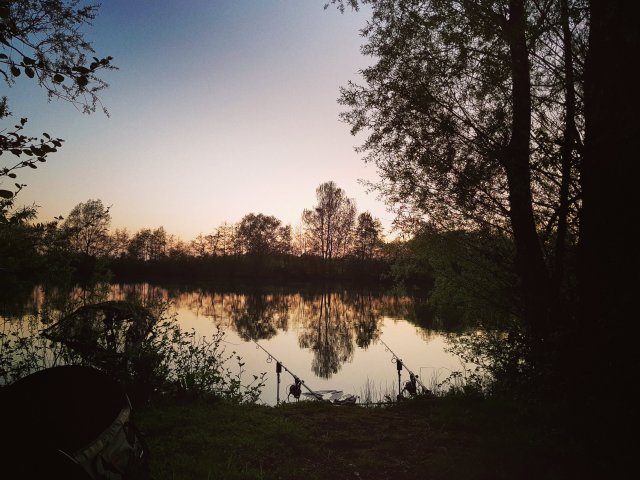
I am lucky enough to fish a Syndicate where it’s managed very well with the number of anglers. As when I arrived (just after 1930) on a bank holiday weekend, there were only 6 other anglers on the complex. I ended up with the middle part of the water all to myself.
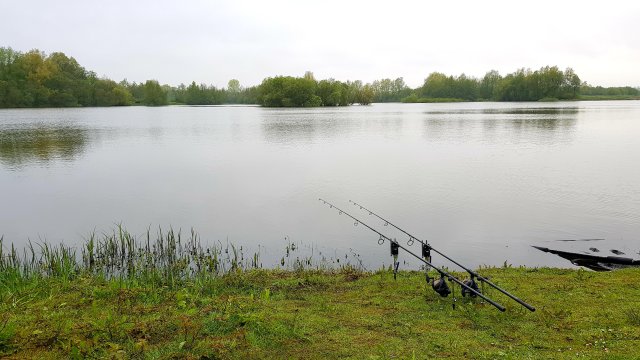
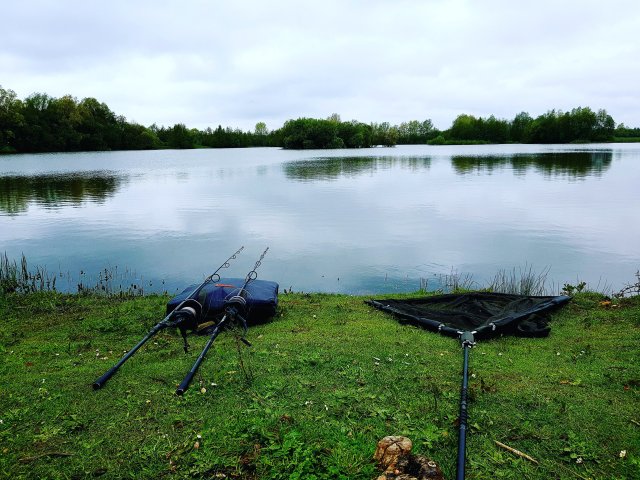
I have fished this swim before and normally fish the area from a different angle (from another bank). I just fancied giving it another go with a different approach, we shall see how the night pans out.
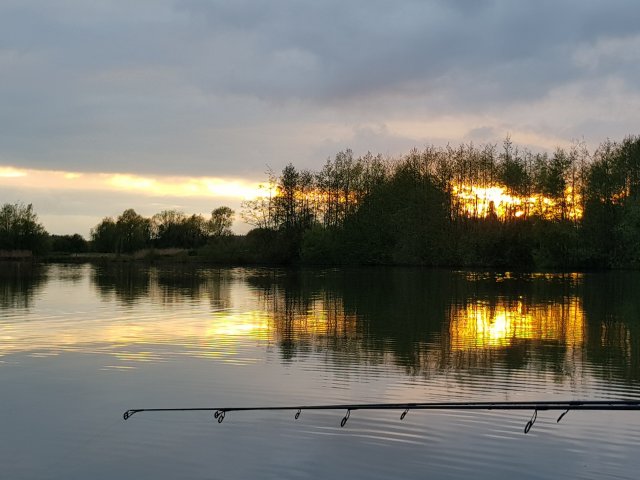
I was a very peaceful night and a fresh misty morning.
Error
This video doesn’t exist
Unfortunately, it was a very quiet night on the fish front as well. The temperature was rising nicely and I think the carp will be spawning over the weekend.
I am over the moon to have an article in such an iconic magazine. The downside is that I’m now an old-school angler! I have probably forgotten more than I can remember these days.
The magazine will be out in the shops in a couple of weeks.
Over the years that I have been carp fishing, I have seen some funny phases. When I first started, it was very secretive, but other angers would have the decency to talk to you and be very polite and ask you to leave the swim before they baited up or cast out again. Even to the point of casting in the wrong area until you had gone. Back in those days (what a line!) no one would set up anywhere near you and if so, they would have the decency to ask if they could do this.
Then came the stage, that anglers would not talk to each other. They would just hide in their bivvies’ or just point blank ignore you. This then moved on to the set up anywhere and cast anywhere brigade.
Anglers have started to reserve swims, which I can see the point of this. As 30 years ago, there were very few anglers and you could spend all day looking around with not even the hint of another angler.
Nowadays, you pull in most lake car parks and you can be followed in by 2 more cars. Getting back to the point, I have seen buckets put in swims for 2/3 hours, which is NOT acceptable in this day and age. Having found the person who owned the bucket and made inquiries re the bucket, I was told his mate was down later and wanted to fish near him (was he scared of the dark!?), he arrived 4 hours later. I have even seen a row of buckets & a chair once (is it beating the Germans to the sunloungers syndrome?).
I have also been told by a person who set up next to me on an empty lake that he fished this swim every Thursday night (even if the fish are topping round the corner?). After a bit of a heated chat, he thought that it was a good idea to move swim and even up the odds a bit.
I have also found that is very hard to even get a swim on some of the circuit waters, nowadays due to the volume of anglers. Which is why I have stuck with small syndicates & club waters for the Winter when most stay at home only coming out on sunny days.
What I do on lakes that have a secure car park, is to have a walk around with my bucket and place in the most likely swim, based on past trips in the weeks before. I then carry on with my wheelbarrow until I find a better one then go back and collect the bucket. This process only takes about and hour or less. Now, if you have the luxury that you have the place to yourself the ‘worlds your oyster’.
I know I have got a bit demoralized with carp anglers due to the above. And moved back onto the rivers where its a pleasure to fish and other anglers are very courteous to each other (and helpful).
This page is all about thinking of other anglers before you set up. Most lakes I fish anglers leave one swim apart and do not fish opposite to each other. This is just an unwritten rule and it works well. On the syndicate that I am a member of on the river Avon, people will not fish within a 3/4 of a mile.
its so peaceful
My point in this page is to think of other angler and also yourself and enjoy the peace and tranquillity of Fishing
A great way to introduce bait accurately and efficiently, many carp and specimen anglers would be lost without their spods and other devices. But there’s so much more to feeding your swim than chucking in a load of bait and waiting for bites.
From a few pouchfuls of maggots to several kilos of pellets or boilies, there are many ways to do it. Getting it right could be the difference between bites galore and a big fat blank. This month, Dominic Garnett and Andy Parkinson present a handy guide to using spods, spombs and airbombs to best advantage.
What is spodding?
A spod is a special bait-dispensing device, designed to be cast using a rod and line. It’s a cylindrical container with dart shaped fins for accuracy. Fill it with boilies, particles or whatever bait you’re fishing with, before launching to the area you intend to fish. Upon landing, the buoyant nose of the spod rises to the surface, tipping out its goodies in seconds. With practice, and the right gear, it can be great way to bait up.
However, we should also mention a couple of other devices here. The spomb is a great alternative. Rocket shaped and enclosed, it releases bait on impact. Meanwhile, there’s also the new TF Gear Airbomb to consider. Again, a rocket-shaped profile allows the Airbomb to reach huge distances, but this clever piece of kit is designed to open in mid-air, when the angler brakes the cast.
Whichever device you choose, the same tips and principles will apply. For example, the tackle used to cast several ounces of bait is similar whether you use a classic spomb or the latest device.
The pros and cons of spodding
So why use a spod, spomb or Airbomb in the first place? First of all, baiting up in this manner is accurate and efficient when it comes to any substantial quantity of bait beyond a few handfuls. Using a spod, it’s possible to add several kilos of bait in a matter of minutes, should you want to.
Another advantage is that you can bait up at longer range in a manner that can’t easily be otherwise achieved. Even with a powerful catapult, for example, your free baits would tend to scatter over a wide area at long range. The spod, on the other hand, can be controlled to land the same distance every cast, only discharging its contents right where you want them. And while you might be able to fire big boilies 100 yards out, the spod lets you feed even tiny morsels of bait, or those which are the wrong shape or too light to be launched big distances.
When to spod and when not to?
Just because you have the means to dish out a big hit of bait at 100 yards, it doesn’t mean you always should. Spods and larger spombs create quite a lot of disturbance when they hit the water. So when would you bother using a spod, when might you decide to leave it out, and when would an Airbomb make the best choice?
WHEN TO USE A SPOD OR SPOMB
When you can’t introduce bait by other means. For example, beyond throwing range.
When you’re expecting a lot of fish and want to bait up hard (a large shoal of bream or tench, or several large carp).
When you’re going to be fishing for a long time.
When fishing in deep water (8-10ft plus).
WHEN NOT TO USE A SPOD
When you’re fishing at shorter range and could throw or catapult your feed without the extra hassle and splash.
When you don’t need to introduce so much bait.
When you’re fishing in shallow water (margin fish don’t like a big spod crashing down!)
When you’re fishing a shorter session (a lot of bait can take a long time for fish to eat).
If the fish are fewer in numbers or easily spooked.
Your decision should be guided by the situation in front of you. If in doubt ask yourself two questions: Do I need to? Will it help make the job easier?
WHEN TO TRY THE NEW AIRBOMB
The new kid on the block has some definite advantages over its predecessors. The main difference is that the Airbomb opens above the water when the angler checks the cast, as opposed to dispensing bait on impact. Here are some scenarios when the Airbomb would give you a distinct advantage:
When you’re fishing shallower water or want to avoid scaring fish at all costs.
When you’re casting close to snags such as trailing branches.
When you want to loose feed with floating baits.
Equipment for spodding and spombing: Rods, reels, line, leaders
Casting a great big container full of bait is a punishing job. Sure, you can cast the smaller spombs or feeders on your usual gear. But for anything with a large payload (that’s any spod, larger spomb or the Airbomb), you’ll need to tackle up for the job. Too many fisheries have spods in trees due to ill prepared anglers!
Typically you’ll need a spod rod (or possibly a spare beachcaster or similarly tough rod), along with a meaty big pit reel. Load this with at least 30lb braid, very possibly with a50lb shockleader. This will help take the strain of each cast without that sudden sickening breaking sound as the line parts!
Tip: When using a shock leader for spodding, pay attention to where the knot goes. To have minimal impact on the cast, it should be positioned towards the bottom of the reel spool.
Choosing and loading baits
One key advantage to using a spod, spomb or Airbomb is that they will take any sort of bait. Tiny feed particles such as stewed hemp seed, wheat or micro pellets are a piece of cake – and you can now deposit these accurately at distances impossible by most other means!
However most carp anglers these days prefer a mixed payload, which gives carp and other fish a mix of bait sizes. It depends on where you fish and the species you target too. You may, for example, want to include some baits that are too big for roach, skimmers and other fish to eat. Cost is another consideration, with most of us opting to flesh out the more expensive baits like boilies with cheaper bulk feeds (like vitalin, brown crumb, stewed wheat or beans, frozen sweetcorn etc).
In many ways, a mix of bait sizes also helps with the spod or spomb too, because smaller offerings and groundbait such as fishmeal based crumb are ideal for filling the gaps left by larger baits. In fact, a good way to avoid spillage on the cast is to top each spod-load of bait with a layer of groundbait or sticky pellets. This keeps everything stuck down tidily.
Spods are a simple case of fill it up and cast. Spombs, on the other hand, have a special opening and closing mechanism. They need loading carefully, so as not to get in the way of the trigger that opens everything up on impact with the water. Done correctly, this makes for an extremely safe and accurate way of delivering bait into the swim (and the spomb also dives less deep and is much easier to retrieve than a spod).
LOADING AND USING THE AIRBOMB
When it comes to loading the new Airbomb, the principles are similar to the spomb. It’s a locking capsule, basically, so provided you don’t overfill it or gum up the locking mechanism, you can load it up however you like. It’s perfect for boilies and particles of all sizes. Here’s our quick video guide showing you how to set up your Airbomb.
The big difference, however, occurs on delivery because you empty the AirBomb beforeit hits the water. This is done when the angler brakes the cast by pulling back on the rod. This activates the trigger to open the capsule, releasing the bait in a controlled manner.
With practice you can get wicked accuracy and some different effects. You can release just over the water to land your feed quite tightly, for example, or higher in the air for a wider spread of bait. Indeed, on a lot of busy fisheries the carp can grow a little wary of super concentrated beds of bait.
How do I know which baiting device is right for me?
This could depend on several factors. The spod is simple and effective for great distances and deep water. The spomb is tidier though – and smaller ones are great for anglers who don’t want to fork out for a special extra rod. As for the Airbomb – well, you just have to try it! It’s a great way to deliver a large payload with the least noise and water disturbance – and it will easily fire bait into tricky areas under trees or other tight spots.
Don’t discount old school catapults and other baiting methods though; if your fishing tends to be shorter range, no problem. Our recent blog on feeding methods is well worth a look here!
Casting out with a spod, spomb or Airbomb
So you’re all tackled up and ready to cast out. What happens next? Well, the first cast or two can be where mistakes happen, so take time to prepare. Firstly, if you’re using braid, it will really help to wet your reel spool. Dry braid is more prone to catching the wind and tangling, so you want it to behave itself.
Start then, by casting an empty spod or spomb just thirty or forty yards and then literally dunking the reel in the water as you reel in under tension. This will help to get the braid damp and sitting cleanly on the spool. Even with mono, it’s worth making a couple of smoother, shorter casts and reeling in, just to ensure your line is laying evenly.
As for the actual cast, it’s a case of keeping it smooth and controlled. There should generally be around half a rod length “drop” between the spod or spomb and the end of the rod. Try to come straight overhead with power but no sudden jerk of force. In many ways, the cast is very similar to casting out a rig with a heavy PVA bag attached – smoothly does it! If anything, you can aim a little higher if you’re casting a spomb, because you want it to land nose first and open cleanly on landing. Of course, if you’re using an Airbomb you’ll want a more direct cast which you’ll need to “break” just before the area you want to target. The Airbomb will open mid-air and fire your bait into the desired spot.
To get your casts to land the same distance each time, you could measure the distance and use the line clip on your reel. Many anglers will literally pace out the distances on dry land. Simply walk in a line along the ground, or use two sticks as distance markers. This way, you can be sure that your spods of bait travel the exact same distance as your baited rigs. That said, you may want to allow slightly more distance to your rig because it will sink to the bottom, while your spod or spomb won’t.
Tip: Feather it down!
It’s easy just to lob out a spod and watch it go splat on the water. However, to make a little less commotion and prevent it from diving far under the surface on impact, try “feathering” the cast down. This simply means dabbing your fingers on the reel spool to slow things down as the cast lands, increasing control and lessening impact. It’s also a good habit to get into for casting leads and PVA bags.
For a quick, simple and visual guide to spodding use our infographic below:
Well, this was a surprise trip. After messaging Ian about not thinking I would be down the lake on Sunday night as the weather was looking rubbish. As luck would have it he was already there and with one of those begging texted to the wife, she gave me a weekend pass. I am off fishing for the weekend. My wife is so understanding. (I love you).
With my swim already selected, my brain was working overtime thinking about the options I had and what strategies I would be using.
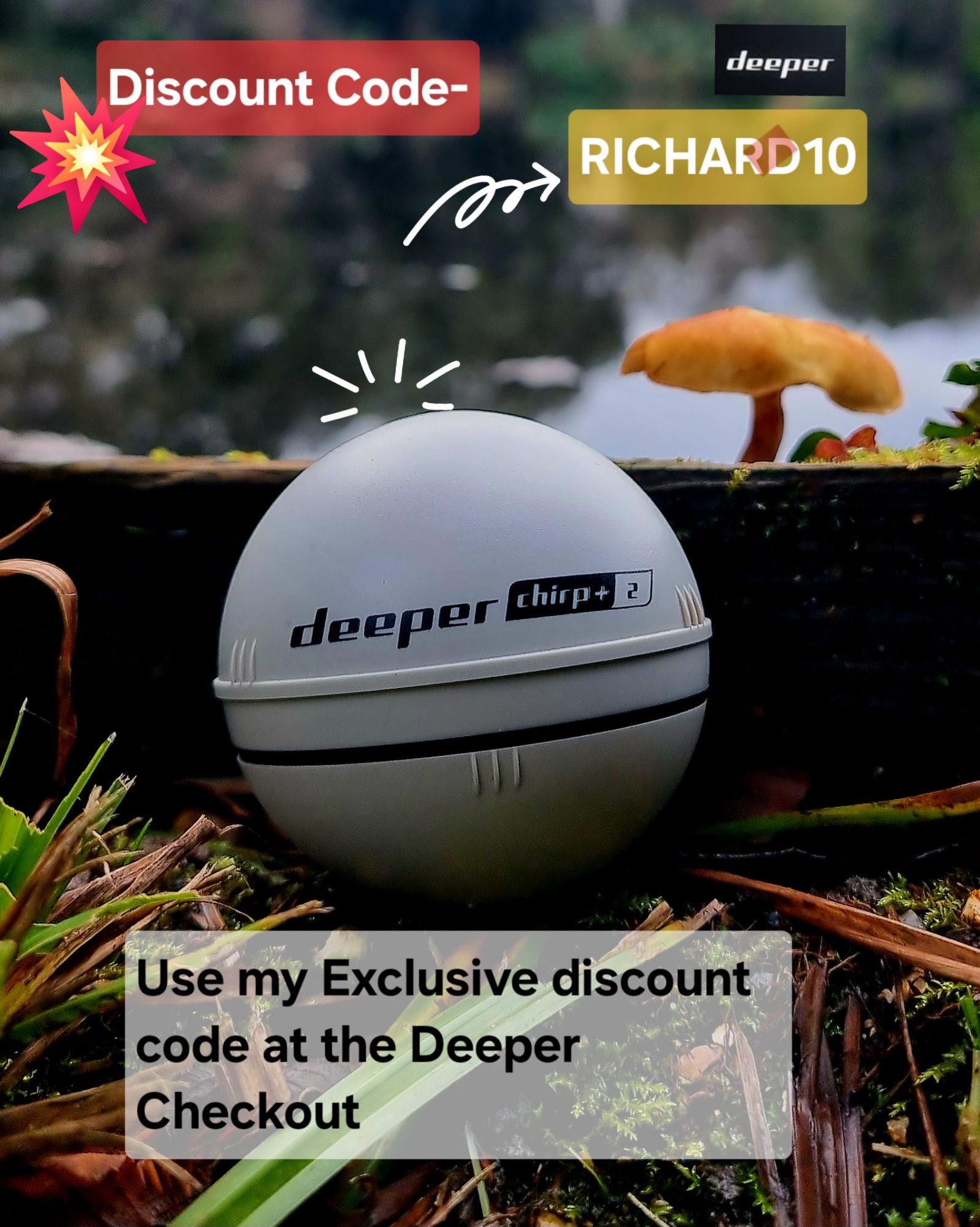
I opted to fish I couple of areas I had fished before, so I flicked the Deeper out to get the exact spot.
These two spots looked good and it was interesting to note the surface temperatures had dropped down somewhat.
I was still sticking with the Pva bag approach and catapulted some Smokey Jack boilies over the top of the bags.
The rain was supposed to have stopped in the early evening but it continued into the early hours of Saturday morning. So we sat on Ian’s nice new Aqua bivvy, chatted and had a few glasses of wine – not too many, as its never a good thing when you’re fishing.
The night passed without a touch, Ian had managed low double figures common before I arrived.
With the first signs of sun all day and probably for the next few days coming, it was very pleasant sitting out on the bank. That was until the silence was broken by my alarm, oh the joy of tufted ducks!
The night past with a single beep and that was that home time came all too soon.
I was still hoping for the last few minutes but no it’s a blank from me.






 A great way to introduce bait accurately and efficiently, many carp and specimen anglers would be lost without their