I have noticed over the years, that for some reason (or other) anglers will spend thousands of pounds on fishing tackle and then only a few quid on bait. Why I don’t know. As all of this expensive kit is sitting on the bank, but it will not put more Carp on the bank for you. The key to this is bait and attraction. I know non match angler’s don’t like match angler’s much, but folks, you are well and truly missing a trick. These boys & girl’s know how to go fishing and attract enough fish to win a match.
Now, if your sitting reading this on a day ticket water, aren’t you fishing a sort of match – against all the other anglers around you?? And if your reading this a lake by yourself, aren’t you fishing against all of Mother Nature’s food sources that are in the lake? So, why oh why, don’t you stick more bait out?
I am not taking boillies, that’s a small part of the puzzle. Get talking to the match anglers and understanding the art of attraction. Don’t feed the Carp from the get go, attract them at first, then feed them and hold them in your area. Why would they move off one feeding area to another (unless it smells and tastes better)? Just look at human beings, we have become addicted to fast food, sweet food etc – all the bad stuff and we know this and can’t stop ourselves. Now, Carp are a bit different I know and not as stupid as us, they understand what their body needs are and will be picky, however it can be done.
Don’t go cheap on the attraction, you see all these articles and videos of anglers pouring in a whole bottle of liquid attraction to their ground bait mix. There is a reason for this and it’s not all about selling it to the everyday angler (which I am). It does actually work and that’s the real reason. So, next time you are in the tackle shop spending 400 quid (but don’t tell the Mrs the real cost) on a new bivvy, ask yourself, should I not be spending less on the bivvy and more on the bait? Do I want to catch more Carp or be more comfortable on the bank and look good with the latest bivvy? The answer is up to you.
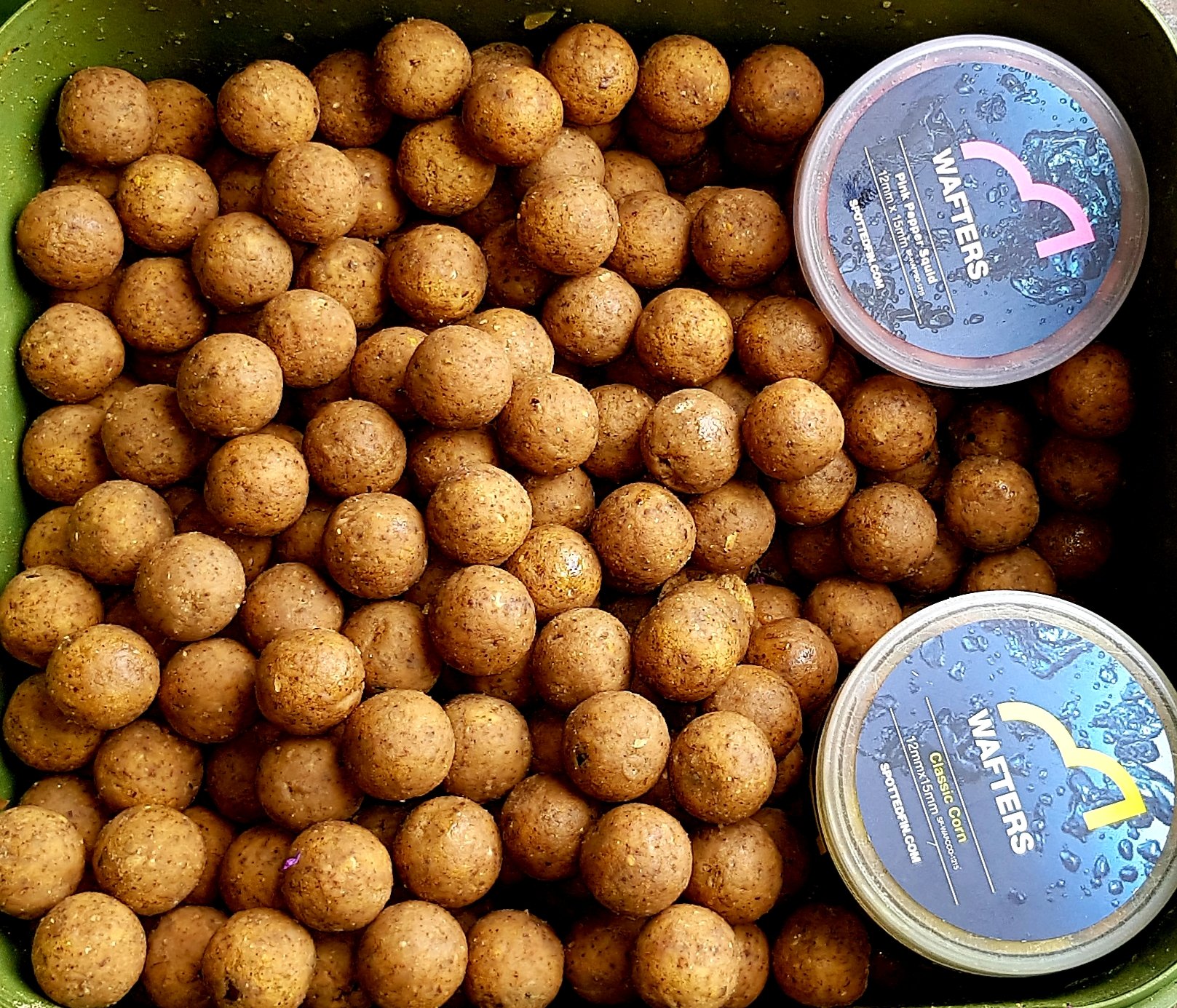
To mention only one of these types of company, Spotted Fin is a perfect example of a company who spend thousands of pounds on research and testing on attraction and ground bait. The reason I mention this company is their main area is Carp & Match fishing and has been for years. So you would think they would have the upper hand in that area of the bait industry. Which I can assure you they do.
“Mastering Mobile Photography: Tips for Stunning Carp Shots”
Introduction: In the ever-evolving world of carp fishing, capturing the essence of your angling triumphs through photography has become an essential skill. In this guide, seasoned angler Richard shares his insights on mastering mobile photography, offering practical tips for taking remarkable carp shots. Whether you’re a solo angler or simply looking to streamline your gear, Richard’s approach provides a simple and effective solution for creating memorable fishing memories.
Section 1: “From DSLR to Mobile: A Gear Revolution” Richard reflects on his journey from using bulky DSLRs to embracing the convenience of mobile photography. Recognizing the high megapixel capabilities of modern smartphones, he emphasizes the potential to capture stunning images without the need for elaborate camera setups. The transition from traditional tripods to mobile-compatible versions marks a significant gear revolution that enhances portability and efficiency.
Section 2: “Optimizing Tripod Setup for Fish Photography” Guiding readers through the tripod setup, Richard highlights the importance of positioning and angle adjustments. By centralizing the camera and aligning it with the unhooking mat, anglers can achieve a balanced composition. Practical tips for finding the ideal distance and testing angles ensure consistent and visually appealing results.
Section 3: “Test and Practice: Refining Your Photography Skills” Acknowledging the learning curve of mobile photography, Richard encourages anglers to test and practice before capturing their prized catches. Understanding the nuances of distance, angles, and composition contributes to a more efficient and enjoyable photography experience. The guide emphasizes the value of continuous improvement through experimentation.
Section 4: “Real-Time Photo Checks: Avoiding Post-Catch Regrets” In this section, Richard introduces a crucial habit – checking photos in real-time before releasing the fish. Drawing from the frustrations of film camera days, he advocates for immediate review to ensure the quality of shots. This proactive approach prevents the disappointment of discovering subpar photos after the fish has been returned to the water.
Section 5: “Simplify Video Editing for Engaging Blogs” Transitioning into video, Richard shares insights into simplifying the editing process for blog content. By recording the entire fish-handling process and later selecting key moments through screenshots, anglers can streamline their video creation without compromising quality. This technique provides a versatile and efficient alternative for documenting fishing adventures.
Section 6: “Facing the Camera: Self-Capture Techniques” Richard’s big tip introduces the advantages of facing the camera towards oneself rather than relying on selfie mode. Exploring the benefits of this approach, he offers practical guidance for achieving more authentic and visually pleasing self-captures. This valuable tip enhances the overall aesthetics of mobile photography.
Section 7: “Streamlining Kit: Single Bank Stick and Adapter” For those seeking ultimate simplicity, Richard recommends reducing mobile photography gear to a single bank stick and adapter setup. This minimalist approach minimizes the need for additional bags and ensures a quick and hassle-free process when capturing carp shots. Practical advice on using a bank stick and adapter further simplifies the angler’s kit.
Conclusion: As Richard wraps up his guide on mastering mobile photography, he leaves readers equipped with valuable tips for elevating their carp fishing documentation. From optimizing tripod setups to simplifying video editing and embracing self-capture techniques, this guide empowers anglers to capture stunning visuals with minimal gear. The evolution from DSLRs to mobile phones marks a new era in fishing photography, allowing anglers to focus more on the artistry of their craft.
May your shots be crisp, and your memories even clearer, Richard
For many years I’ve been trying to fish with less kit, this has been a hard task at times especially when the car can be parked so close by. This makes it quite easier to do a couple of trips to and from the swim. Also, being lucky enough to fish secure locations helps a great deal. When I was younger, the barrow was sky high with kit and I would sling a rucksack on your back, but with age, this is becoming harder. I fished a stretch of the Hampshire Avon about 10 year’s back where you could fish night’s, use three rods and stay for a few days. I now can’t imagine how on earth I carried all that kit in one go. There was no going back to the car and getting the rest of the stuff after walking over a mile. You couldn’t just leave your stuff there as the cows would have probably trashed it and there was no where to stash it safely, because it was so open.
My gear was trimmed down, but I could carry so much more, there was no opportunity to barrow it, so I just hauled it all in one go. But then I moved on to the lakes again after the carp and the ability to park close by. The tackle levels grew again, which was fine for a few years until I needed to start doing two trips backwards and forwards to the car. Again, it was ok at the time, except when it was raining. A couple of the swims on the lake, you could load the car directly from the bivvy, which is great, but also encourages you to take yet more kit and moving swims soon became a thing of the past. In conjunction with age (no doubt), the thought process that the carp aren’t far away and with the knowledge that moving swim doesn’t always pay off – unless they are really going for it (that’s for another article).
A few year’s ago, I started to limited the size of the bag (carryall) I took and simplify what I took to only what could fit in the bag. This sort of worked for a time, but extra kit would creep back and an extra bag would end up on the barrow at some point. Then another cut back would be needed. One issue that needs to be taken into account; the older I get, the more comfortable I like to be. Gone are the day’s of fishing under a brolly all year around. I finally realised that being comfortable made me a better angler, simply because if I’m tired or cold I just don’t fish as well as I would do if I’m warm and well rested.
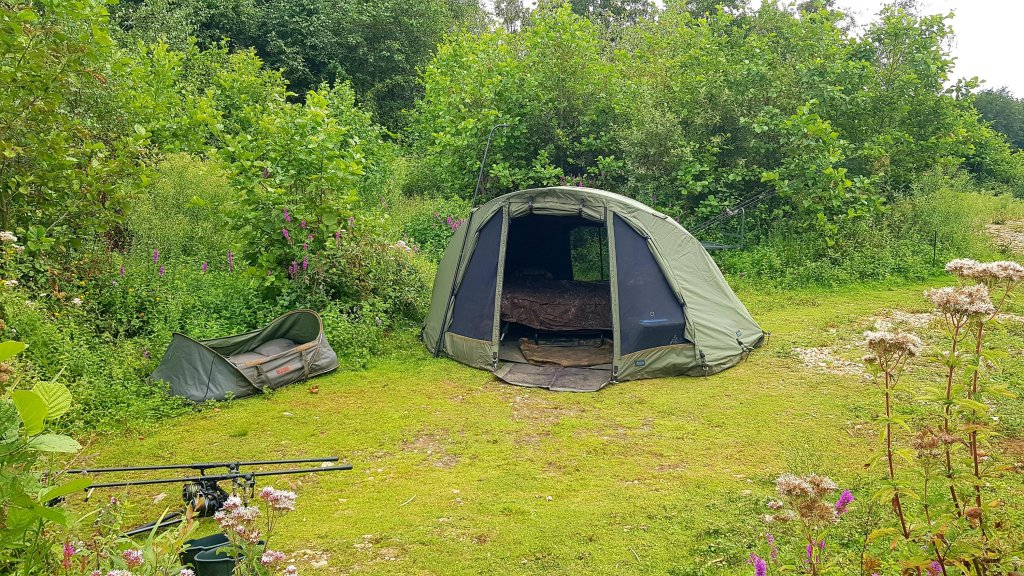
Comfort is a real must these days for me. I like to use a bivvy with an overwrap that extends the size of the bivvy enough to sit on a day chair and where possible I use a small two man bivvy in the winter. This makes fishing in these months a lot more productive, as I’m enjoying my time and not stuck under a brolly freezing cold – probably an age thing again!
This year with joining a new syndicate I had to really focused my mind on reducing my tackle down a lot more than I had done in the past year’s. I needed the opportunity to be able to move swim and do only one trip to and from the car.
This lead me to many months of trying to get the right balance between what I used and what was there for that ‘just in case’ moment. For instance, how many spombs do you need? For me, it can be all sizes, as I like to be prepared and there’s always that unfortunate chance you may lose one. I know is rare and you can leave any spares in a bag in the car tucked away out of sight. My spare kit bag on the car was born. I know I can’t get too carried away and end up with a larger carry all full of kit.
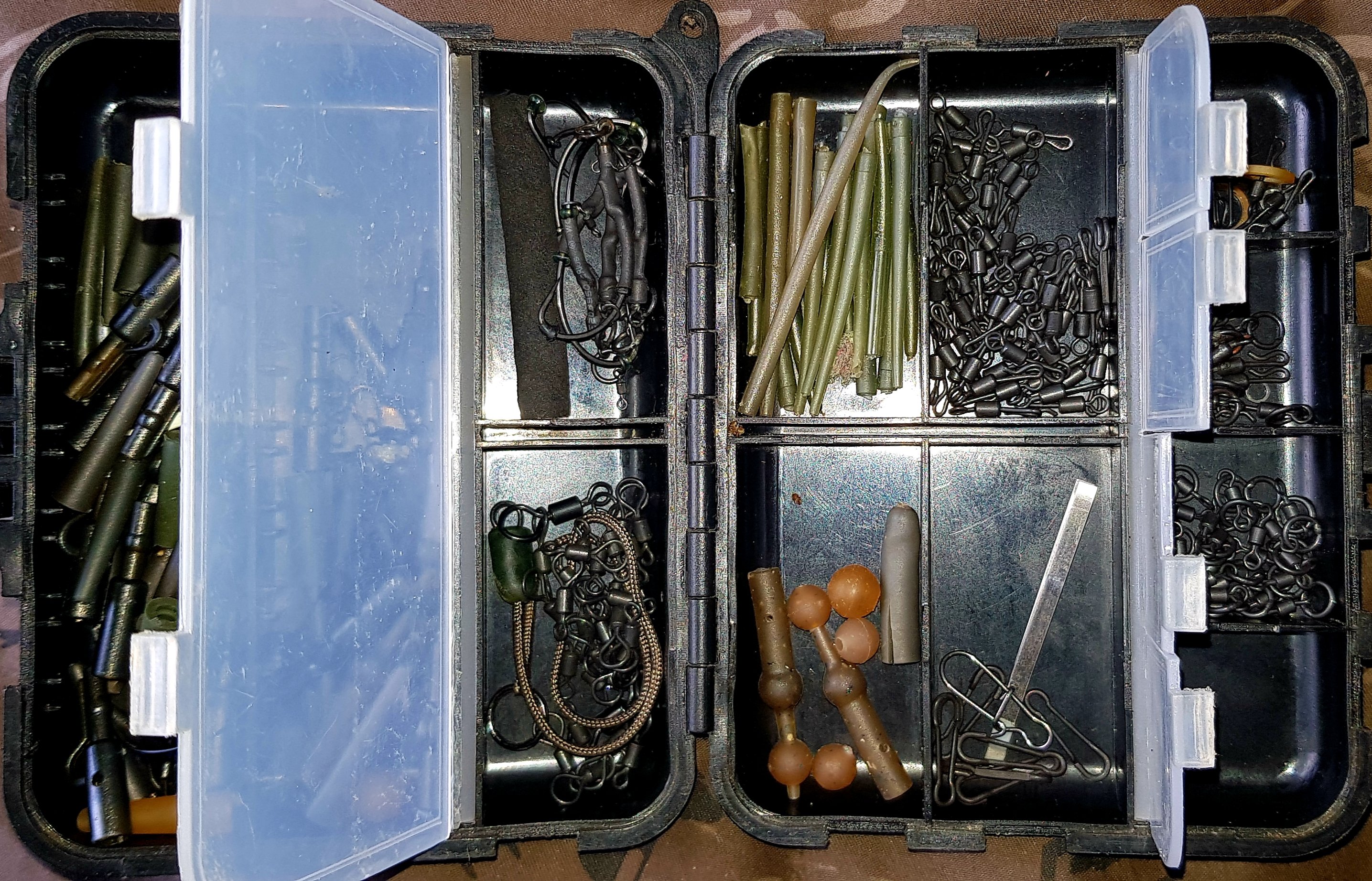
I started to break down how much of every bit of tackle that I take and I use regular. I then reduced the volume of each item, e.g. how much end tackle do you need? Leads are another thing I take to much of and spares can easily be in my car bag.
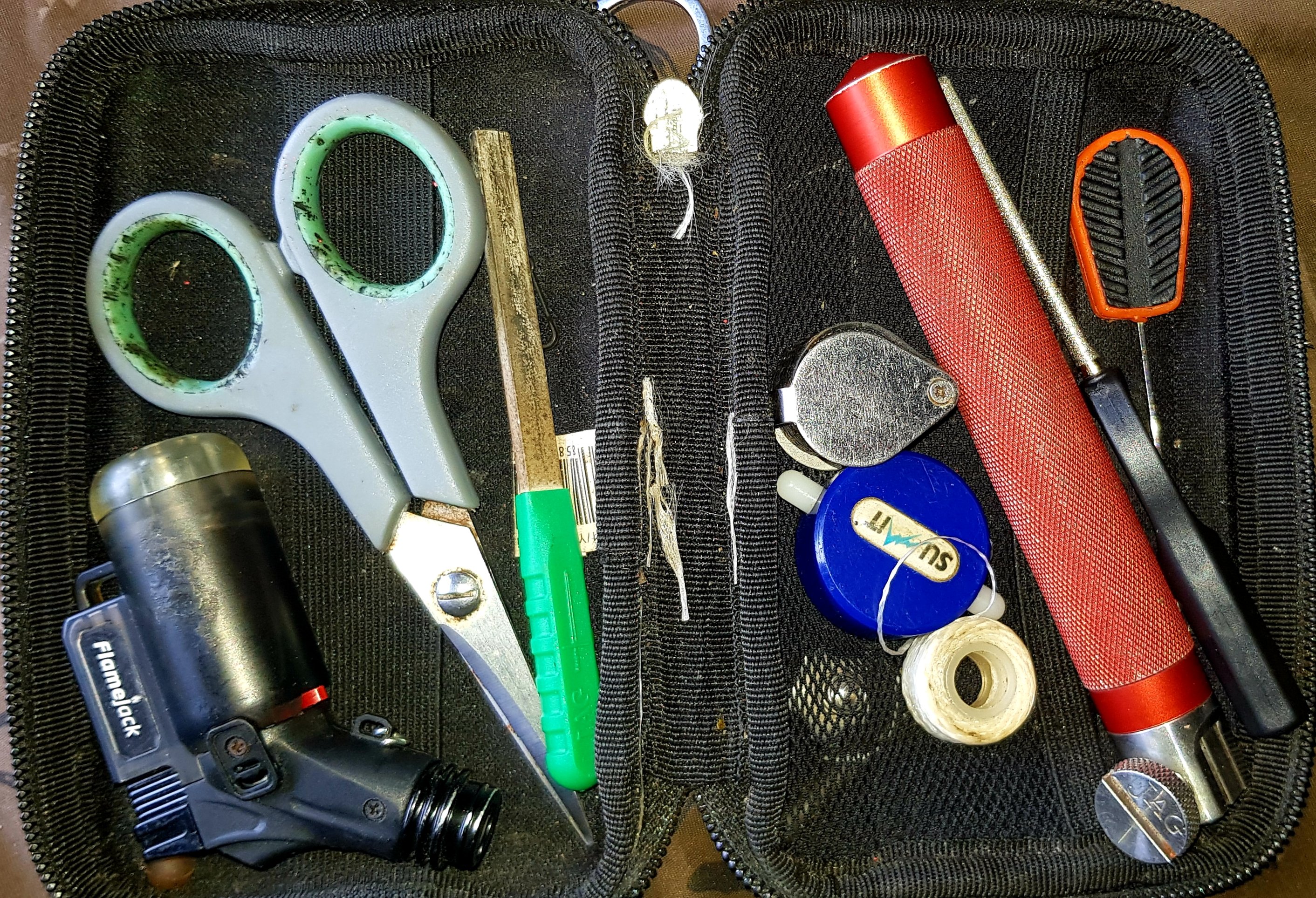
My tackle box was broken down into three separate boxes (bags), which for me makes it easier to use on the bank. I really only need the baiting up bag out, this makes packing up and moving swims a lot faster.
This just contains the essential items that I need to bait up and keeps things simple.
This bag contains the remaining essential items, plus my head touch and a battery pack changer and cables .
I deliberately reduced the quantity really low and had a lot stored in the car for a few weeks. I filtered out a lot more and surprisingly never needed anything, so, reduced down the bag in the car to a small one. I rarely need and could leave at home (and probably will do at some point). I don’t carry a rig board anymore, as I haven’t used one for years. I like to make a fresh rig when needed and I sharpen my hooks each time I bait up. I found that my rig board just got in the way and were always filled up with the wrong sort of rig that I needed at the time.
Hook baits were another thing I carry to many of and just don’t use them. Why would you, when you know that you have upmost confidence in what you are catching on? It would be different if you were on a new water or day ticket water.
I now only carry what I’m using and a couple of pots in the car just in case. Which, I’ve yet to get out. This all really goes to show, we carry way to much kit.
There is no way around the big items, such as bedchair, bivvy, sleeping bag, metal ware, rods and landing nets, which I carry two of due to fish care and that’s another blog all together. You can fit the the odd bit of tackle in bags and beds.
I like to use a fold away chair on my bedchair as my back can’t take sitting on the bed all day without it, this easily fits in the bedchair.
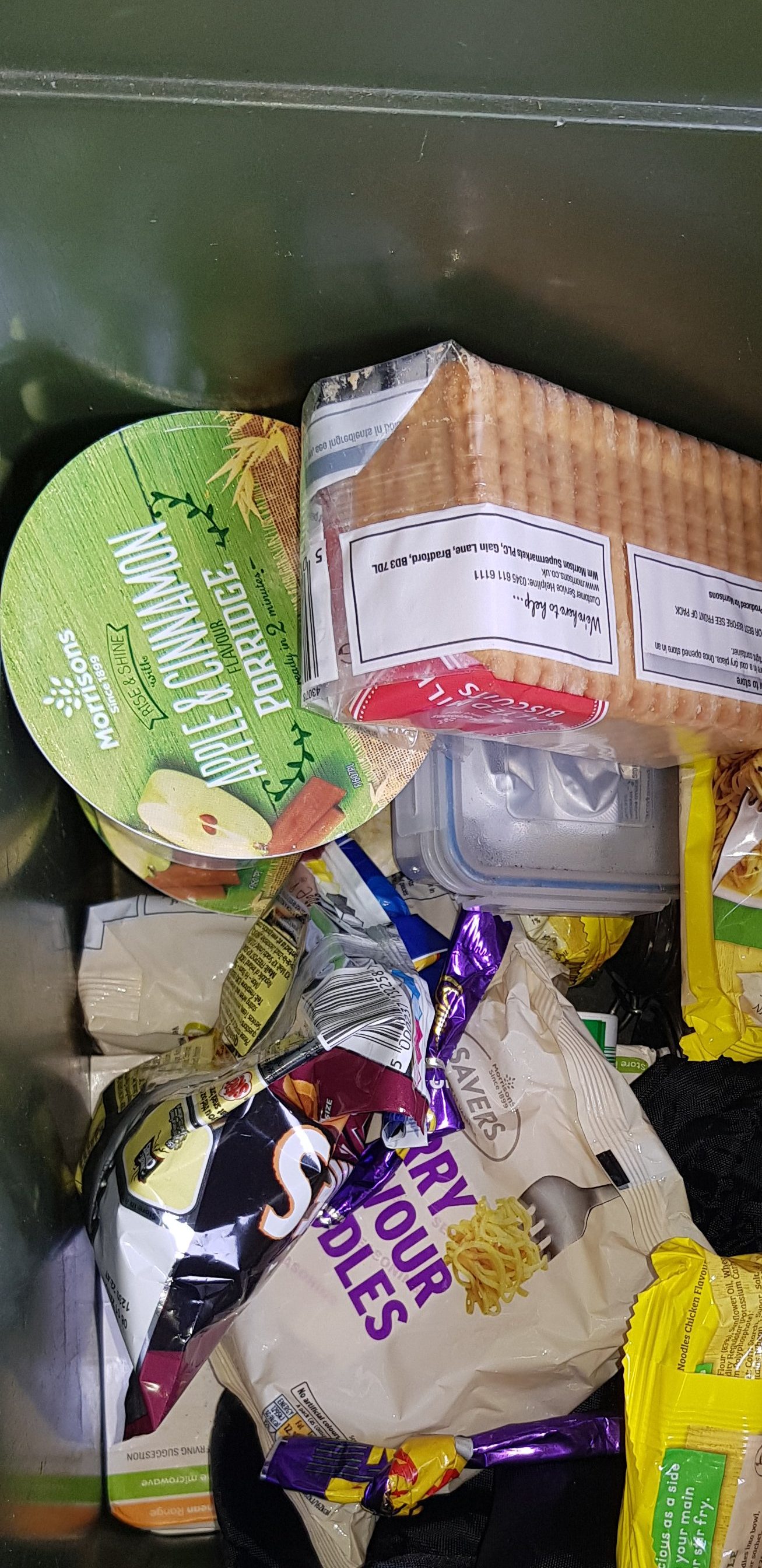
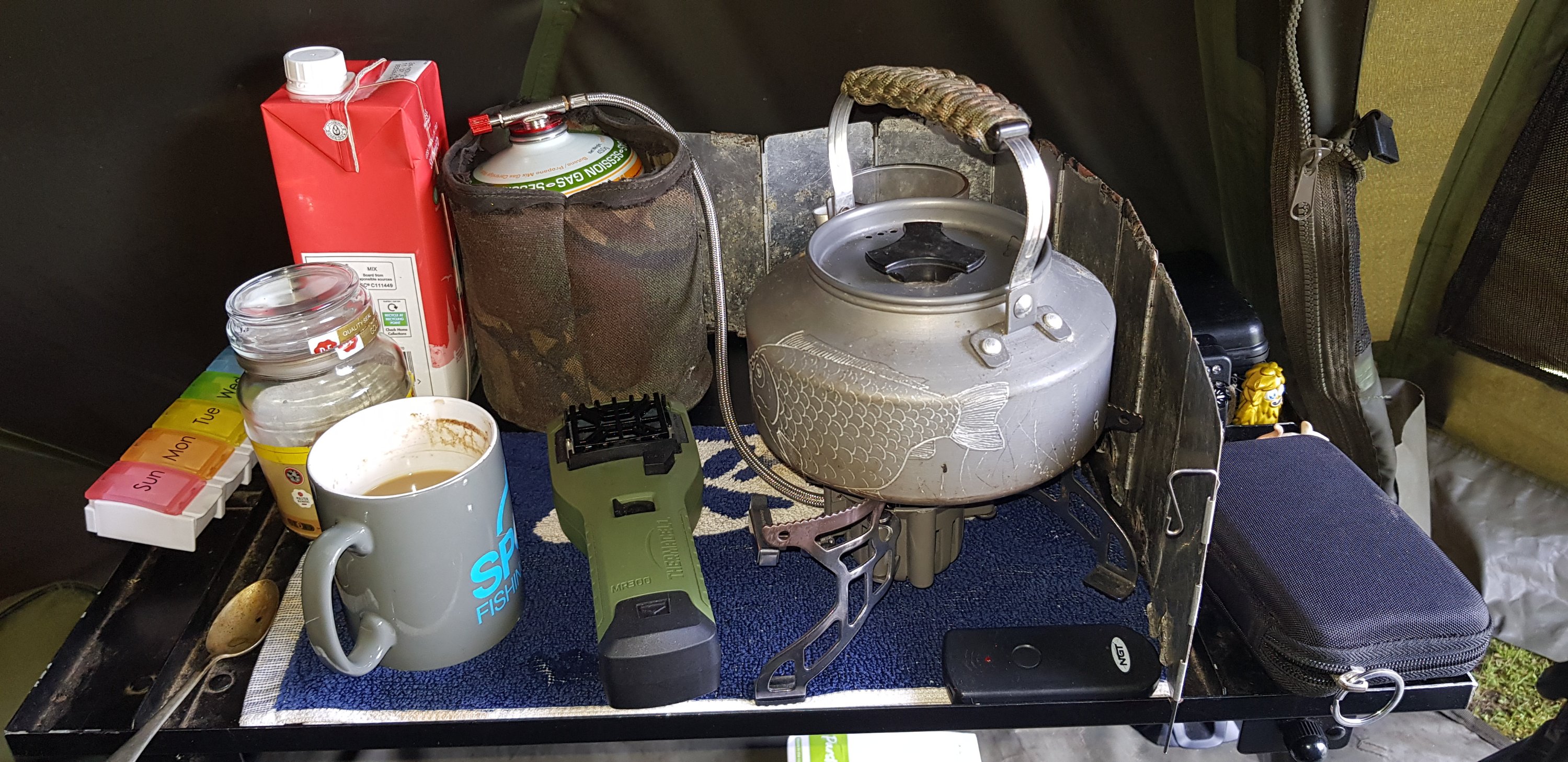
My cooking kit is kept in a Ridgemonkey bucket including all the food I’m going to eat.
If it doesn’t fit in then I don’t take it. I keep extra food (if needed) in the car. I’ve found a very good food company that make self life nice meals that can be stored with out the need freezing them, this simplifies things a lot. I like my noodles a lot, at one time I was into cooking some amazing meals on the bank, but these day’s I just can’t be bothered for a few night’s fishing. If I’m going for longer (as I do a couple of times each year), I have no other option than to bring a cool box, I’ve even started to drink black coffee to save on the weight of the milk, bit extreme but it all adds up.
Bait wise I only bring down to the swim what I’m going to use and if necessary I can go back to the car or pop by when its time to head to the toilet.
I have a barrow with a small bag, if there was the option for more panniers, I would simply overload it. It’s like a shed – the bigger the shed the more stuff you put in it, but if you had a smaller shed it would still be full up, but a lot less junk would be stored there.
Looking from the outside, it still looks like I carry way too much kit and I’m always looking at ways to reduce the amount of stuff I need. I’ve found that I don’t need the bag in the car after all, as I’ve never been to get anything from it. Which certainly goes to show that we all bring to much to the lake.













 UK Carp & Coarse Fishing