More Ramblings
I certainly believe there is such a thing as a nutritional edge in carp fishing, although I think it tends to be specific to individual waters. The reality is that there is something in every good bait company’s range capable of catching carp.
The real challenge is identifying what nutritional deficiencies exist within a lake and determining which essential nutrients the carp are not receiving from either natural food sources or the boilies being introduced by anglers.
From a carp angling perspective, solving this puzzle is extremely difficult because we rarely know exactly what carp are eating throughout the year, let alone the nutritional value of those food items.
However, there are several ways we can get closer to the answer.
1. Start with a nutritionally complete bait
Rather than trying to guess individual deficiencies, I prefer to use a high-quality boilie containing a broad range of proteins, amino acids, vitamins, minerals, oils and carbohydrates. The theory is simple: if the bait offers everything a carp requires, it becomes attractive not just through flavour but through nutritional recognition.
2. Study the lake’s natural food larder
Different waters offer vastly different natural food sources. A rich estate lake full of bloodworm, snails, mussels, shrimp and daphnia provides a much more balanced diet than a silty water with limited natural food. Understanding what’s available naturally can give clues as to what may be lacking.
3. Observe carp preferences
Carp often tell us a great deal through their behaviour. If they consistently choose one bait over another, despite similar presentation, it may indicate they are responding to nutritional signals rather than simply flavour. This is one reason certain food baits continue to catch year after year.
4. Consider seasonal requirements
A carp’s nutritional requirements change throughout the year.
- Spring – recovery from winter and preparation for spawning.
- Summer – growth and spawning demands.
- Autumn – building energy reserves.
- Winter – maintaining condition while feeding less frequently.
A bait that excels in one season may be less effective in another.
5. Pay attention to amino acids
Research has shown that carp can detect dissolved amino acids in the water. If a bait leaks a strong profile of free amino acids, it may signal a valuable food source. This is why ingredients such as fishmeals, milk proteins, liver products, yeast extracts and fermented ingredients have remained successful for decades.
6. Let the carp decide
Ultimately, the most practical solution is long-term observation. If a bait continues producing year after year, on different waters and under different conditions, there is a good chance it is providing something the carp value nutritionally.
In reality, I think this is one reason I’ve always had confidence in baits such as the Nutrabaits range. Rather than chasing the latest flavour or miracle additive, I’ve always preferred quality food baits applied consistently. Over time, the carp themselves become the best judges of whether a bait is offering something worthwhile.
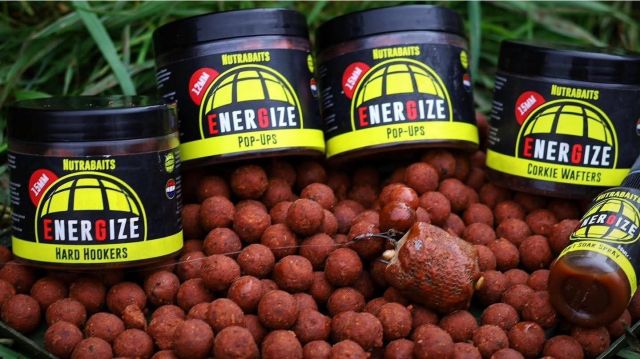
My top two Nutrabaits boilies have now become my top three following the release of the EnerGize Range.
For years, my go-to baits were the Big Fish Mix and Co-De. Both have accounted for plenty of carp over the years and remain firm favourites in my bait bag.
However, the introduction of the new EnerGize Range at the beginning of this year has really caught my attention. More importantly, it has caught me some lovely carp already, giving me plenty of confidence in what is a truly unique bait.
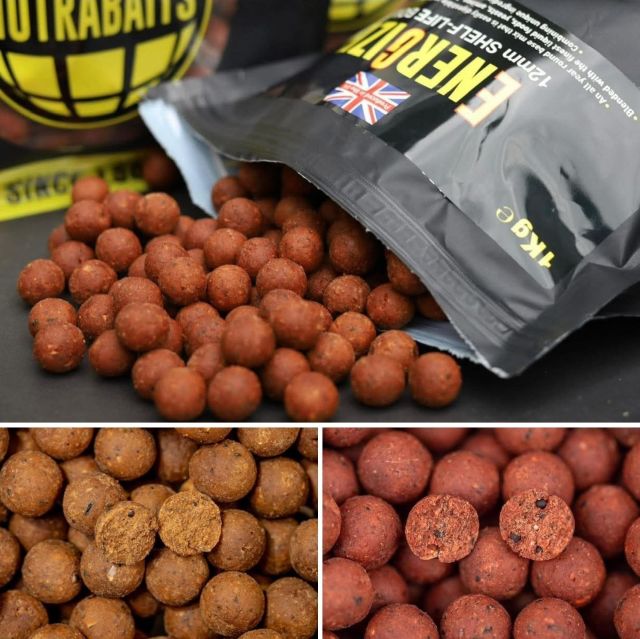
So, what makes EnerGize different?
It’s a hybrid bait built around a low-temperature produced meat meal originally developed for salmon and bass farming. This ingredient is packed with high-quality protein and a superb amino acid profile, making it a fantastic addition that carp seem to absolutely love.
To complement this, Nutrabaits have blended a selection of premium fish meals that work perfectly alongside the meat meal, creating an amino-rich foundation for the bait. Each ingredient has been included to provide the ideal balance of protein, solubility and digestibility.
The recipe doesn’t stop there. Human food-grade milk and whey proteins are combined with Sluis CLO, plus a carefully selected package of vitamins, minerals and natural emulsifiers, using only the finest ingredients available.
The result is a nutritionally balanced bait that is highly digestible, attractive and effective throughout all twelve months of the year.
It’s still early days for me, but EnerGize has already earned its place alongside Big Fish Mix and Co-De as one of my all-time favourite Nutrabaits boilies.
What Nutrabait say about EnerGize – Now comes a unique Nutrabaits spice blend that gives the bait a beautiful aroma and taste profile that you will find hard to put back on the shelf, and screams carp.
To finish off, we have the liquid food package, again rich in amino profile and high protein, along with the addition of our Garlic essential oil at a low level that gives a fantastic aroma and taste profile, which will catch big carp for many years to come.
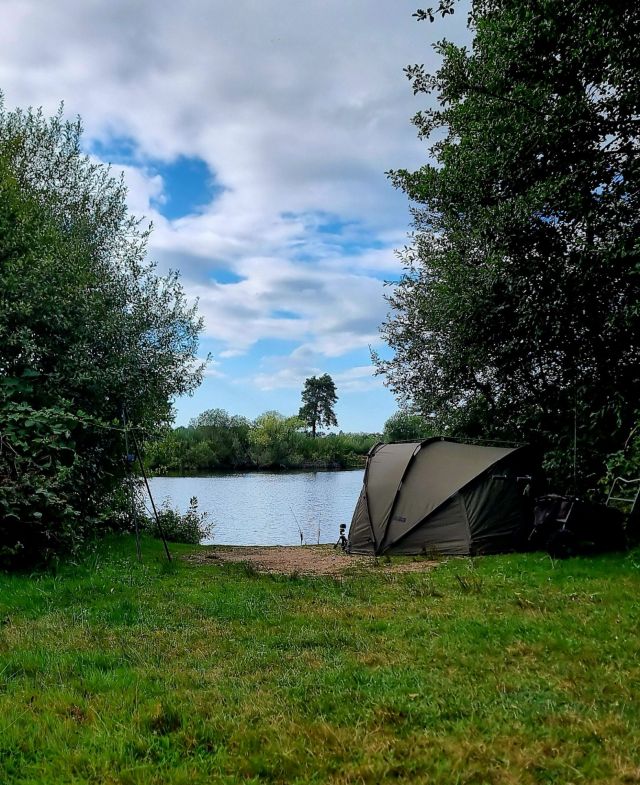
When buying bait, it’s been a legal requirement to display the ingredients used in bait for over 5 years, along with a few other requirements. Always check the labels.
The truth is that no angler can know every nutritional gap within a lake’s ecosystem. The closest we can get is providing a highly digestible, nutritionally balanced bait and then observing how the carp respond over months and years rather than judging it on individual sessions.
And perhaps that’s what makes the nutritional puzzle so fascinating.
If a lake contains very little weed and is dominated by gravel bars and silty areas rich in bloodworm, the carp’s natural diet is likely centred around bloodworm, insect larvae, snails, freshwater shrimp and other small invertebrates living within the silt.
Bloodworms are an excellent natural food source and rich in protein, but they are unlikely to provide a complete diet on their own.
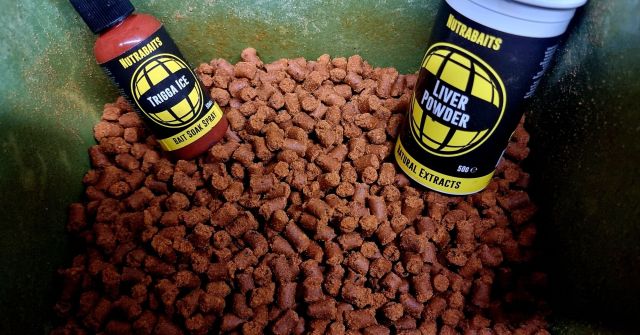
The question then becomes: what are the carp not getting enough of?
Possibly:
- Higher levels of oils and fats for energy reserves.
- Certain essential amino acids present only in low concentrations.
- Vitamins and trace minerals from a more diverse food chain.
- Digestible carbohydrates, which are often scarce in aquatic environments.
This may explain why quality fishmeal and bird food boilies have worked so well for decades. They offer a far broader nutritional package than carp might find naturally, especially in relatively barren lakes with limited weed growth.
What’s particularly interesting is that many anglers automatically reach for bloodworm-flavoured baits on bloodworm-rich waters. Sometimes that works brilliantly. However, there is also a strong argument for offering something different—a bait that complements the natural food rather than imitates it.
If carp are already consuming millions of bloodworms, they may be drawn towards a food source that provides nutrients they struggle to obtain elsewhere.
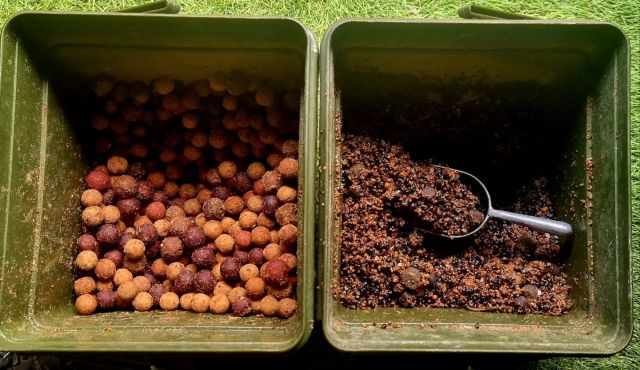
Given my own preference for observation and my experiences on Airfield Lake, I’m often torn between two theories:
Match the hatch
- Bloodworm.
- Liver.
- Fishmeal.
- Natural extracts.
Offer nutritional contrast
- Milk proteins.
- Birdfoods.
- Balanced food baits that provide something different.
The carp will soon tell you which theory is correct.
One thing I always look at is the condition of the fish themselves. If the carp are long and lean for their length, it can indicate a lake rich in natural food but lacking energy-dense foods needed to put on weight. If they’re deep-bodied and carrying plenty of condition, their nutritional needs are probably being met quite well already.
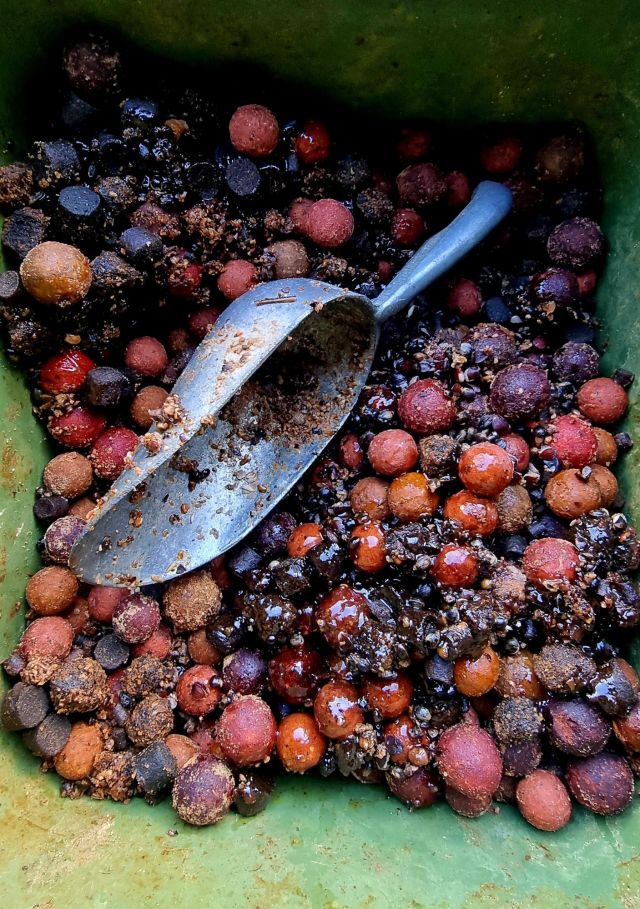
Another clue is where they choose to feed.
If carp spend much of their time head-down in soft silt, they’re likely exploiting bloodworm beds and other invertebrates. Yet many of the best captures come not from clean gravel, but from the transition zone where gravel feathers into light silt.
These areas offer the best of both worlds:
- The gravel provides a firm feeding area.
- The adjacent silt holds bloodworm and other invertebrates.
- Undertow and wind action deposit food along these edges.
- Carp can feed efficiently without burying food too deeply.
The fact that anglers often catch carp close to the gravel but in the silt suggests the fish are feeding confidently in the softer areas while using the gravel as a reference point. Many bites credited to a gravel spot are actually coming from a bait positioned just off the hard area in a couple of inches of soft silt.
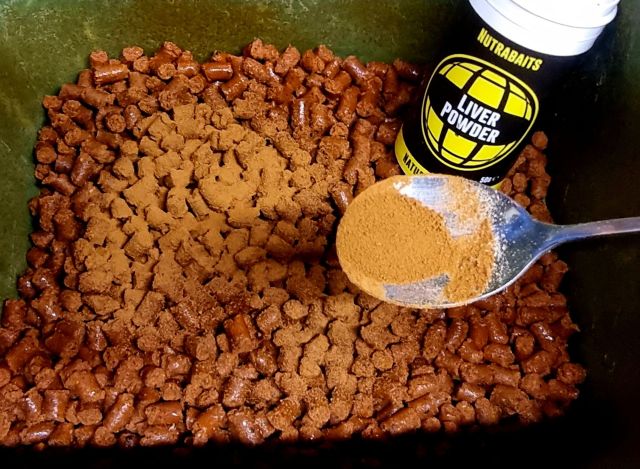
From a nutritional perspective, this reinforces the idea that carp are exploiting bloodworm-rich silt while remaining willing to investigate anglers’ baits.
When I try to work out what advantage a boilie offers in that environment, I focus less on what bloodworm contains and more on what it lacks.
A quality food bait can provide:
- A broader amino acid profile.
- Additional fats and energy.
- Vitamins and minerals.
- Easily digestible nutrients available all year round.
This may explain why a bait like Blank Saver continues to produce even on waters packed with natural food. The carp don’t necessarily see it as a replacement for bloodworm—they may see it as a valuable supplement.

I’m a huge believer in watching fish and mapping lakes carefully, so my advice is simple: keep fishing those transition areas and let the carp tell you where they feel most comfortable feeding.
After all, if you’re regularly catching them from the silt just off the gravel, they’re already giving you a pretty strong clue about where they want to eat.
Hope this helps
Richard


Get 10% off Deeper with Code – RICHARD10