
I love to know the history of the lakes I am fishing. I find it fascinating and it gives you a brief history of where you are fishing. So I started to searching the internet and found some amazing stuff.
——————————-

Situated on the western edge of the New Forest, between Ringwood and Fordingbridge, Ibsley was a busy RAF and USAAF Fighter airfield during World War II, after which it became an accommodation base for personnel from the nearby R.A.F. station at Sopley. R.A.F. Ibsley opened on 15th February 1941, flying activities ceased in 1946, and the station finally closed in 1952.
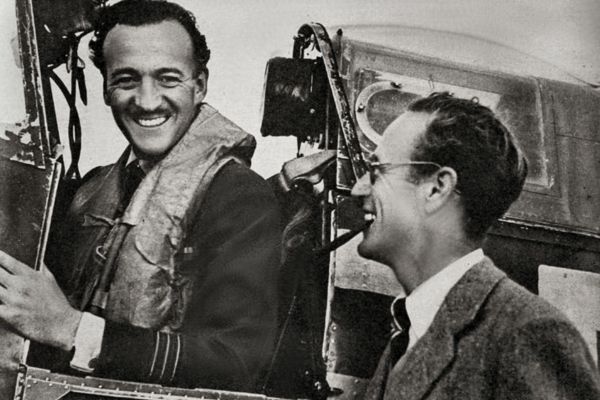
It was at Ibsley, during the late summer of 1941, that the flying sequences for the classic film ‘First of the Few’ starring David Niven, Leslie Howard and Rosamund John,depicting the story of the development of the Spitfire by Reginald J. Mitchell were filmed, with pilots of No’s. 118 and 501 Squadrons taking part between operational sorties.
During its operational years, many squadrons were stationed at R.A.F. Ibsley, including no’s. 32, 66, 118, 124, 129, 165, 234, 257, 263, 302, 310, 312, 313, 421, 452, 501, 504 and 616 of the Royal Air Force, also No. 7 Flying Instructors School and the No 1. Glider Pick-Up Unit. Ibsley was also used, for short periods, in 1942 and 1944, by the United States Army Air Force, the 1st Fighter Group, 8th Air Force The 48th, 367th, 371st Fighter Groups, 9th Air Force, and 67th Tactical Recce unit of the 9th Air Force.
A number of wartime structures still remain at Ibsley and several, including the old Control Tower, the Battle Headquarters, Direction Finding Station Blast Wall and twelve remaining Compass Points, a Sleeping Shelter and Stanton Shelter, have been registered by the Group with the Imperial War Museum’s Defence of Britain Project. This project aims to list the World War II structures still remaining in this country. These structures have also been registered with the Sites and Monuments Register of the Hampshire County Council
On 24th April 2000 a polished granite Commemorative Plaque resting on a Purbeck stone base was unveiled to mark the role R.A.F. Ibsley played in World War II and beyond. It rests on the existing wartime concrete base of the airfields old guardroom/picket post at Cross Lanes, Mockbeggar. A link to google maps for directions can be found on our get involved page.
I also found this propaganda video with David Niven filmed on the airfield.
Ibsley Control Tower combines so m
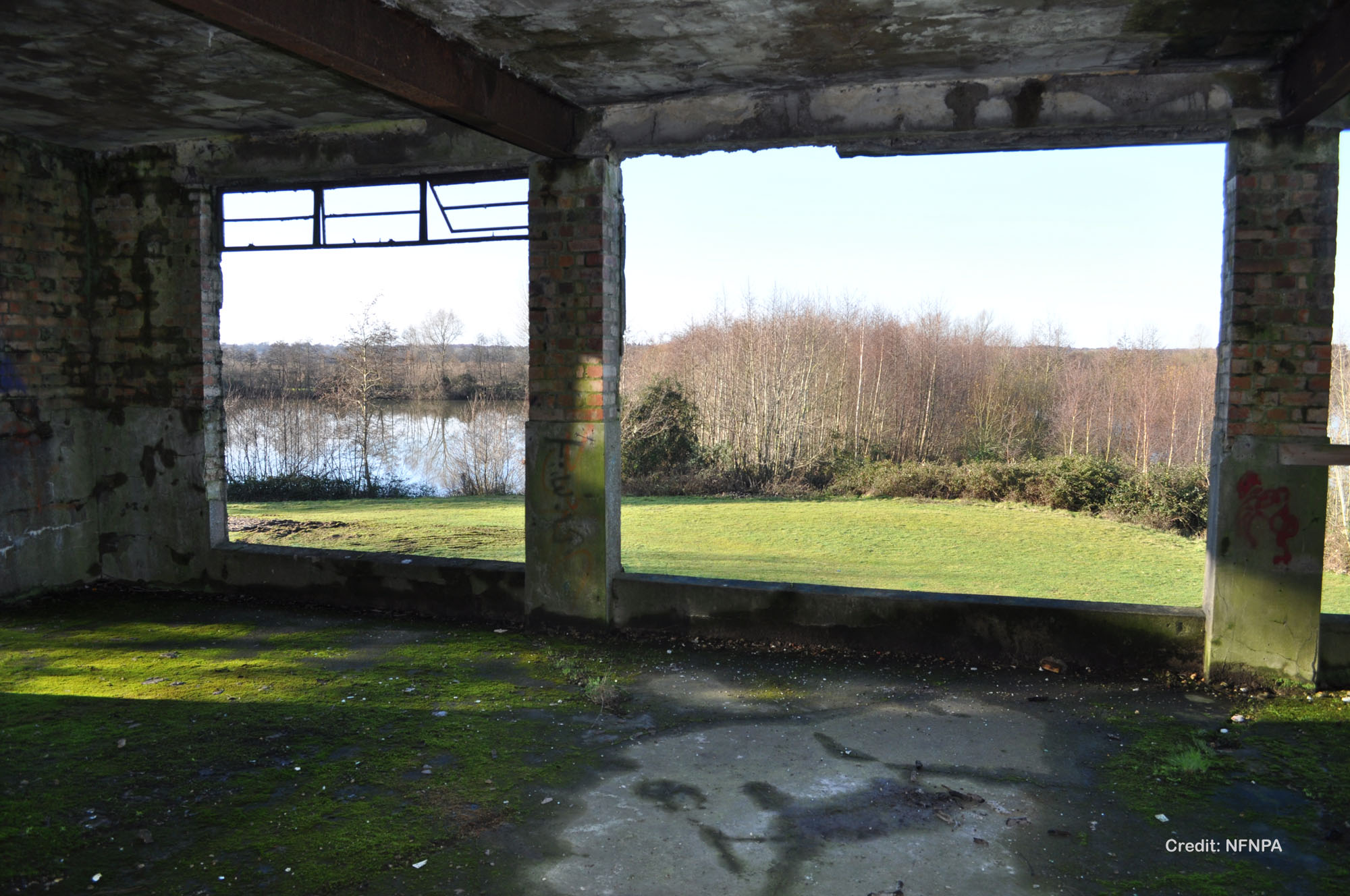
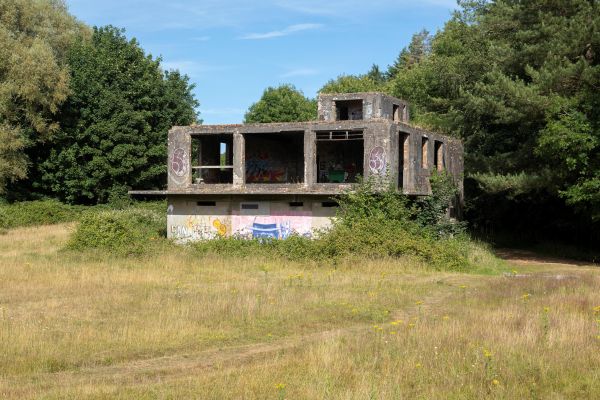
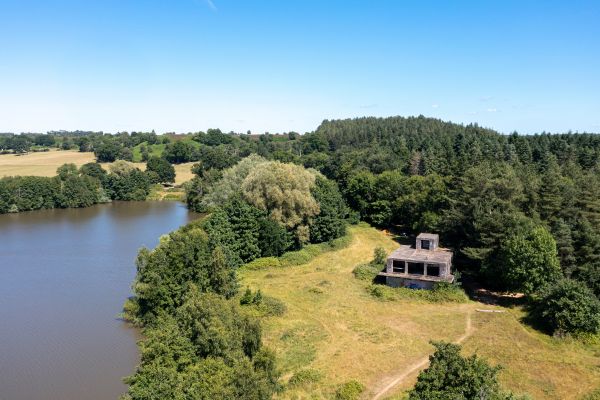
uch that is of interest to those appreciative of atmosphere. Ibsley was a very busy RAF airfield in the last proper war. It was the location for a morale-boosting wartime movie starring David Niven, and was taken over by the Americans in 1943. Ibsley played a major role in the D-Day invasion. It survived for precious few years, the airfield having been lost, almost entirely, to gravel abstraction. All that is left is a ruined and forlorn watch office (control tower) surrounded by lakes, now known as Mockbeggar Lakes, with wooded islands.
There is undeniable atmosphere, and a definite sense of foreboding due to graffiti and drug-related litter suggesting regular use as a rendezvous for illicit nocturnal activity – which seems all the more strange when one considers the affluent and respectable New Forest village setting. Looking closely at the daubed and battered walls it is just possible to make out three forces’ sweethearts painted by US airmen. Well meaning plans to save and restore the building have come to nothing and, unfortunately, its complete demise seems imminent. Ibsley Tower is on private land belonging to the gravel company, but its isolation and neglect would suggest that trespass for the sake of curiosity is unlikely to be a problem.
It can be viewed lawfully from the north-western most corner of Fir Walk, public access woodland a quarter of a mile to the south of the village of Mockbeggar, which itself is just off the A338, about two miles north of Ringwood.

Still watching over Ibsley – RAF Control Tower
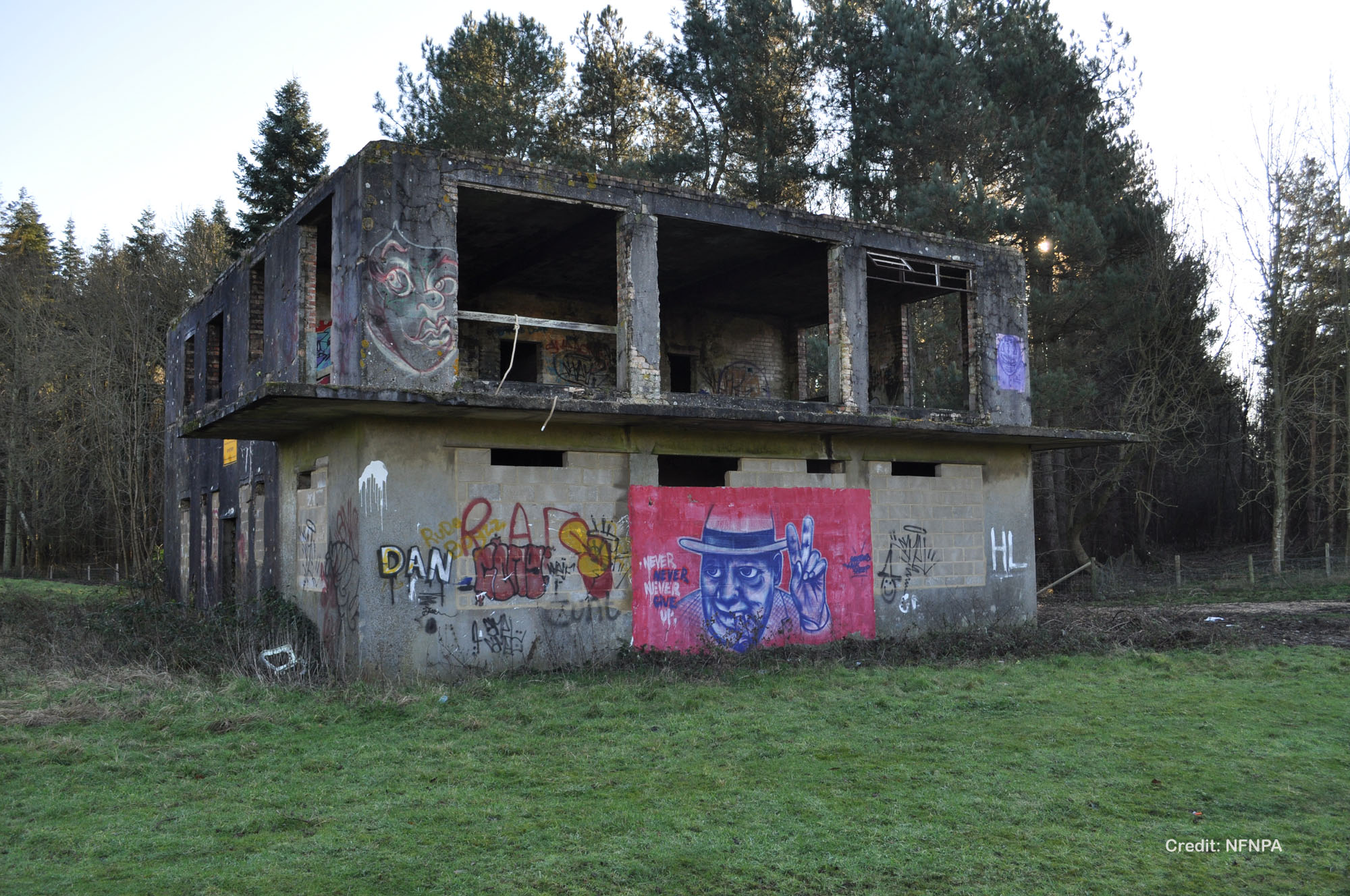
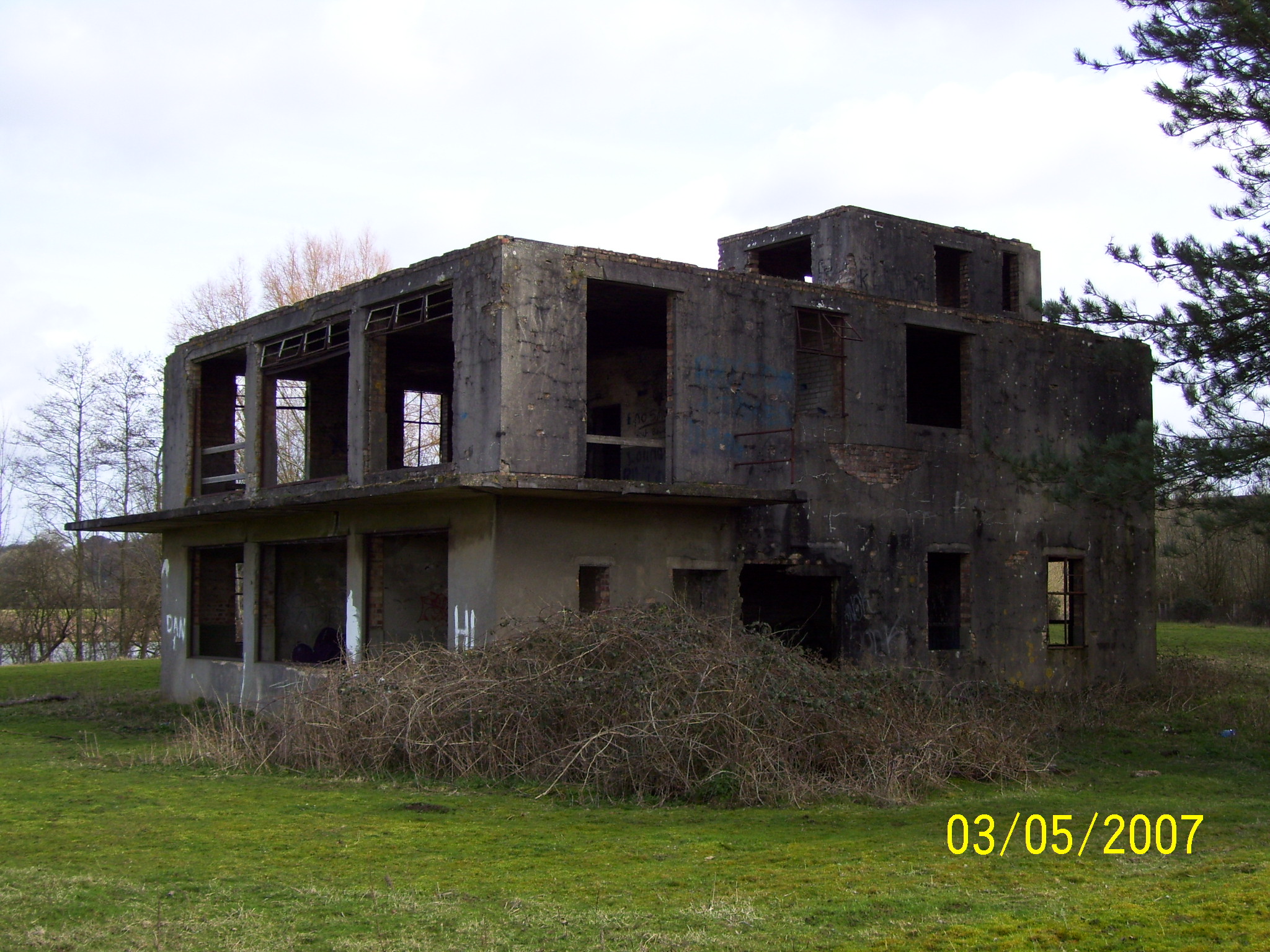
Please note that the watchtower is on private land with no public access. It can be seen from the road
Today, the former site of RAF Ibsley is mostly unrecognisable. After military control and a successful stint as a race circuit managed by Ringwood Motor Cycle and Light Car Club that operated till 1955 the area became a major quarrying area. Though most of RAF Ibsley is now hidden under quarries or landscaped lakes (known as Blashford Lakes), various echoes of its past still haunt the area. One of which is the surviving shell of the Watch Tower (Type 518/40 ‘Watch Office with Meteorological Section’) believed to be the only example in the country whose floors and balacony were formed entirely from concrete, and survives unaltered.
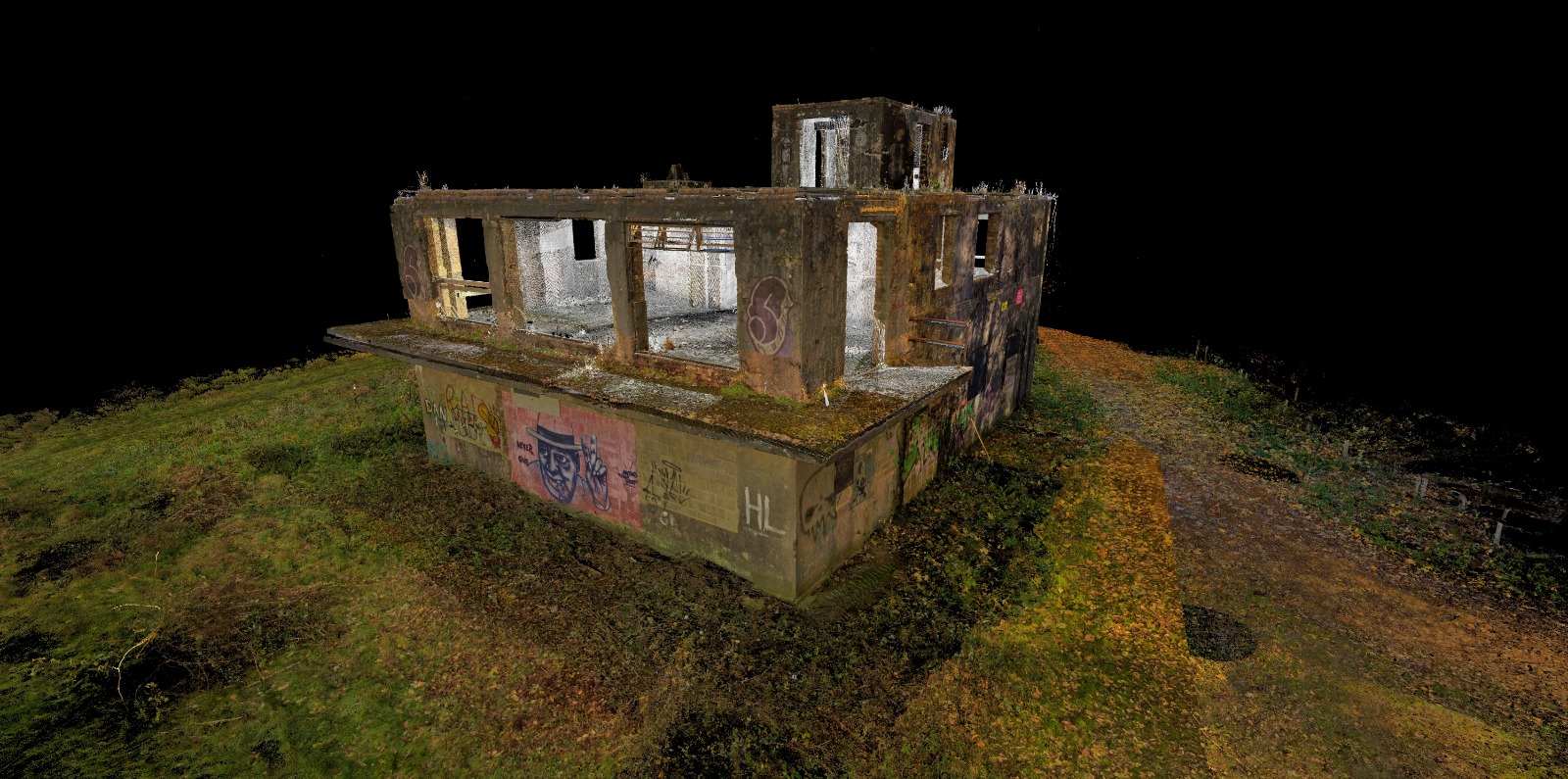
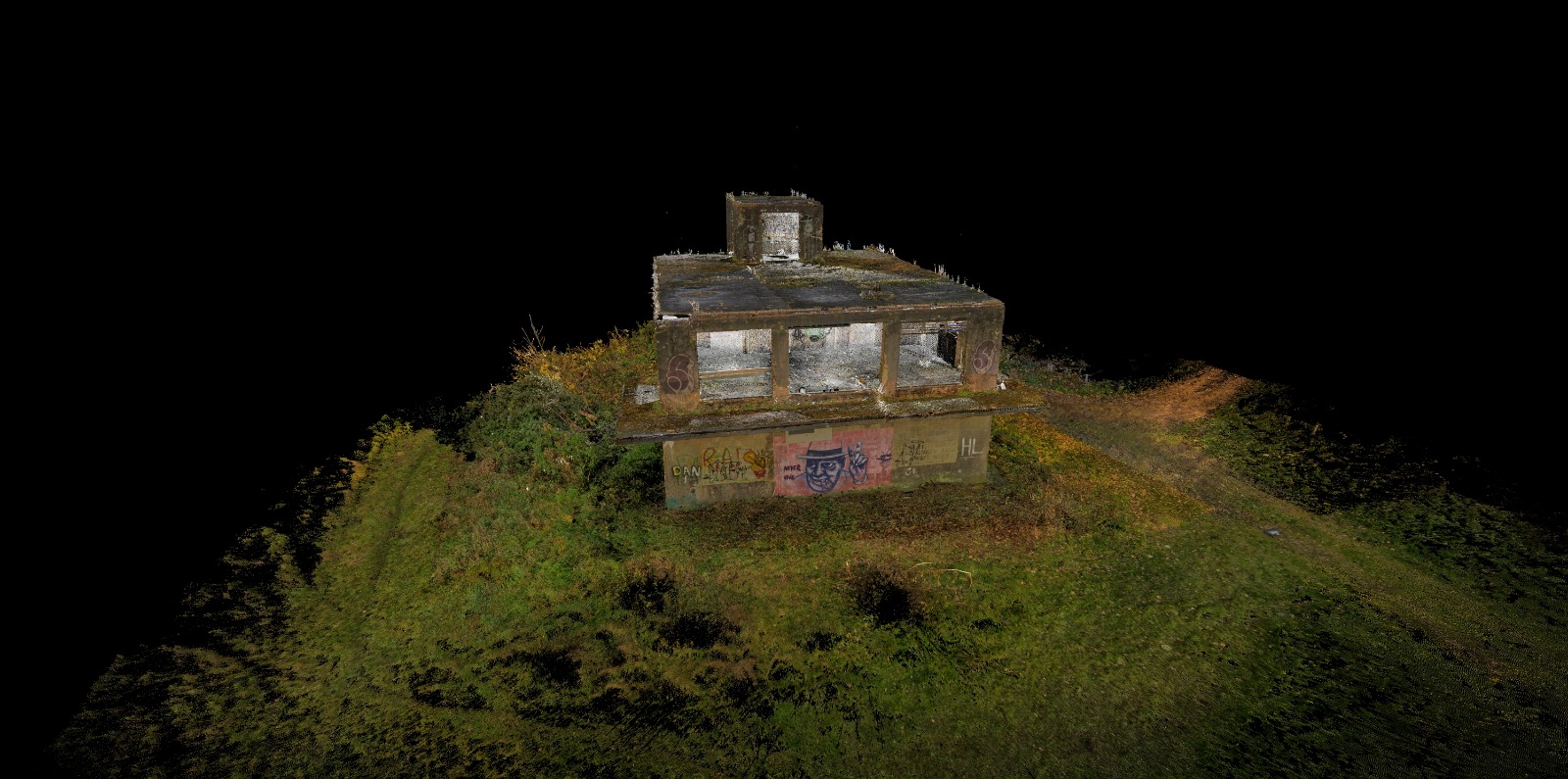
In 2018 with support from the National Lottery Heritage Fund through the Our Past, Our Future Landscape Partnership Scheme a detailed laser scan was undertaken of the building to aid with any future conservation plans and to ensure an accurate point in time record could be used for ongoing monitoring. The following video is a fly through of the building using the laser scan results.
Laser Scan Animation of the RAF Ibsley Control Tower
Laser Scan animation of RAF Ibsley control tower from Archaeovision on Vimeo.
Links
- R.A.F. Ibsley Historical Group
- Wikipedia: RAF Ibsley
- Control Towers: RAF Ibsley
- Google Earth Community: RAF Ibsley Aerodrome
- Still watching over Ibsley – RAF Control Tower – New Forest Knowledge (nfknowledge.org)
- RAF Ibsley Watch Office (landmarktrust.org.uk)
The most recent news is that the Land Mark Trust have plans for this Tower
RAF Ibsley Watch Office
Nr Ringwood, Hampshire
RAF Ibsley Watch Office once played a crucial part in Britain’s fight against the dark forces of Hitler’s planned invasion. It now stands derelict and in peril.
Overview
Our project aims to rescue and restore the Watch Office at the former Second World War airfield at Ibsley, near Ringwood in the New Forest. With your support, we have the chance to save this wartime monument to human courage. The Landmark Trust has identified 20th century military buildings as being at the very highest risk, and we have long been on the look-out for the right structure. We believe we have finally found it.
From its runways airmen flew out into hostile skies
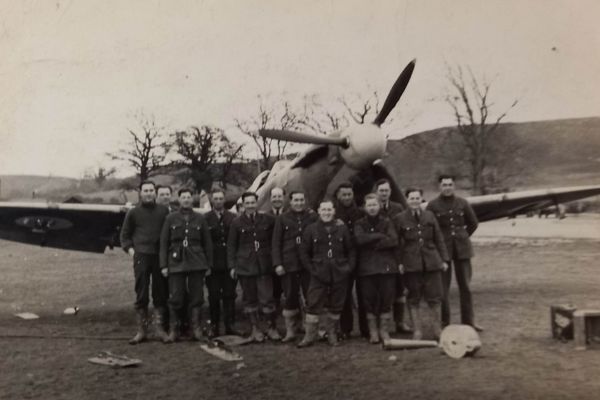
From 1941 to 1944 both the RAF and USAAF saw active service at Ibsley. A series of fighter squadrons were stationed there, Hurricane and Spitfire aircraft fuelled and at the ready to fly out over the English Channel to protect ships, attack infrastructure and intercept hostile aircraft. It was here that during the punishing first years of the war, Lesley Howard and David Niven made the seminal war film The First of the Few or for its American release Spitfire – designed to inspire confidence that, thanks to the exceptional qualities of the Spitfire, Britain could prevail.
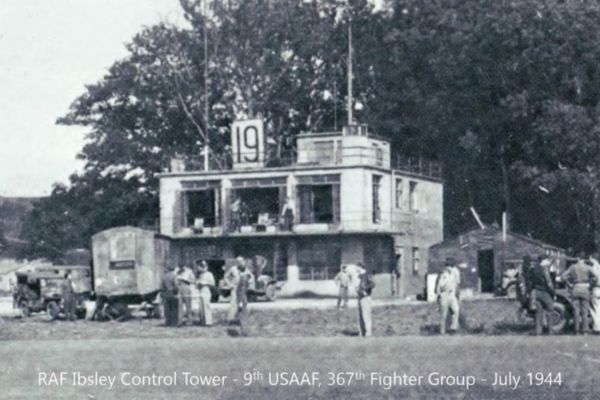
RAF Ibsley is considered one of the best surviving and most at-risk examples of a Second World War Watch Office by the Airfield Research Group. It is a rare surviving example of its type, with a Meteorological Section, large Crittall windows and a slender concrete viewing balcony.
80 years on, the roar of Spitfires and Thunderbolts has been replaced by birdsong, and the asphalt runways by the peace of a nature reserve.
The Watch Office could make a comfortable, thought-provoking Landmark for eight. The original large Control Room would become a shared space for living, cooking and eating, making the most of the panoramic views of sky and landscape. The cylinder store in the stair tower will be adapted to install a lift, ensuring that the whole building is accessible to all.
RAF Ibsley Watch Office’s survival is remarkable, but it is in a state of extreme dereliction. Badly vandalised, with its structure crumbling after many years of neglect, it will soon be too late to save it from decay or demolition.
Help us bring this fragment of wartime history back from the brink of collapse.
Donate to save this historic building
History
RAF Ibsley was one of twelve Second World War airfields in the New Forest.
The airfield was part of a network of defence structures across southern and eastern England hastily constructed in the early years of the war, as Europe fell to the Nazis with terrifying speed.
Ibsley began as a ‘satellite fighter station’, with just a small wooden building in a field serving for its air traffic control. Rubble from bombed-out buildings in Southampton was used as hardcore for the foundations of three runways, configured as a lop-sided ‘A’ positioned roughly south-north. Construction of the Watch Office was underway by August 1940, and it was still unfinished when it welcomed its first squadron in February 1941.
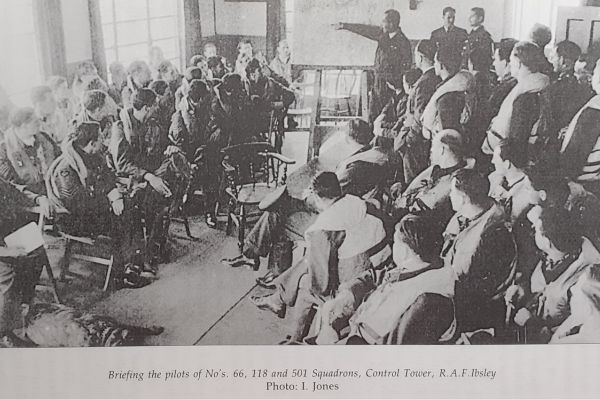
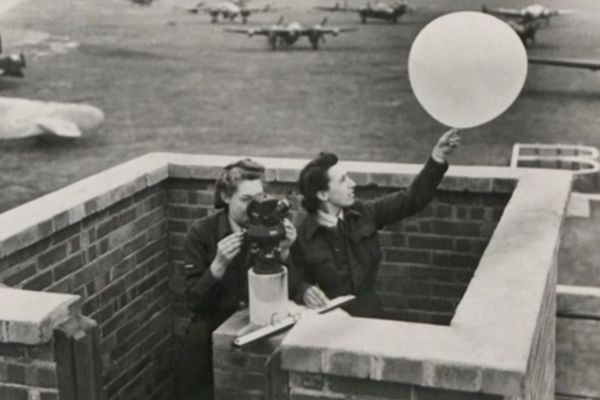
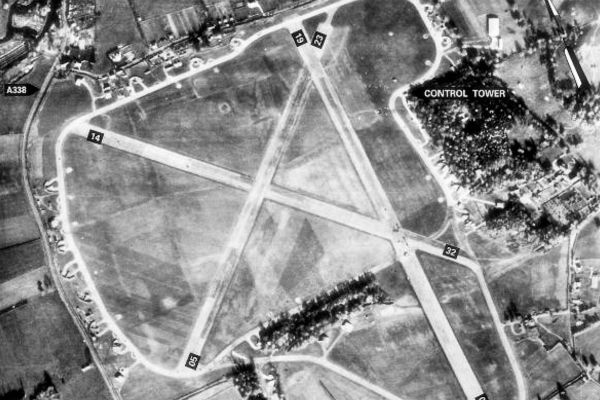
A series of squadrons were stationed at Ibsley throughout the war, their aircraft fuelled and ready to fly out over the Channel at a moment’s notice to protect ships, attack infrastructure and intercept hostile aircraft. Initially a fighter station for Spitfires, at its height in 1943 under the USAAF the airfield held over 150 P-47 Thunderbolt fighter bombers. They were supported by around 3,000 personnel living in requisitioned houses and purpose-built dispersed accommodation around the airfield’s perimeter.
The Ibsley Watch Office was a late evolution of standard Second World War designs, combining air traffic control with the collection of meteorological data. Hydrogen to fill the weather balloons was piped up from the ground floor to the roof.
“Although it had a very short life, what a life it has to tell, as both an RAF Fighter Station and United States Army Air Force Fighter base…what a magnificent contribution Ibsley made to the defence of England in those turbulent wartime days.”
Wing Commander Christopher ‘Bunny’ F Currant, DSO, DFC and Bar, Croix de Guerre (1911-2006), Station Commander at RAF Ibsley 1941-42 (Foreword, So Much Sadness, So Much Fun, 2002, RAF Ibsley Historical Group)
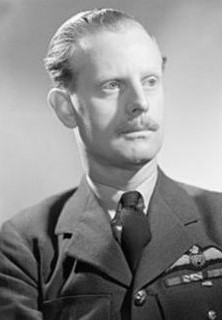
Hollywood came to Ibsley in 1941
RAF Ibsley played a key part in the campaign to sustain national morale as the location of Leslie Howard’s celebrated film about the invention of the Spitfire, The First of the Few. The film (released in the United States as Spitfire) was filmed at the airfield. First World War veteran and screen idol Leslie Howard both directed and starred as R J Mitchell, designer of the Spitfire. David Niven co-starred as Mitchell’s courageous test pilot. Serving personnel, including Squadron Leader Christopher ‘Bunny’ Currant and other RAF pilots appear in the film, flying aircraft and taking on minor speaking roles, with filming periodically interrupted when they were scrambled for action. The film premiered at Leicester Square on 10 August 1942 to widespread acclaim. Two years later, Leslie Howard was killed when his passenger flight was shot down by the Luftwaffe over the Bay of Biscay.
Post-War years
After the war, the airfield served as a USAAF flight school and then, from 1951 to 1955, as the circuit for the Ringwood Motor Cycle and Light Car Club. The runways and hardstanding were later removed for use as hardcore aggregate and the site was dug for gravel extraction. The disused gravel pits, long since filled with water, are now the scenic Blashford Lakes, designated as a protected nature reserve.
A chance to save this monument to human courage
With your support, the Landmark Trust could give RAF Ibsley Watch Office a new lease of life. Together, we can ensure that the building stands proud for many years to come, as a fitting memorial to those who fought, and in many cases died, in defence of their country and its values.
Donate to save this historic building
Future Plans
With your support, the Watch Office can be saved from dereliction to become a comfortable, thought-provoking place for eight people to stay.
The original, large Control Room on the first floor will become a shared space for living, cooking and eating – making the most of the panoramic views of sky and landscape, with access to the concrete balcony which once overlooked the busy airfield. The cylinder store in the stair tower, from which hydrogen to inflate weather balloons was piped up to the roof, will be adapted to install a lift to the first floor and the roof, ensuring that the whole building is accessible to all.
Built of concrete-rendered brickwork and with single-glazed windows, the Watch Office of the 1940s would have been cold by today’s standards. We plan to add external insulation to improve its energy efficiency, leaving the original ceiling heights unchanged and altering the window and door openings as little as possible. The internal walls will keep their wartime finish of painted brick and cement, with wall-mounted services, ducting and light-switches carefully chosen to match the details that survive from the war years.
Proposed floor plans





 UK Carp & Coarse Fishing