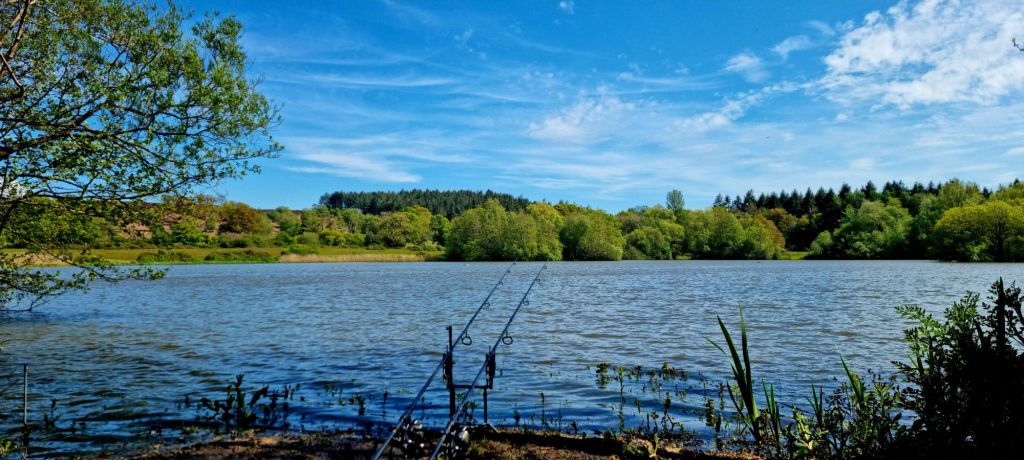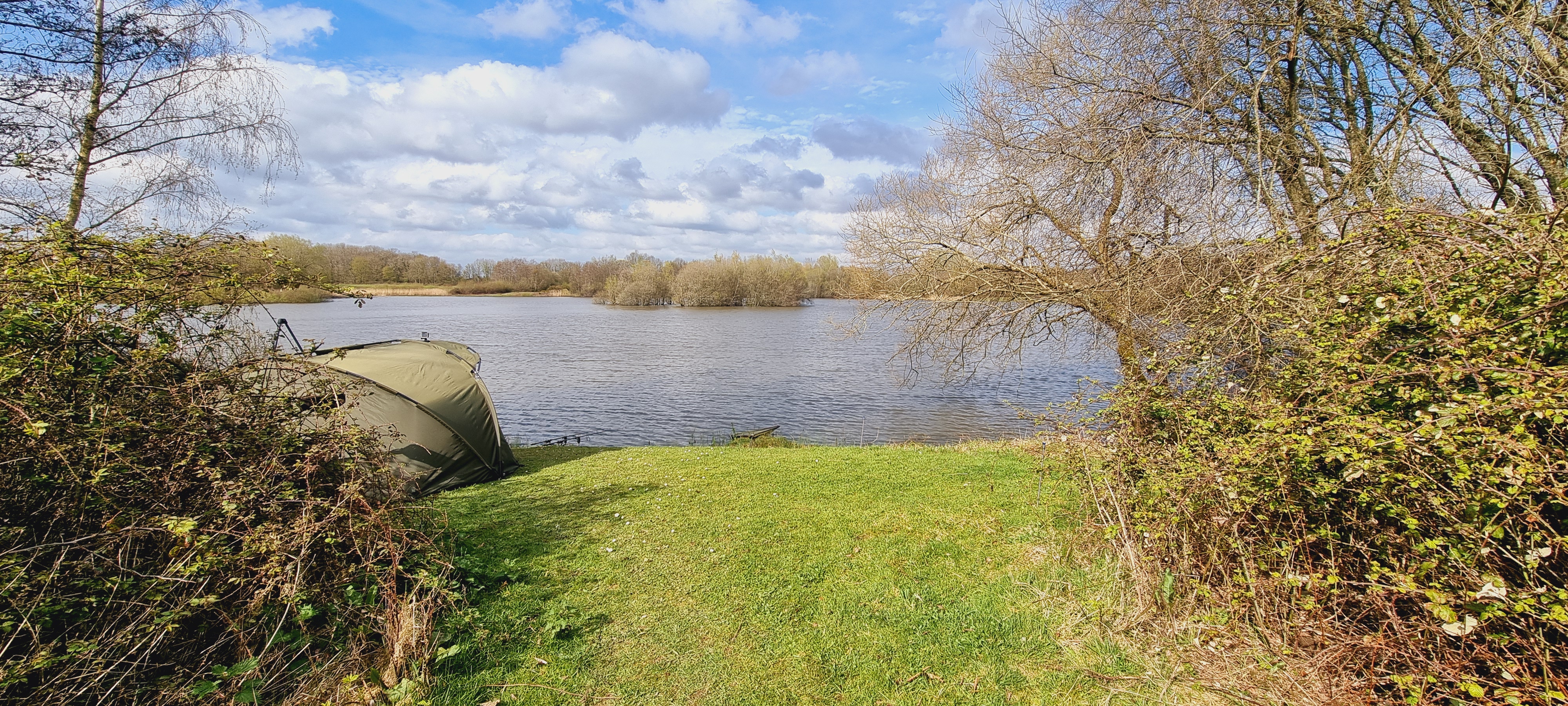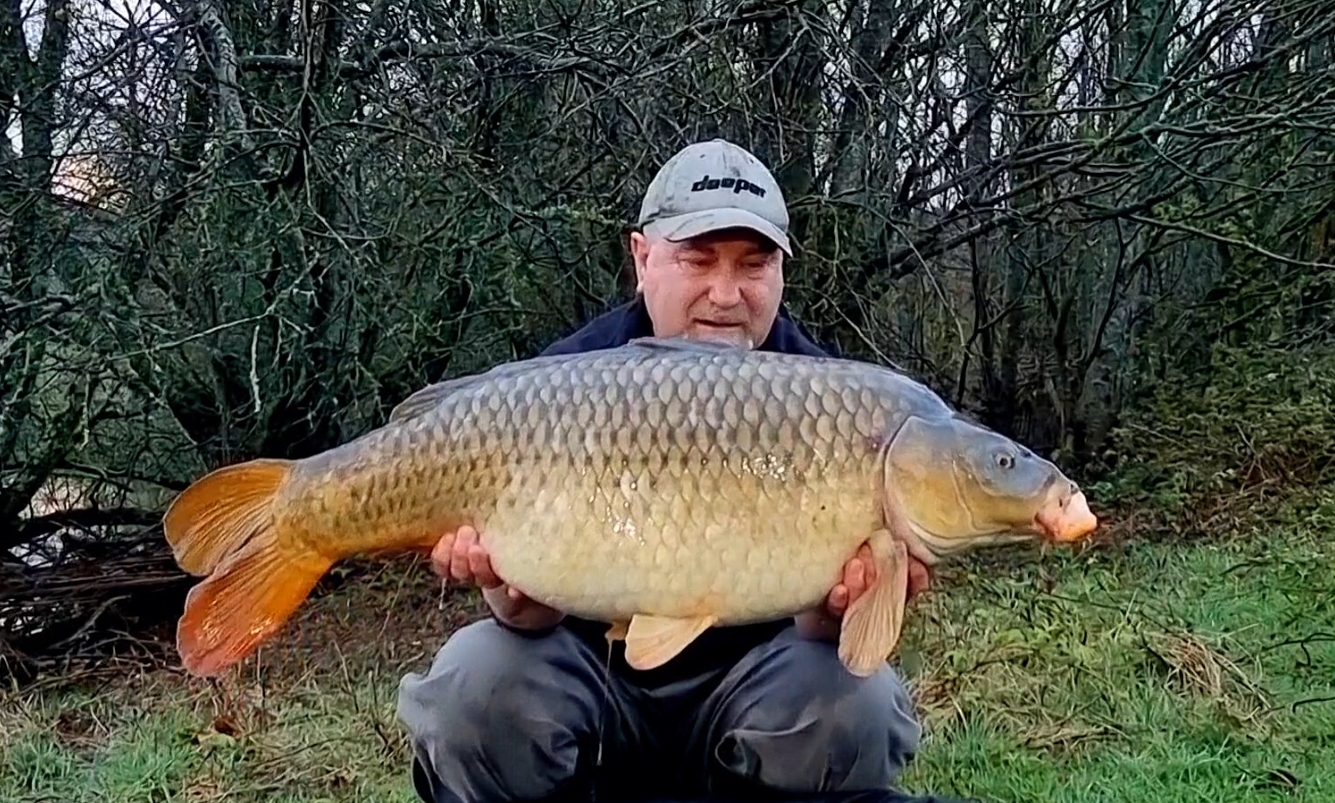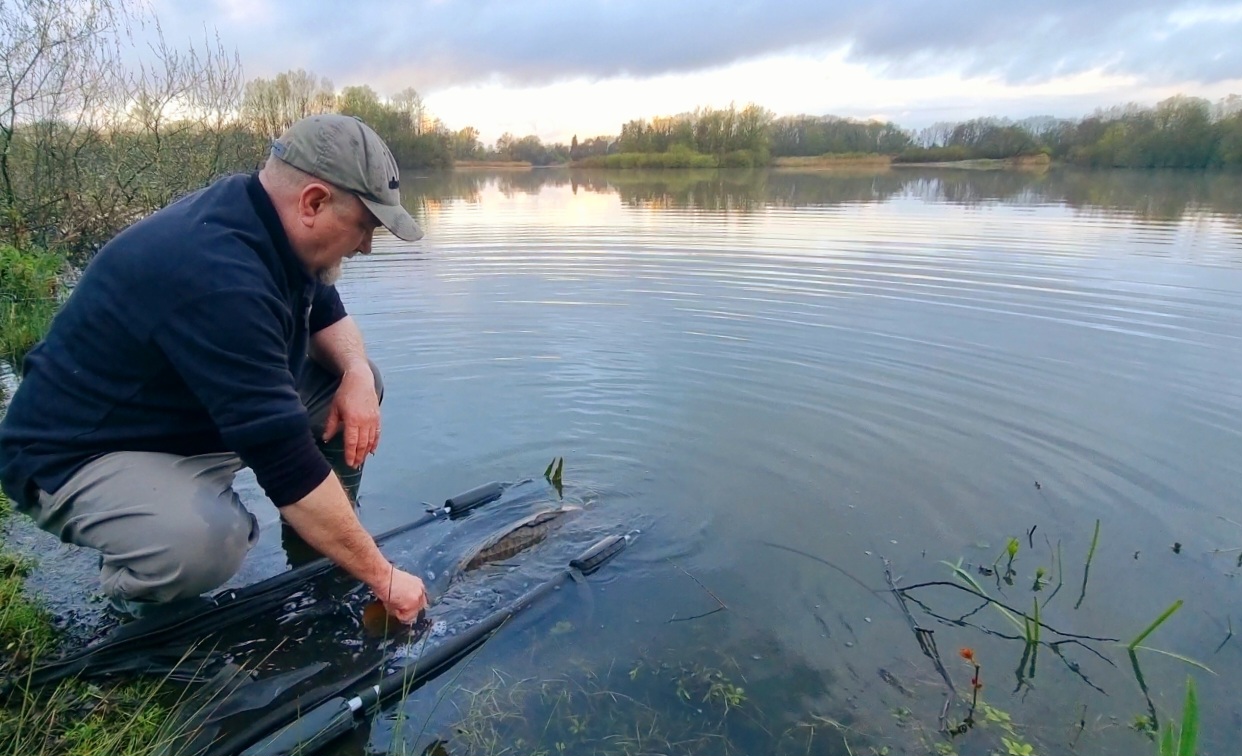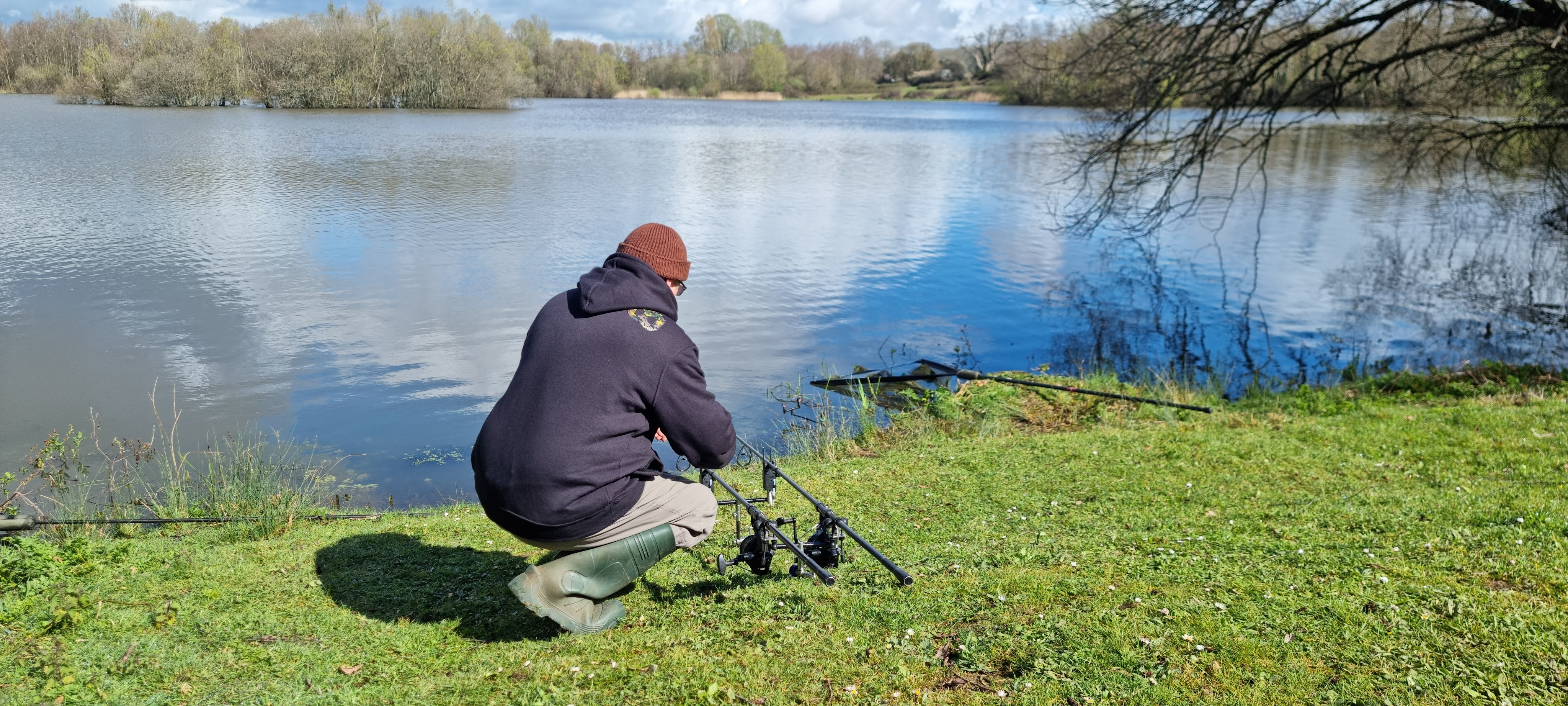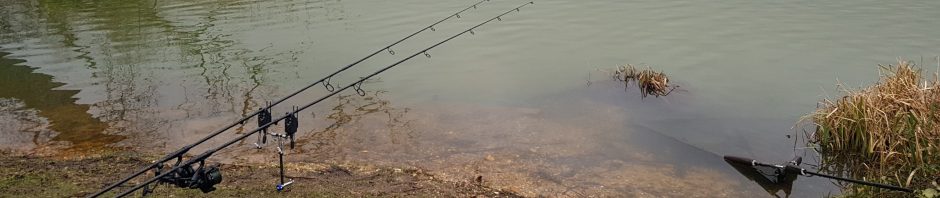
This trip, I found myself back at West Stow Country Park for my annual get-together with my old friend, Rob Nunn. After last year’s unfortunate encounter with COVID-19 that forced me to cut my trip short, I’m hoping for a smoother experience this time around.
My day began early, with me waking up just after 4 a.m. and hitting the road by 4:30, embarking on a roughly three-hour drive. The early start was worth it, though, as I made swift progress on the M3 and around the M25. It felt like driving back in the good old days when there wasn’t as much congestion. The M25 has now expanded to four lanes, but I still couldn’t escape the occasional road hogs in the middle lanes, or as they’ve now evolved, the third and fourth lane brigade. Some things never change.
Arriving a little after 7 a.m., I was pleasantly surprised to find Rob already awake. I half-expected him to still be sleeping, given the rainy weather that had followed me to the park. The rain was brief, and I quickly loaded my gear and set up next to Rob. We were quite close to each other, which made for a nice and sociable setup, at least until the rain settled in for what appeared to be an all-day affair.
We had positioned ourselves at the car park end of the lake, which was convenient. In hindsight, I should have brought my T2 with me; it would have come in handy for the conditions.
The weather conditions were favorable for carp fishing, with low pressure, wind, and rain, which the carp here seemed to love much to my surprise. Rob’s assurance that there were indeed carp in the area was spot on. I had already spotted three fish jumping before I even finished setting up my bivvy. This trip felt like the one where both of us might finally catch a few.
Thankfully, I didn’t need to cast at long ranges, with 16 wraps being the maximum distance. The wind was pushing hard at this end of the lake, and it looked perfect for fishing. Despite positioning a bag right over a showing carp, I didn’t get a bite right away but hope springs eternal.
I used a marker to explore the bay, and with some guidance from Rob to avoid spooking the fish, I identified three perfect spots at various distances. I spombed out 10 loads of bait over each spot, intending to fish with Catalyst, Corn, and Smokey Jack on each rod in different setups. My hope was that this strategy would pay off and bring me a couple of carp over the next three nights.
As the afternoon moved into evening, Rob ordered an Indian takeaway to be delivered to the lake, which was a welcome treat. I had tried to catch a ‘carp nap’ earlier in the day, but the general public was too noisy for that. I figured I should get some rest before the prime nighttime fishing hours, as that’s when the carp were most active. They were still making sporadic appearances, keeping my hopes up.
The night was uneventful, aside from the rain and wind. The raindrops on my bivvy roof created quite a noise, and I couldn’t work out whether it was actually very windy, given my shelter among the trees. I had been in my sleeping bag for 12 hours, not necessarily asleep, but I hoped to catch up on sleep from the previous early morning. If not, I might find myself wide awake throughout the night, which wouldn’t be ideal.
I heard several fish breaking the surface last night, which maintained my confidence. Carp tend to feed in the rain, so I could only hope that one of my three rods would scream to life today with a substantial catch.
Unfortunately, as expected, a couple of anglers noticed the carp activity in the bay and set up right across from me. It appeared that one of them was pushing the boundaries, and with eight lines in that area, I felt the chances were slim for any of us. I made the decision to move my left and middle rod away from the crowded spot, hoping to increase my odds. Interestingly, it seemed that his fishing partner also became fed up and relocated, though I wasn’t sure where. This change worked out for everyone’s benefit.
On the far bank, there was a river running parallel to the lake, and there was an inlet pipe pointing directly at me. With all the rain, I hoped it would start flowing into the lake soon, enticing the carp to feed. They were certainly in the area, and I just hoped they weren’t too preoccupied with the natural hatch happening at the moment.
Now, I had two rods along the bottom of the bar and one out in open water, all positioned over smooth, silty areas.
With the rain letting up, I took the opportunity to re-bait one of my rods. While doing so, I spotted another carp breaking the surface on the other side of the bar. I could only hope that they’d come over to my side, or I might need to try casting on the other side and hoping I could retrieve my bait, similar to fishing the Airfield Lake.
Another night passed without any carp action. The ongoing natural hatch, combined with the rain from the previous day, had raised the water level by around six inches and it was still rising. This presented a significant factor in my decision-making for the day. I would have to address this issue later in the morning. Carp were still visible in the vicinity, not too far from where Rob and I were positioned. Unfortunately, I didn’t have any significant signs of carp in the Car Park Bay anymore. I had a couple of bleeps late yesterday evening, but nothing more. I believed I was close to them, and my bait placement seemed perfect. Now, it was a matter of time and luck, and I wasn’t certain I had either in my favor. I could still hear water flowing through the pipe, which concerned me, as it was dangerously close to touching my bivvy mat and just eight inches away from the overwrap. I believed it was time to move my bivvy and rods before it was too late.
The lake’s water level continued to rise, and after a lengthy discussion with Rob, a few phone calls with other syndicate members, and checking the weather and river conditions, which included a flood warning, we faced a tough decision. Despite our belief that we stood a chance of each catching a carp, common sense prevailed. We decided it was best to pack up and head home, as the river might flood our area. We didn’t want to risk our fishing equipment getting damaged or potentially being caught in rising waters in the early hours of the morning, incurring significant costs.
The process of packing up was wet and challenging, and the drive home, with heavy rain and traffic, was no less entertaining. I arrived home by 3:00 PM, drying out my gear, ready to head off to the Airfield Lake tomorrow morning.
Demystifying the Ronnie Rig: A Game-Changer in Carp Fishing
Introduction
Carp fishing has evolved over the years, with anglers continually developing new techniques and rigs to outsmart these elusive and wary fish. One such innovation that has gained widespread popularity in recent years is the Ronnie Rig. This blog will delve into the world of the Ronnie Rig, exploring its components, setup, and why it has become a game-changer in the pursuit of carp.
The Origin of the Ronnie Rig
The Ronnie Rig, also known as the Spinner Rig, gained its name from British carp angler Ronnie Deakin, who is credited with popularizing this setup. Ronnie’s creative approach to rig design has revolutionized the way anglers present their baits to carp, leading to increased success on the water.
Key Components of the Ronnie Rig
Hook: The Ronnie Rig typically uses a curved or semi-curved hook. Size and pattern can vary based on personal preference, but hooks in the range of size 4 to 10 are commonly employed.
Swivel: A small, high-quality swivel is attached to the hook’s eye. This swivel is crucial for attaching the hook link to the mainline and providing rotation to the bait.
Hook Link: The hook link material is usually a supple and flexible material like fluorocarbon or soft braided line. A length of 6 to 8 inches is standard.
Bait Screw or Ronnie Ring: The magic of the Ronnie Rig lies in this component. It’s a small, screw-like device that is threaded through the bait (typically a pop-up or bottom bait), allowing it to rotate freely. This rotation adds an enticing movement to the bait.
Bait: The Ronnie Rig is highly effective with both pop-up and bottom baits. Popular choices include brightly colored pop-ups or critically balanced bottom baits.
Setting Up the Ronnie Rig
Thread the Swivel: Pass the swivel through the eye of the hook and secure it with a knotless knot, ensuring that the hook points toward the bait.
Attach the Hook Link: Attach the hook link to the swivel using a loop-to-loop connection or a knotless knot.
Add the Bait Screw or Ronnie Ring: Thread the bait screw or Ronnie ring through your chosen bait. Ensure it’s positioned in the center so that the bait can rotate freely.
Position the Hook: Carefully mount the bait onto the hook, ensuring that the point remains exposed. The curved shape of the hook helps with effective hooking.
Why the Ronnie Rig Works
The Ronnie Rig has gained a reputation for its effectiveness due to several key factors:
Natural Presentation: The rotating bait screw or ring imparts a lifelike, spinning action to the bait, making it appear more natural to the carp. This movement can trigger curiosity and entice feeding.
Hooking Efficiency: The curved hook and exposed point increase hooking efficiency, resulting in more successful hookups.
Anti-Eject Properties: The Ronnie Rig’s setup makes it challenging for carp to eject the bait without getting hooked.
Versatility: This rig is versatile and can be used with a variety of bait types and sizes, making it adaptable to different fishing scenarios.
Conclusion
The Ronnie Rig has undoubtedly left its mark on the world of carp fishing. Its innovative design, natural presentation, and hooking efficiency have made it a go-to choice for many anglers seeking an edge in their pursuit of carp. Whether you’re a seasoned carp angler or just starting out, the Ronnie Rig is a rig worth exploring to enhance your chances of landing these elusive and prized fish. Remember to adapt your setup based on the specific conditions and preferences of the carp in your chosen fishing location. Happy angling!
After a weekend of scorching heat, the current week blessed me with perfect angling conditions. I’d perfect timing, with the atmospheric pressure currently at 1013 mbs, dropping to 1004 mbs by Friday, followed by a sudden rise on Sunday. There was also a storm expected to pass through on Thursday night into Friday morning. This set the stage for an exciting angling adventure. I was eager to hit the lake after a morning of gardening, having already loaded my car for a quick departure.
Selecting my swim for this trip wasn’t an easy decision. With the wind coming from the southwest and recent mixed results in my previous spot, I debated whether it was worth revisiting. However, I’d explored new swims recently after the estate manager had cleared and improved them. While they had been overgrown for a while, his hard work had opened new possibilities. The Middle Swim, a personal favourite that I hadn’t fished in this year, was particularly appealing.
I arrived around 11:30 AM and decided to check out the swim I had explored last week. I was quite certain that no one else had fished there recently, though it was hard to believe I might be the first angler to ever try it. The swims at the double gravel area and the end of the tower point also looked promising, but considering the prevailing weather conditions, I had to investigate the other side of the lake.
Being the only angler around, I had the privilege of inspecting the area thoroughly. My car’s vantage point offered a good view, and I spotted several carp showing in different areas. I swiftly decided to venture out onto the island, leaving out the first swim in the hopes that my friend Ian might choose to set up there. My attention focused on the end swim and, of course, the cherished middle spot, which I fondly referred to as the “Secret Swim.” It felt like the middle swim was beckoning me, and it had never looked better.
I began with a lead to check for weed, as this had been an issue earlier in the year. While I found some patches, none appeared significant enough to deter me. My priority was to set up the bivvy, especially since rain seemed imminent. Once the bivvy was in place, I scoured the lakebed with a marker rod to locate a couple of ideal spots and then deposited a substantial amount of bait. For a change, I decided to go exclusively with boilies for this session, especially given the predicted weather conditions. I used a spomb to distribute a couple of kilograms of boilies over each area, and I didn’t cast very far as I counted on the wind to guide the carp toward my baited areas. Plus, I didn’t want to make spombing difficult in strong winds. It was essential to keep things easy in challenging conditions.
With the baiting complete, I made a quick trip back to my car to collect my gear, including the Weber, a cool box, a chair, and my clothing bag. This was followed by an afternoon and evening of relaxation. It was soon dinnertime, and as my Mac and and cheese was still frozen, it required 45 minutes of cooking. I timed it just right, as my wife called on her way home from work, and the meal was ready to be enjoyed in the remaining daylight hours. I’ve never been a fan of dining in the dark.
As I savoured my meal, I was about a quarter of the way through when the right-hand rod came to life. In a flurry of activity, I donned my waders and picked up the rod as the carp moved steadily to the left. It was crucial to enter the water quickly, as the fish was pulling hard and aiming for the right, making it necessary to get in front of the massive overhanging trees. This strategic move would redirect the fish into open water and away from any potential snags.
Fortunately, the carp co-operated, and I was able to walk back to my swim while guiding it away from the trees. In the process, I gradually edged the carp closer to the net. It was a testing battle, as the carp was determined to escape to the left. However, once I returned to the tree’s front and had the net ready, it became evident that this fish was larger than any of those I had encountered last week. I maintained a steady approach and gently slipped my NSR50 landing net under the carp – victory achieved. It was the first fish of the session, the first of the night, and no blank.
The carp weighed in at a respectable 23 pounds and 14 ounces.
With this success, I swiftly reset the rod, checked, and sharpened the hook, attached a fresh 20mm Classic Corn wafter, and recast it. Then, I settled down for my warm evening tea, which was quite enjoyable. A rain shower had arrived, though unanticipated, but it failed to deter the carp, which continued to sporadically breach the surface. I was comfortably ensconced in my bivvy when, during the rain, my left-hand rod suddenly screamed to life, heralding my second catch from Airfield Lake.
This fish also had a penchant for swimming to the left, and there seemed to be something in that direction that attracted them. I would need to be cautious of this in the future. It wasn’t long before I successfully netted this fish, which weighed 16 pounds and 6 ounces, and by the time it returned to the water, the rain was falling quite heavily. It seemed like a good idea to check the weather forecast under the circumstances.
Much to my surprise, the forecast indicated that it would rain throughout the night. That certainly wasn’t what the Met Office had predicted earlier in the day. However, I remained hopeful that the carp would embrace these conditions. The rest of the night passed without further action, although it was a challenge to sleep given the warmth inside the bivvy. The temperature finally dropped in the early hours, allowing me to rest more comfortably. I didn’t wake until around 8:30, later than I had intended. I called my wife as she was on her way to work and then proceeded to spomb out some bait while replacing the hookbaits.
Just before 9:30, the right-hand rod came to life, and it was evident that a better fish had taken the bait. It darted into open water but soon began to veer left, making it necessary for me to wade out into the water up to my waist. Even as it moved further away, I knew this fish was different from the ones I’d encountered earlier. After a spirited fight, the carp succumbed and was guided into the net. However, it wasn’t easy to land these fish in this swim, as I had to wade out into the lake to offer the carp three feet of water to swim past me. It passed so close that I feared it might swim through my legs! This carp weighed in at 19 pounds and 3 ounces. The ordeal involved in landing these carp was sometimes comical, given their size.
Unfortunately, the sleepless night had made it difficult to settle back into slumber. It wasn’t until the early hours, when the air had cooled, that I finally caught some sleep. However, that didn’t last long. The next action occurred around 4:15 when the left-hand rod suddenly screamed to life. I was in a deep slumber and quite disoriented, but I soon recognized the duration of the buzzing and sprang into action. I rapidly donned my waders, opened the bivvy while avoiding a sudden gale blowing directly in my face, and then managed to free the rod. The carp was determined to head left, so I needed to be in the water as quickly as possible to prevent it from reaching the obstacles between Ian’s swim and mine.
By the time I guided the carp back into open water, it was evident that this was a better fish than the ones I’d landed earlier. However, my elation turned to disappointment as I felt a quick bump, and the line went slack. The carp had slipped the hook, a particularly disheartening experience given the fish’s size. Reflecting on my angling history, I couldn’t help but recall similar instances around that part of the lake. It seemed that a different approach was necessary, and I resolved to explore alternative methods next time.
My rod was soon back on the same spot, and I was soon back in my bivvy, with the door closed due to the rain and wind. When the wind changed direction to the southwest, it brought relief from the heat and allowed me to enjoy more comfortable slumber. Around 10:30, it was coffee time.
The morning unfolded quietly, with no action until around 10:30, when the right-hand rod suddenly came to life, delivering a spectacular take. The carp had its sights set on open water, making it quite a challenge to slow it down and turn it towards me. The fish seemed determined to reach the snags on the right, but I managed to steer it clear, and it swiftly found its way into the net.
This beauty weighed in at 22 pounds and 5 ounces.
I was just preparing to take my first picture when the other rod, the left-hand one, erupted with another burst of activity. I rapidly closed the Nsr50, deposited the carp back in the water, and hurried to the second rod, which was still screaming. I was fortunate to have both landing nets ready for action. Within moments, the second fish was in the net, safe and sound.
It was a 19-pound, 4-ounce common carp.
I had no time to rest as I had planned to recast the rod and replenish the swim with fresh bait. The sun had made a welcome appearance, and I took the opportunity to retrieve the rods, top up the swim with my remaining boilies, and then pay a visit to Ian’s swim for a brief interlude. A refreshing pale ale and a burger with red onions were the perfect midday meal.
I returned to my swim around 2 PM, the showers and strong winds persisted, but they were due to stop around 8 PM, along with the carp’s activity. I hoped they would remain in my area until Ian’s departure on Sunday morning, as I would be leaving the lake as usual on Saturday morning. Late afternoon and evening brought a mix of light rain and strong winds, until around 7:30, when the skies cleared, and the wind settled down.
The early evening was marked by a tranquil interlude with the carp still active. However, it was around 10:15 when my left-hand rod suddenly screamed with another take. The night had drawn in, with rain and gales. There was no time to don a coat, so I swiftly pulled on my waders, attached my headlamp, unhooked the rod, and waded out into the water to regain control over the fish before it reached any snags or obstacles.
Despite the challenging conditions, I played the carp into the net. It weighed in at 12 pounds, and the rain had yet to relent. After a quick recast and some tidying up, I began to write this blog. However, around 9:15, the same rod was away again. I had now switched both rods to Classic Corn Boilies. This time, it was an 18-pound, 7-ounce common carp.
I phoned my wife, ensuring I had time for another baiting session on the spots before the rain resumed. Just when I was about to make my first spomb, the same rod came alive again. This time, I was fully prepared for the excitement, and the carp did not disappoint. It was an 11-pound common.
Following the spombing, I settled down to continue the blog. Just before 10 am, I realized that it was time for a fresh cup of coffee. Unbeknownst to me, the angling adventure was about to get even more exhilarating. A mere few moments later, the left-hand rod, which I couldn’t remember baiting, suddenly burst into life.
The previous five hours were nothing short of a whirlwind. As I sipped on several cups of coffee, the bivvy remained dry. It was clear that the carp were on the feed. The initial excitement of each take was followed by the challenge of getting the fish around my favourite tree in the dawn.
Ian joined me for a late cup of coffee, drawn by my barista skills. At around 11:30, my left-hand rod again took the spotlight, only to end in a disappointment – my second hook pull of the trip. I quickly flicked out, as the sun finally graced the scene.
With the rod back out, I took the opportunity to replenish the swim with the last of the boilies and then went to see Ian. The afternoon and evening were marked by showers and winds, which were expected to move on by 8. The calm and the clear skies gave way to hope that the carp would continue to feed in my part of the lake and not move until Ian’s departure on Sunday morning. I would stick to my usual schedule and depart on Saturday morning.
The night remained uneventful until the early hours when, the right-hand rod was suddenly off. It took me a moment to realise what was happening. After donning my waders, I wrestled the rod and ventured outside, keeping a watchful eye on my bivvy to prevent it from being swept away by the powerful southerly winds.
The carp darted to the left with remarkable speed, I waded into the lake, raised the rod high to prevent it from snagging or finding the overhanging trees. I needed to be in the water before it could reach the boulders. My strategy worked, and the carp responded by behaving more favourably. I was now able to direct it back into open water, away from the dangers that lurked under the tree. Finally, I was ready to land the carp. With a bit more fight left in it, the carp yielded.
At last, the moment of triumph had arrived. This fish was the biggest of the trip so far, weighing in at a stunning 25 pounds and 8 ounces. Once I’d reset the rod and refreshed the bait, I was back in my bag, enjoying the clear skies and dropping temperatures.
The morning unfolded peacefully, with mist dancing on the water, wildlife awakening, and the idyllic surroundings inviting a sense of serenity. It was a beautiful start to the day, long-tailed tits chattering in the trees and a kingfisher on my rod tips. The time had come for another coffee. My peaceful morning was interrupted by the local shooting party, who inadvertently led me to an unforgettable sunrise!
As I was watching the mist, my rod sprang to life once again, and I was prepared to meet the challenge. This time, it was one of Airfield Lake’s lively, small-sized residents, weighing in at 10 pounds.
The beauty of the morning scene was hard to resist, but I knew it was almost time to pack up and head home. The warmth of the sunshine was still lacking, but I hoped to at least dry a few things before departing. Fresh hookbaits were prepared in anticipation of a last-minute catch, but this time the carp had other plans.