
Fishing is more than just catching fish—it’s about learning, adapting, and immersing yourself in nature. Over the past seasons, the Airfield Lake has given me all this and more. It’s been a journey filled with exploration, strategic baiting, and a fair share of ups and downs, but overall, it’s been one of my best 10 years of fishing.
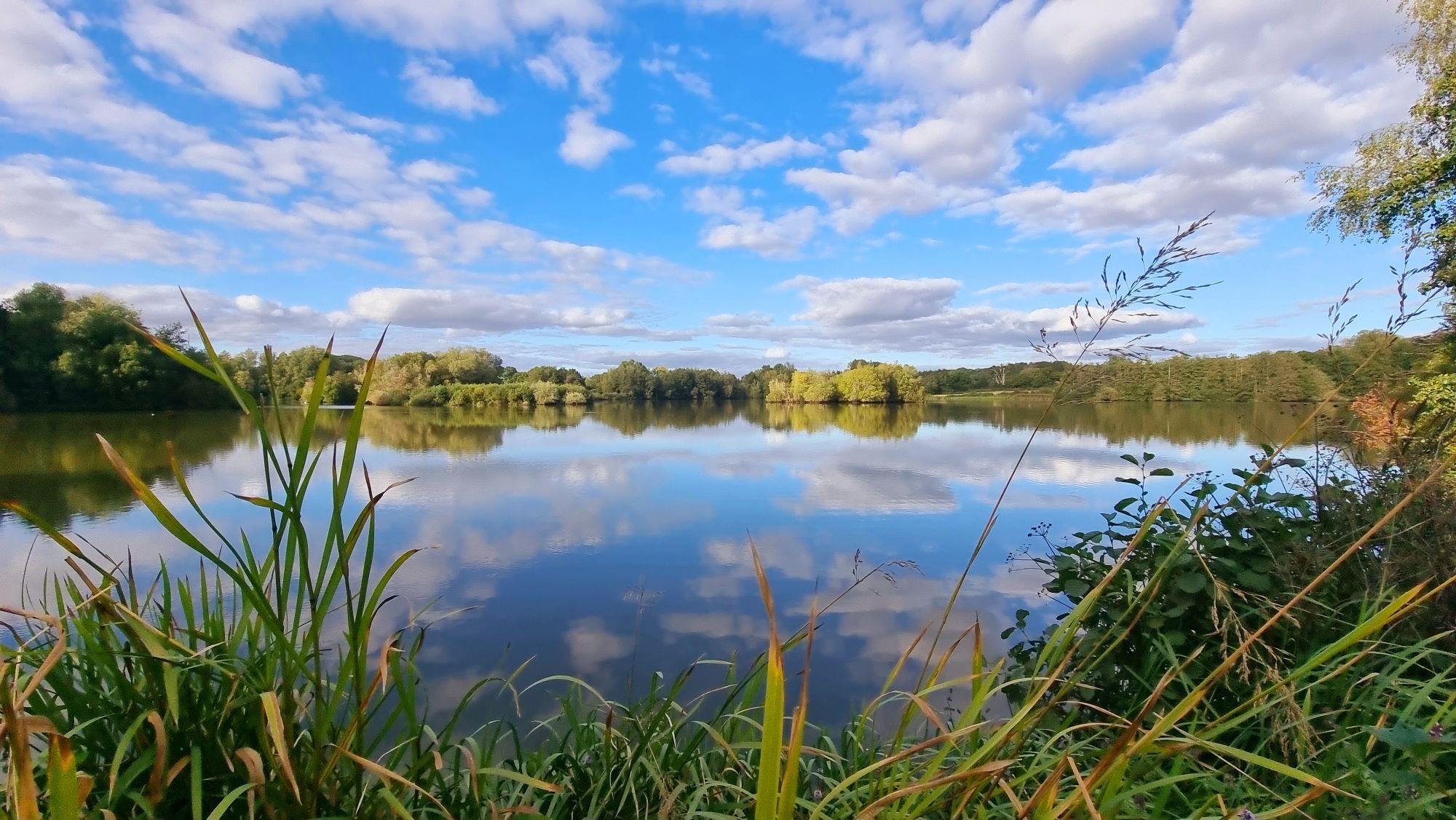
The Unique Beauty of Airfield Lake
From the moment I first fished Airfield Lake, I knew it was a special place. The lake is a maze of islands, open water, and hidden snags, offering an incredible variety of swims. Only two of the many islands are fishable—and only if you’re brave enough to cross the old bridges to reach them.
The lake has a fascinating history, too. It wasn’t always a fishing lake. After the airfield closed down, the surrounding valley was dug for gravel for road building, only to be filled with Blitz rubble and then re-dug again. Eventually, it was turned into a reservoir, then a fish farm, and later, it went through various syndicates before the estate finally decided to manage it themselves.
Over the years, the lake became overstocked with smaller carp, and several netting attempts were made to remove them. But due to the complex structure and depth variations, many fish remained. One thing that didn’t change was the boulder-strewn lakebed, which is an absolute nightmare when playing fish. Many carp know exactly where to run, making losing fish an unfortunate but common part of fishing here.

Early Spring: A Difficult Start
We arrived back in early March, and the carp were already active, but they were clearly locked onto natural food sources. Early-season fishing here is notoriously tricky, with the best chances coming from fishing tight to overhanging trees and snaggy spots—a challenge in itself.
The west bank is the prime area, but it’s completely out of bounds except for about six available swims. That might sound limiting, but the advantage of this syndicate is that many members aren’t particularly keen anglers, meaning at least half of these swims are usually free.
That said, plenty of fish show themselves across the lake from March onwards, so I knew there were other ways to tempt them into feeding.

Lockdown Disruptions and a Change of Plan
The season was off to a solid start. I had started to see on the news a new illness coming out of China, countries in Asia were starting to close their borders, and it was becoming obvious something would happen here soon. Sure enough, Lockdown happened. Before the lakes were closed, I managed two weekend sessions, landing a nice common. Then, everything came to a grinding halt.
When we were finally allowed back in May, I was cautious. Being asthmatic, I didn’t want to take any risks with COVID, so I opted for an isolated swim on one of the islands, keeping myself well away from others. Unfortunately, I lost a fish to one of those infamous boulders—a frustrating but familiar scenario.
My plan for the year was to focus on the deeper lake, particularly an underfished area with access to some interesting bars. But when I returned, I found that other anglers had beaten me to it. That threw a wrench in my plan, but as always, adaptability is key in carp fishing.
Rather than fighting for a popular swim, I moved to a different area where I could build up bait gradually. But even that area became increasingly popular over the next month, forcing me to rethink my entire approach heading into the autumn.

Adjusting Strategies: Autumn Approaches
With the deeper lake becoming busier than expected, I decided to shift my focus to the main part of the lake. This area had:
Lots of open water
Several islands (some fishable, some inaccessible)
Proximity to a large no-fishing zone that held a lot of carp
Over the years, some swims in this area had become overgrown and unpopular. I saw this as an opportunity—if I could bait these areas consistently without fishing them immediately, I might be able to establish my own little feeding zones.
I also spent time studying the lake’s Deeper Lakebook page, mapping as much of the lakebed as possible. Knowledge is power in fishing, and understanding the underwater topography gave me a huge advantage.
Late Summer Success: The Plan Comes Together
By September, things were falling into place.
I had two pre-baited areas and started rotating between them to keep bait going into both. I even cut back one of the overgrown swims, giving me access to an untapped part of the lake.
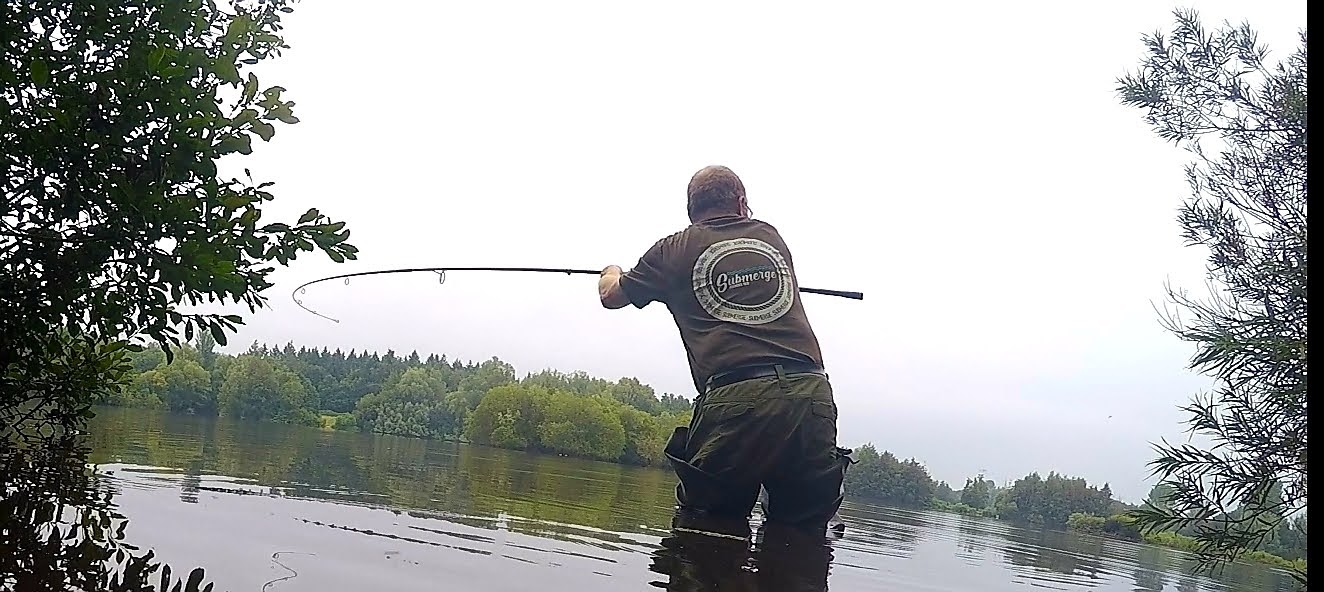
This swim had its challenges—
Landing a fish required wading out due to overhanging trees.
You had to keep carp away from nasty marginal snags.
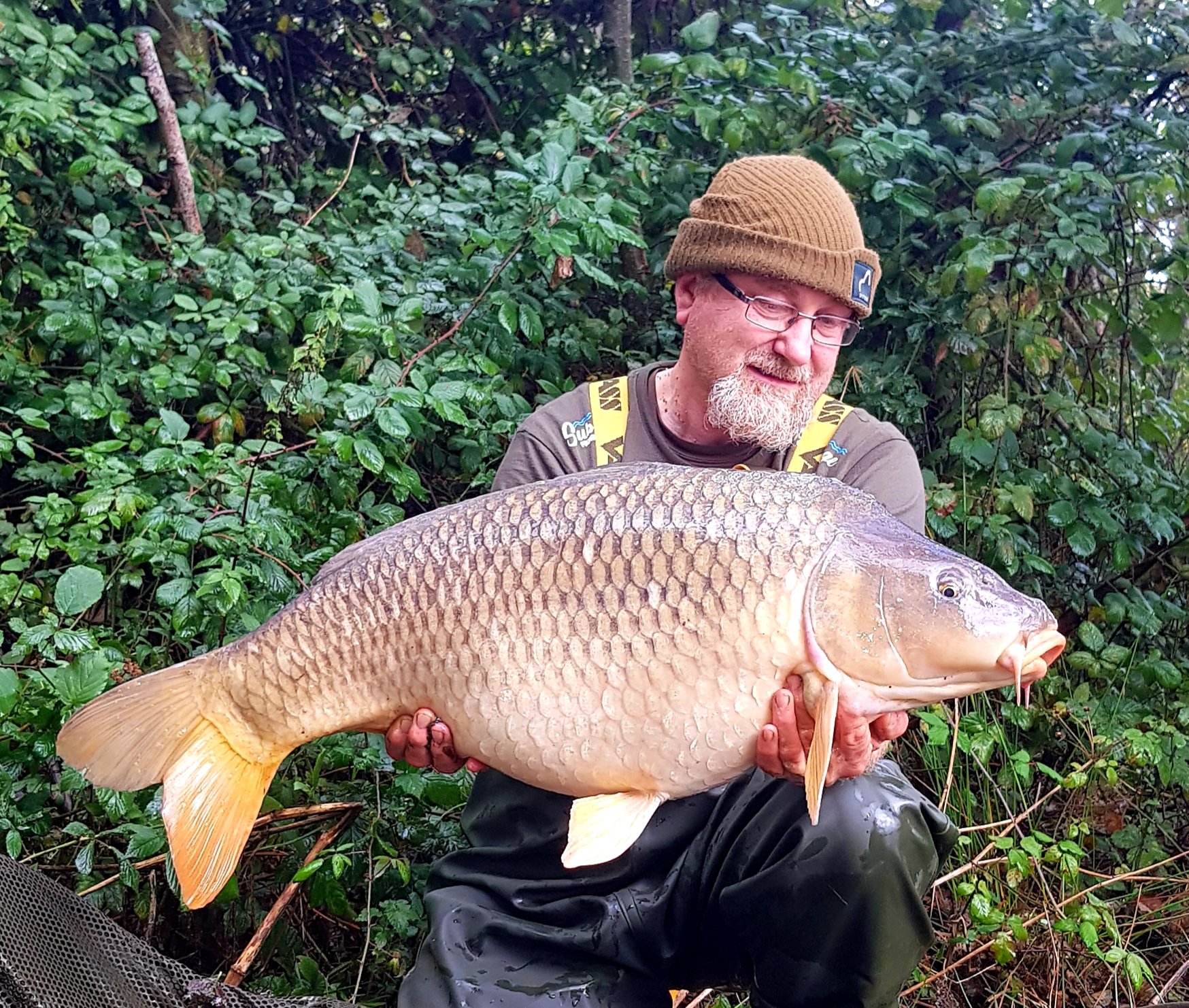
Despite the difficulties, the rewards were worth it. My catch rate was improving, and I was avoiding most of the smaller carp (though the mid-doubles were still a bit of a nuisance).
Fishing alongside my mate Ian was also a big help. If you follow my blog, you’ve probably seen him in some of the photos. He also helps with filming, and we often rotate swims, keeping things varied and fresh.
Since the lockdown ended, we had been catching consistently, with the average size of carp improving. We experimented with different rigs, trying to filter out smaller fish, which worked fairly well but didn’t eliminate them entirely.

October: A New Challenge
I had never fished the lake in October before, so I was looking forward to:
Watching the trees change color
Golden sunsets over the lake
Experiencing how the carp behavior changed
Things started well, but then the weather turned against us. A northeasterly wind blew in, and suddenly, the carp were easy to find but impossible to catch. Pressure had shot up, and I’m convinced that on this lake, carp don’t like high pressure.
Then, in the final week of the season, we had 36 hours of relentless wind and rain from the north. Conditions were grim, but I still set out for a five-night session. It was tough going, but I avoided a blank with an 11lb fish. Meanwhile, Ian saved the trip with a stunning 30lb+ carp on the second-to-last night.
The joy on his face said it all.
If you could have seen my smile behind the camera, it was exactly the same. That’s what fishing is all about. Sharing in each other’s success, celebrating every capture—whether it’s your own or a mate’s.

Reflections on the Season: A Year Well Spent
Looking back, the season on the Airfield Lake was my best in years! Could it have been the months of forced isolation which lulled the fish into a false sense of security, or was there a possibility that the lack of food turned them back onto the bait?
54 carp landed
Biggest fish: 29lb 6oz Common
No 30s this time, but I’m convinced I lost two that could have been
I finished the season with a long session, which set things up perfectly for the year ahead. My plan was to split my time between Meadow Lake (5 months) and Airfield Lake (7 months).
Of course, you never know what’s around the corner—especially in today’s world. But as long as I can keep fishing, adapting, and enjoying the time on the bank, that’s all that matters.
Tight lines.
Richard


Get 10% off Deeper with Code – RICHARD10










 UK Carp & Coarse Fishing