The Double Gravel Swim – September Session

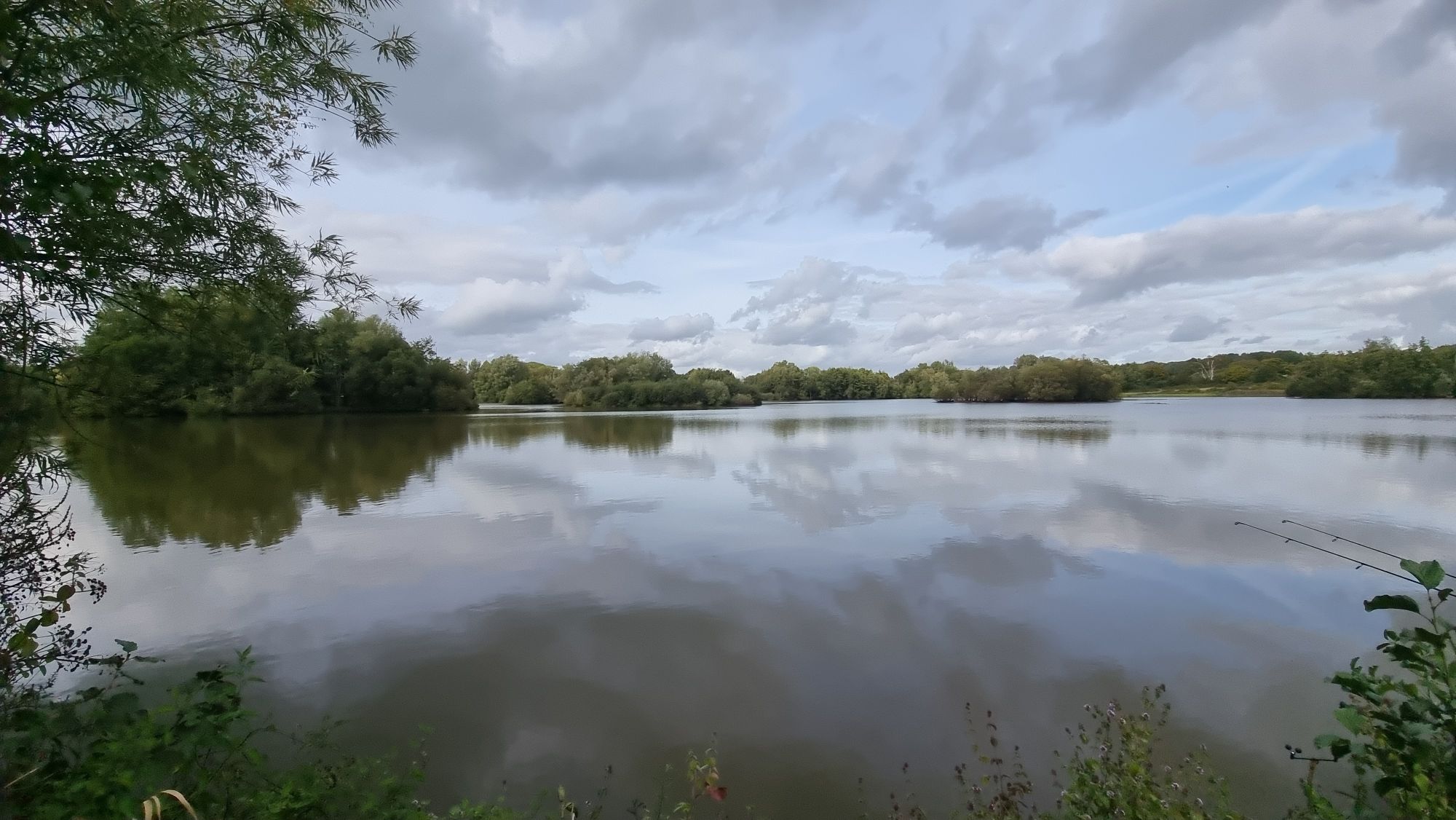
After a good look around the lake earlier in the week, and also backed up by studying my old records, I decided the Double Gravel swim was my best bet. It wasn’t an easy decision, but with no other clear signs of carp activity elsewhere, it stood out as the most logical option. This swim has produced for me in the past, often with a bit of patience, and it’s one I’ve built confidence in over the years.
The first thing I always do when settling into a swim is to get the marker rod out. Even though I know the area well, I like to double-check that everything is still as it should be. Weed shifts about, silt builds up, and there’s nothing worse than assuming a spot is as clean as you remember, only to find it’s changed. The rod whistled out into the wind, clipped at the right distance, and the lead hit down with that firm, reassuring thud of clean gravel. A couple of drags confirmed it. Perfect. The long-range gravel bar was still there, sharp and defined, while the closer line I’ve favoured before was equally inviting.
This time, though, I wanted to tweak things. Normally, I’d fish further out, but my gut told me to bring one rod shorter. It felt like a gamble, but sometimes carp fishing is about breaking habits. The plan was simple: one rod fished closer with solid PVA bags, the other at long range on a proven spot that has a knack for throwing up the bigger carp every so often. That second rod, however, would be fished with single hookbaits only.

The crosswind was already building across the lake, and I knew accuracy would be an issue if I tried spombing at range. Singles would allow me to stay precise without overfeeding. On the closer rod, neat parcels of bait in the form of PVA bags would ensure everything stayed tight and attractive, without the wind scattering free offerings all over the place.

For bait, I stayed with my trusted choice—BFM boilies and solubles. There’s no point complicating things when you’ve got a formula that works. Both areas received a decent helping, enough to draw attention, but not so much that I’d risk overdoing it at this stage.
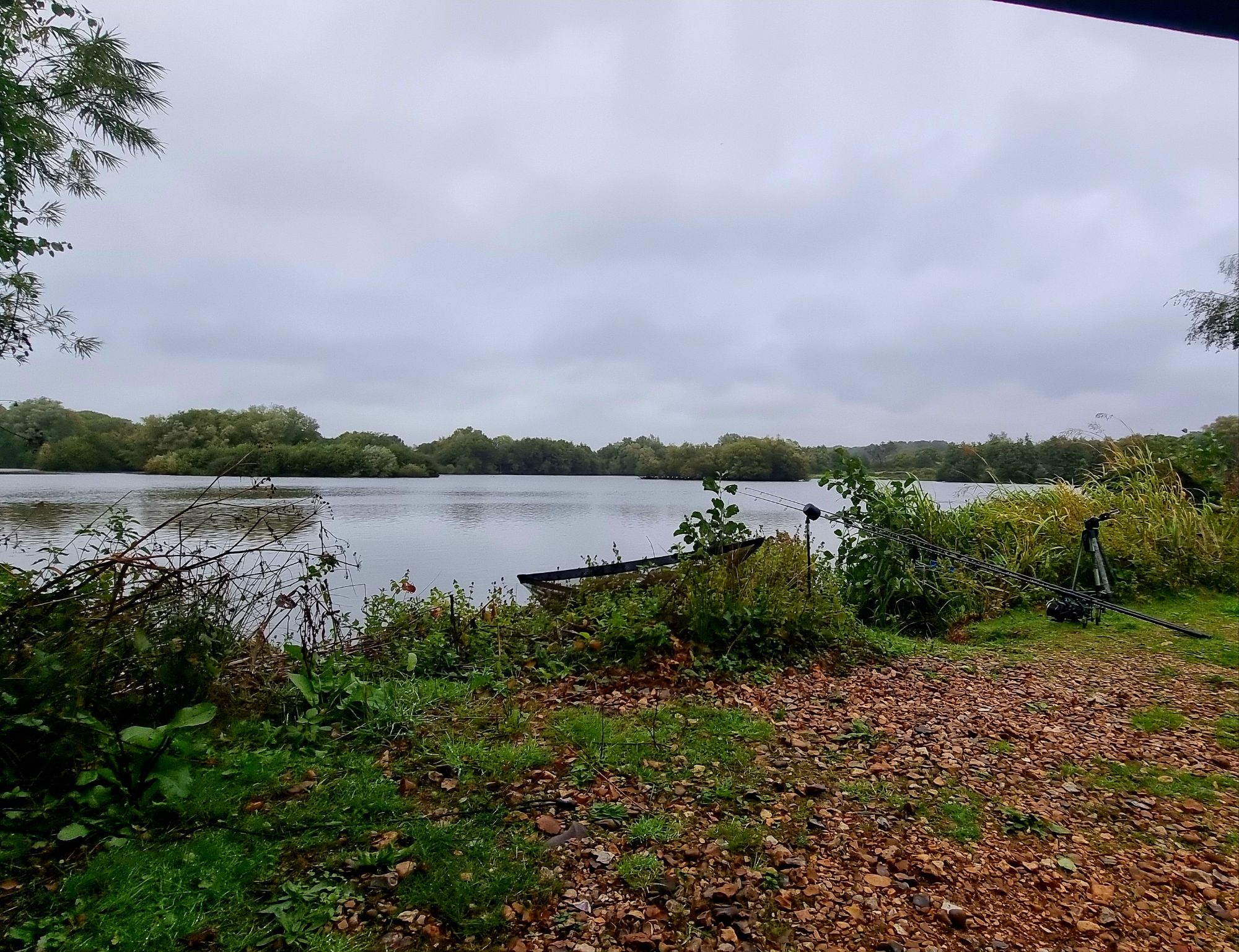
By the time the light started to fade, the rods were in place, the rigs tied with care, and everything clipped up and set. The lake settled into that familiar evening rhythm—birds skimming the surface, the breeze pushing through the trees, and the faint smell of autumn creeping into the air. It felt like I was in with a chance, even though I knew this wasn’t the sort of swim to expect fireworks on the first night.
First 24 Hours – Wednesday
The night passed quietly, which didn’t come as a surprise. Carp here tend to take their time before drifting into the area, but once they arrive, they often hold in front of you for days. That’s why the Double Gravel swim can be so rewarding if you’ve got the patience.
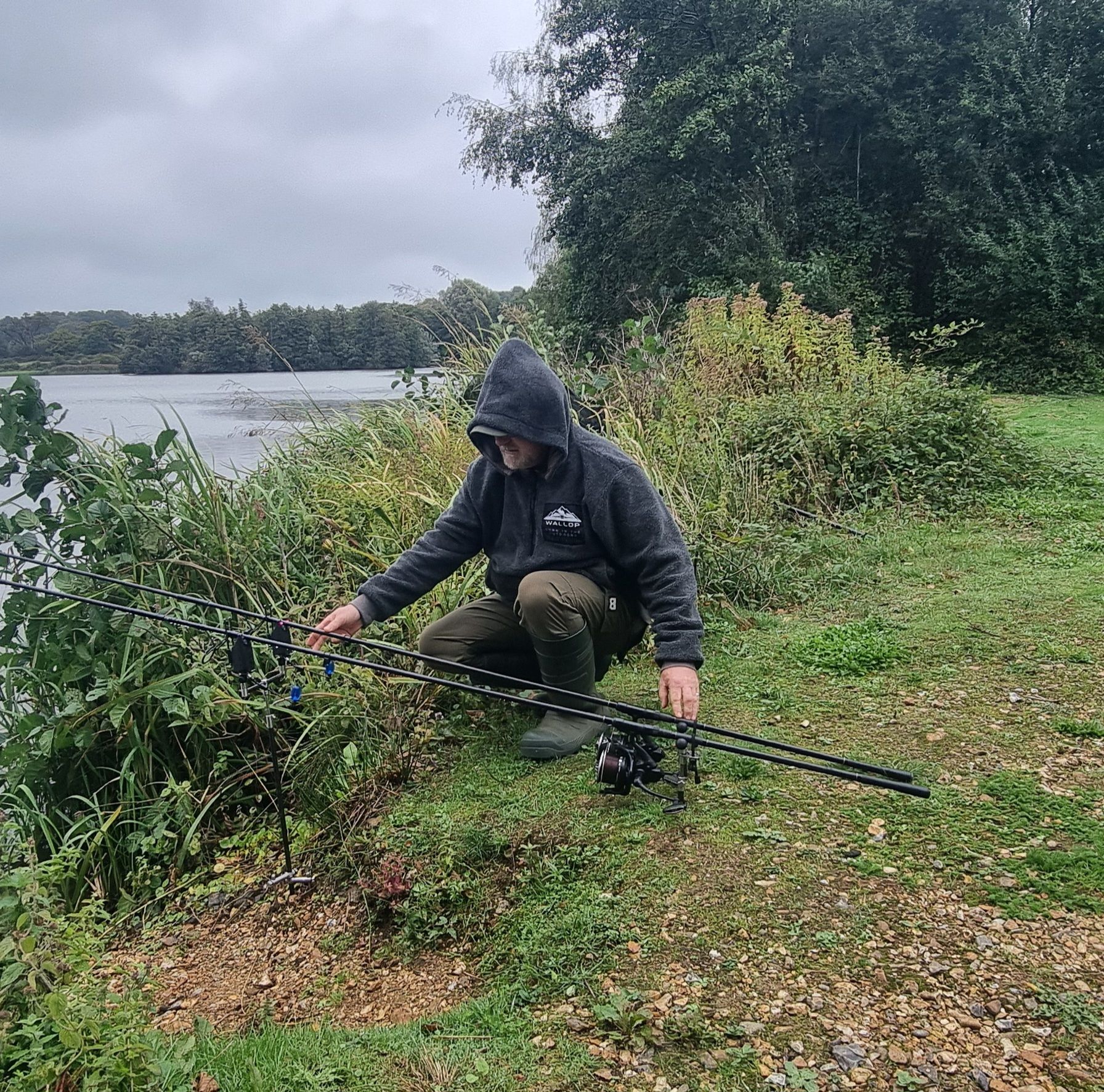
By 1130 hrs Wednesday, I felt the need to top up the spots. Four spombs went onto each area, pushed out against the crosswind, just enough to keep some bait trickling in. It was a bit of a battle keeping things accurate, but I felt confident the effort would pay off.
It wasn’t long before it did. At 1406 hrs, the left-hand rod suddenly burst into life. The fish kited hard, spending much of the fight on the surface, just like a couple I’d had the week before. The battle was tense but controlled, and eventually I guided a lovely 17lb 4oz common into the net. A cracking fish, not the biggest by any stretch, but very welcome all the same.

That one bite did wonders for my confidence. I’d been slightly worried I’d made the wrong decision in moving here, but catching from this swim before gave me belief, and once again it delivered.

Second Night & Thursday
Despite the good start, the following night played out exactly as the one before—quiet. By 0730 Thursday morning, I hadn’t had a single bleep. I’d neither seen nor heard anything through the dark hours, and the only other swim I might have fancied moving into was already occupied. In truth, I wasn’t ready to abandon the plan anyway. Two nights and one full day aren’t enough to judge an area like this. In the past, this swim has come good for me with persistence, and I reminded myself to trust the process.
By 1430 Thursday, I decided on a small change. I moved my right-hand rod into open water with a solid bag, as Ian was due to arrive at lunch time. This was partly to give Ian and me a bit more space between our lines, but also to test whether the fish were holding off in slightly different water.
That decision produced a result, though not quite the one I was after. At 1730 Thursday, the rod signalled a drop-back. I lifted into it and soon realised it wasn’t a carp but a tench. Not the prize I wanted, but at least it told me something was happening out there. It also gave me a chance to refresh both rods with new hookbaits and get things reset perfectly for the night ahead.
Final Night & Friday Morning
The hours ticked by, and at 0045 Friday morning, the right-hand rod finally gave me the sort of take I’d been waiting for—a steady, plodding run that screamed carp. The fight felt heavy, purposeful, and I was certain it was a better fish. But then, disaster. The line went slack. The hook had pinged out.
Losing carp is part of the game, but it doesn’t get any easier, especially when you know it felt like a good one. It’s been happening a lot lately, and it leaves you replaying everything in your head, wondering if you could’ve done anything differently. I quickly got another solid bag back out, but the sting of losing that fish sat heavily in the bivvy with me. After last week’s frustration with lost fish, this was the last thing I wanted to repeat.
The rest of the night stayed quiet, and by 0800 Friday morning, I was still brooding on that lost carp. It’s not just the missed opportunity—it’s the knowledge that these bigger fish don’t give themselves up easily, and every lost one feels like a setback.
Closing Thoughts
Despite the ups and downs, it was a session worth doing. The 17lb 4oz common gave me confidence in the swim, and while the tench and the lost fish brought their frustrations, they also reinforced that I was in the right area. Sometimes that’s half the battle—knowing you’ve put yourself where the carp are, even if luck doesn’t always play along.
Looking ahead, I can’t help but feel optimistic. The weather is due to turn more autumnal next week, with a change in wind direction and a drop in temperature. That shift often sparks more activity and encourages the carp to feed harder. If I can time it right, it could be the trigger for something special.
For now, though, I’ll chalk this session up as another step in the process. Carp fishing is rarely about instant results; it’s about piecing together the puzzle, session by session, until it all comes good.
Until next time,
Richard



Get 10% off Deeper with Code – RICHARD10







 UK Carp & Coarse Fishing