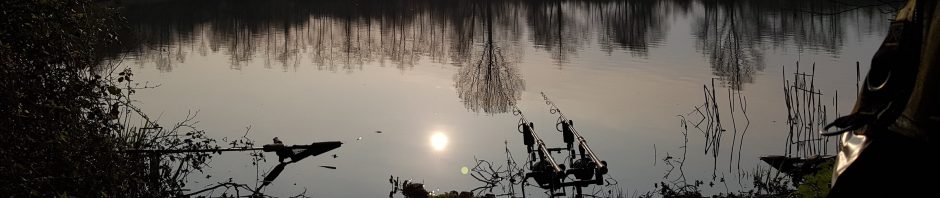
The allure of Airfield Lake lies in the challenge it presents each season, requiring anglers to transition carp from their natural food sources to boilies and particles. This constant adaptation keeps me returning for more and keeps the lake shrouded in mystery, as there isn’t a clear pattern to this behavior, though I’m beginning to think there might be.

Here are the established facts for each year:
- The season commences on March 15th.
- Carp are visibly active and feeding, often seen in their usual spots.
- They are primarily feeding on naturals.
- We must introduce boilies and other baits to offer an alternative food source.
- In the initial weeks, we tend to catch carp closer to snags, even though they appear to be in open water.
- Carp spawn in the first few days of May each year, a fascinating fact.
Now, it’s time to tackle these questions logically and hopefully reach a conclusion:
- The opening date is fixed and can’t be changed.
- These usual spots seem to be the prime feeding areas, either because they are favored by the carp or offer the best food source.
3 & 4. One approach could be a bulk application of boilies in late March, essentially scattering them across every swim to ensure carp have no choice but to encounter and hopefully feed on them. This approach, akin to prebaiting, presents logistical challenges since access isn’t granted before the opening day. It may need to be carried out when other anglers are present, making midweek attempts more feasible despite the associated costs.

- The idea of altering their feeding areas merits exploration. Are the areas where carp are caught during summer and autumn months chosen because they offer better feeding opportunities, or are they simply where the carp congregate due to warmer, uniform temperatures across the lake? Carp often seek shelter in snags, but since they’ve been undisturbed for nearly five months, why would they remain under the trees? Perhaps they seek group warmth and security over the winter, especially considering the absence of weed in the lake. Carp residing in silt in 5ft or 6ft of water in the middle of the lake likely face cooler conditions.
- The bulk-up period prior to spawning in April seems to suggest baiting near snags is a viable solution. Baiting the margins has crossed my mind as well, and I regret not attempting it earlier.
Recap:
At the start of the session, carp gravitate toward the trees because these areas offer warmth and security during the winter months. Therefore, it seems sensible to begin baiting near these locations during the first month, as carp tend not to feed in open water initially. This will be my strategy for the upcoming season, although it may be slightly affected by the Easter holidays falling in early April.
We’ll see how this plan unfolds during this session and the next.
Until next time,
Richard








 UK Carp & Coarse Fishing